…[After WW2], monopoly capitalism absorbed the world through debt, trade, media, technology, and corporate consolidation.
The result is the strange hybrid we live under today: corporate communism from above.
Private ownership for the few. Managed dependency for the many.
Who Won World War II?
The ordinary soldier did not win.
The bombed civilians did not win.
The raped women of Eastern Europe did not win.
The Christians sent to gulags did not win.
The British public did not win. Despite Britain’s continued role within the postwar international order, the public was left with heavy debt and prolonged austerity.
The American people did not win either—over 400,000 were killed, while U.S. institutions emerged with unprecedented federal debt and a permanently expanded war economy.
Poland suffered catastrophic losses during the war, with an estimated 5.5 to 6 million people killed—around one-sixth of its population—yet did not emerge as a fully independent state in the postwar settlement, but became part of the communist sphere of influence.
The Germans did not win. The country and its major urban and civilian centres were devastated by sustained bombing, millions were displaced or expelled from Eastern Europe. An estimated 6–7 million German soldiers and civilians lost their lives during the war and its immediate aftermath, and between 12 and 14 million ethnic Germans were displaced or expelled from Eastern Europe, with many forced into occupied Germany while others were deported eastward into communist labour camps or used as forced labour.
With over 20 million deaths, the Soviet population—including Russians, Ukrainians, Belarusians, Baltic peoples, and others—certainly did not win, if by “victory” we mean the experience of the people rather than the outcome for the Soviet state.
The winners were the institutions that emerged stronger: central banks, military contractors, intelligence agencies, supranational bodies, ideological bureaucracies, and the financial interests able to profit from destruction and reconstruction alike.
The war did not end in 1945. It changed form.
The battlefield shifted—from territory to finance, from armies to institutions, from open conflict to systems of management and global governance.
The old empires flew flags. The modern order operates through frameworks.
Institutions such as the United Nations matter not because they command openly, but because they reflect a broader postwar principle: that sovereignty is increasingly shaped, guided, and constrained through supranational structures.
I believe almost all thoughtful people can agree with the highlighted paragraph above. Who are the strongest players inside that system and what goals are they pursuing — these are the questions which face us today. Who controls the propaganda, who owns its outlets; who advocates for censorship; who uses established institutions to control large populations; who controls those institutions and how were they built, and how have they been taken over? What can possibly replace insider control of major institutions, and where does the power lie to do that? I don’t see it. We the people cannot do that. We the people can only act effectively when largely united, a rare occurrence. There may be a role for some future iteration of AI to remove most if not all of the corruption, contradictions, frictions and inefficiencies within regional and global systems. I imagine we humans will try to do that and might succeed. A good version of a world like that will provide for everyone without stifling anyone. At core, most of our problems are fairly simple, so it could happen. ABN
Sent by a friend, who commented ‘mildly interesting’, which I agree with. Still mildly worth a look because we rarely get honest views of Israel from people who live there or know it well ABN
The day will come when AI can answer almost all of our questions.
I doubt it will be able to know on its own what questions we want to ask. In that respect, we will have knowledge or information AI does not have.
AI will also not know what we humans are going to ask each other or say to each other. And only a human interlocutor can answer a subjective question we ask them about themself.
Only humans have complex subjectivity which is difficult for us to figure out. AI may be able to help us with that to some degree.
But how will it help us with the complex subjectivity that exists between two or more humans?
With the help of some sort of brain monitoring device worn or embedded in a human, AI will have some calculable grasp on our subjectivity.
Would it ever be good enough to be a substitute for a human companion?
Is subjectivity anything else but confusion within the human system? Or is it a nonrational transient appraisal or measure of the system?
Subjectivity can be beautiful, ugly, inspiring, boring, intriguing, illusory.
FIML may wind up being the only thing humans can do that AI cannot do. ABN
Kendall Jenner embraces the ‘fake nipple’ theme as BFF Hailey Bieber changes into a sexy minidress to lead the A-list glamour at Met Gala afterparties with Margot Robbie, Sabrina Carpenter and Katy Perry
I have only watched the short clip above, but approve of what he is saying and so am posting the full video as well. I may comment later after having watched the long version. People everywhere, but especially in the West, must learn cultural, anthropological and religious information as it really is and not see it only through the idealistic lenses of Western fantasy. ABN
“From direct negotiations between the United States and Iran for the first time in nearly half a century… to coordinated diplomatic and military movement across the Middle East, South Asia, and beyond… the old geopolitical order is being replaced in real time. This is not chaos. This is strategy.”
__________
This is required viewing if you are interested in what is happening in Iran, the Middle East and the world. It’s a great take on the events of today and historically. I hope he’s right. ABN
Motivated reasoning means reasoning to gain. Speaking to effect means speaking to cause something.
Both are the most common forms of thought and speech for all people with few exceptions.
Speaking to effect and motivated reasoning maintain personas.
Because it is difficult to tell truths and because trying to do so brings calamity, we don’t. We narrow thought instead; our voices dull faceless muffled sounds with no meaning.
This is the tone and timbre of samsara, the feeling of group delusion, the Suffering of the First Noble Truth.
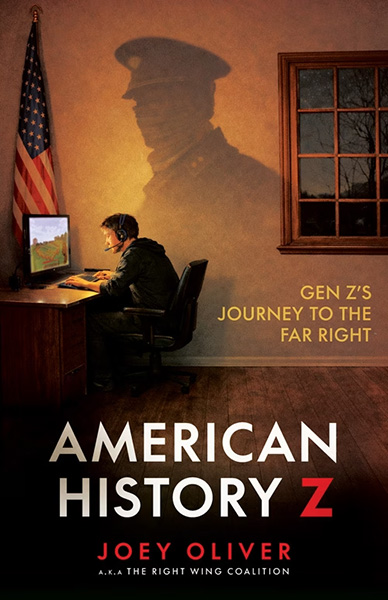
American History Z, with a foreword by Jared Taylor, just broke Arktos Media’s record for first-day sales and is shaping up to become a bestseller. It seeks to answer a question older loyalists of the political establishment ask almost in desperation: What could possibly be turning young men so powerfully toward “right-wing radicalism?” The generation in question, popularly termed “Gen Z” or “the Zoomers,” is commonly defined as Americans born between 1996 and 2010. Joey Oliver, born 1998, is therefore a fairly senior member of the cohort whose political education he describes in his first work of nonfiction after an earlier novel called The Grey Lion.
This generation can just about remember George W. Bush’s America: already riddled with the corrupting influence of liberalism, but outwardly still a continuation of the America of their fathers. There were still plenty of what we politely call “nice neighborhoods” with “good schools” — places where whites were free to be ourselves and raise our children. But those children are Generation Z, now coming of age or already young adults, and they see clearly that the world they glimpsed early in life is gone. They cannot, therefore, simply approach life on the same terms as their parents, but will have to fight for things their parents took for granted.
…Mr. Oliver notes that, as with antiracism, feminism was initially supposed to be a reconciliation, but has become open resentment and seeks retribution:
Women now had it all — education, careers, contraception, no-fault divorce, affirmative action — you name it. But instead of contentment and success, we got the most unhappy female population in recorded history. We were doing everything we could for women, but it wasn’t enough. We tried to give them what they asked for, and they still hated us. So, after the endless efforts and concessions, lots of us young men gave up on trying to appease any of these people [meaning both women and non-whites]. We don’t have an obligation to be nice to people who hate us.
Researchers have found that humans are still evolving, and at a much faster rate than previously realised.
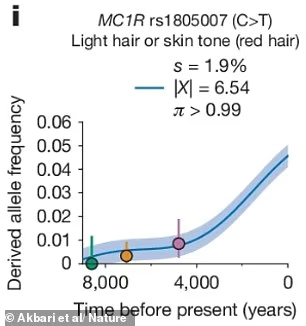
DNA analysis shows that over the past 10,000 years, the ginger gene has become more common among Europeans.
It means the red hair could increasingly become more widespread.
Other variants that appear to have become more common include a light skin tone, a lower chance of male-pattern baldness, a faster walking pace and higher intelligence.
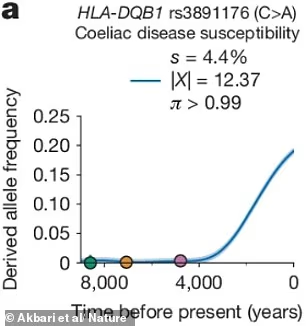
Additional traits that have proliferated are a susceptibility to celiac disease, immunity to HIV, resistance to leprosy, a lower risk of rheumatoid arthritis and a lower body fat percentage.
‘…The sex lives of women with red hair were clearly more active than those with other hair colour, with more partners and having sex more often than the average,’ Dr Werner Habermehl, from the University of Hamburg, said. ‘The research shows that the fiery redhead certainly lives up to her reputation.”The sex lives of women with red hair were clearly more active than those with other hair colour, with more partners and having sex more often than the average,’ Dr Werner Habermehl, from the University of Hamburg, said. ‘The research shows that the fiery redhead certainly lives up to her reputation.
Simply stated, semiotic codes are the conventions used to communicate meaning.
Codes can be compared to puppet masters that control the words and semiotic bundles that people use when speaking and listening. For many people, semiotic codes are largely unconscious, functioning mainly as limits to communication or as givens.
Some examples of codes might be the ready-made formulas of politics or the ordinary assumptions of any culture anywhere.
Codes work well in most cases when we do ordinary or formal things, but they inhibit thought and communication when we want to go beyond ordinary or formal interactions and behaviors.
Unconscious, unexamined, or strongly-held codes can be a disaster in interpersonal relations if one or both (or all) parties are rigid in their definitions and understanding of the codes being used. These are the sorts of conditions that lead to absurd exchanges at the dinner table and are one of the main reason most of us learn never to talk about politics or religion at most gatherings.
Gathering for dinner itself is a code. On Thanksgiving we are expected to break bread without breaking the code of silence on politics or whatever else your family can’t or won’t talk about. There is not much the individual can do to change this because the harder you try—no matter how good your intentions—the more it will seem that you are breaking the code, being aggressive, or threatening the (probably fairly weak) bonds that hold your dining unit together.
Many years ago, Charles Berger and Richard Calabrese proposed a theory about communication known as the Uncertainty Reduction Theory. This theory deals with how people initially get to know each other. It proposes:
…that, when interacting, people need information about the other party in order to reduce their uncertainty. In gaining this information people are able to predict the other’s behavior and resulting actions, all of which according to the theory is crucial in the development of any relationship. (source)
The basic idea is that we humans need to reduce uncertainty in order to understand each other well-enough to get along. If we succeed at reducing uncertainty sufficiently, it then becomes possible to continue to develop relations.
The theory works pretty well in my view, but the problem I see with it is reducing initial uncertainty is much the same as feeling out semiotic codes, discovering which ones both (or all) parties subscribe to. As mentioned, this works well-enough for ordinary and formal relations, but what happens next? For the most part, most people then become trapped in the codes they seem to share.
What happens next can even be seen as sort of comical as people over the weeks or months continue to reduce uncertainty while confining themselves even more. Very often, if you try to go a bit deeper, you will be seen as breaking the code, disrupting convention, even threatening the group.
This is the region in which intimate relationships can be destroyed. Destruction happens because the parties involved are trapped in their codes and do not have the means to stand outside them and analyze them. Obviously, this leads to either reduced or turbulent speech.
I think the Uncertainty Reduction Theory might be extended and amended to include a stage two theory of uncertainty reduction. FIML practice would constitute a very reasonable stage two as FIML is designed to remove uncertainty and ambiguity between close partners.
Notice that FIML itself is not a semiotic code. It is a tool, a method, a procedure that allows partners to communicate without using any code at all save ones they consciously choose or create for themselves.
It seems clear to me that all established interpersonal codes are ultimately limiting and that people must find a way to analyze whatever codes they hold or have been inculcated with if they want to have truthful or authentic communication with their closest partners.
Most codes are public in the sense that they are roughly known by many people. But all of us have idiosyncratic ways of understanding these public codes and all of us also have private codes, idiosyncratic codes that are known only to us.
Sometimes our understanding of our idiosyncratic codes and/or idiosyncratic interpretations of public codes is not all that clear to us. One reason is we do not have good ways to access them. Another reason is a good many idiosyncrasies are sort of born in the dark. We muddle into them privately, inside our own minds with little or no opportunity to share them with others. Indeed, as seen above, to try to share them all too often leads to disruption of the shallow “certainty” that adherence to the shared code has provided.
What a mess. We need codes to learn, grow, and communicate with strangers. But we have to go beyond them if we want to learn, grow, and communicate with the people who are most important to us.
FIML is a sort of stage two Uncertainty Reduction Practicethat allows partners to observe and analyze all of their codes—both public and private—in real-time.
Why is real-time analysis important? It is important because codes can only be richly and accurately analyzed when we see clearly how they are functioning in the moment. The “psychological morphemes” that appear only during brief moments of communication must be seen and analyzed if deep understanding is to be accomplished.
Meaning can be defined as two or more signaling systems connecting. Connecting means “sending and receiving, receiving and sending.”
To visualize this, think of Newton’s every action produces an opposite and equal reaction; thus sending (action) produces receiving (reaction), which in turn sends a message back. For example, a photon hits a hydrogen atom; the photon “sends” while the atom “receives”; by receiving, it also sends a message back and out; it affects the photon and more.
Space is the foundation of the plethora of signaling systems. Time is the foundation of their activity and extent.
Meaning is the most basic word in language.
When you look at it “psychologically,” it’s not what the sign is but what the meaning is. Thus, meaning is a deep basis of semiotics.
In this context, it makes sense to say that time and space are the sine qua non of signaling systems. This “defines” time and space in terms of signaling systems.
Identity depends on meaning as defined above.
Our identities are (somewhat) complex nexuses of meaning/signaling that “embody” our comprehension of the semiotics of our cultures and experiences. They lie at the center of how we understand ourselves. Identity signaling occurs internally as well as externally.
In non-FIML social intercourse it is normal for people to assert/display the props/symbols of their identities, as they understand them.
People who do FIML also need identities, but they do not need the social props that help non-FIML people define each other.
You really do not want to be defined by props and symbols. It’s a static role that leads away from authentic being.
People do not truly belong to a culture. Rather they maintain the illusion that they belong to a culture. This is clear when we think and analyze identity in terms semiotics, which here means “the science of communicable meaning.”
Having a weak or confused identity can be a very good thing as this may prompt you to learn how identities are made and maintained.
No Buddhist should want an identity defined by props and symbols.
Buddhism is about authentic being, the “thusness” of being, the experiential existential being that you really are, the one that occurs before there are definitions, props, and symbols.
This being can be hard to see because humans are semiotic entities; that is, we are entities that seek, create, and communicate meaning. This causes us to look within semiotics for the definition of our authentic being, a place where it can never be found. You have to look outside of semiotics.
But you can’t look outside semiotics unless you know how to look inside. You have to fully understand how the “language” of your semiotics works to be able to step outside of it.
Your semiotics is your unique take on the semiotics of your culture(s) and experiences.
You cannot fully explore your semiotics, your identity, your nexus of individual meaning alone because there is no way you can check your work. You cannot see yourself.
Each of us is a social, interactive, communicative being. You can only fully explore your unique semiotics/identity with a partner who wants to do the same.
Two people working together are able to stop the flow of conversation to analyze the semiotics of how they are hearing and speaking. One person working alone is only guessing.
Find a partner and do FIML. You will learn a lot from it.
Do not expect FIML to give you new symbols or props or tell you how to be. FIML is only a procedure. It is empty, almost devoid of its own content. It is a process that will help you see and recreate your identity.
Do not expect your FIML teacher to be an example for you. Do not expect your teacher to be impressive or to project signs and symbols at you. Do not expect to follow your teacher.




 American Buddhist Net