I know this feeling, too. Many of us know how dangerous life can be for children and young people. She is clearly not looking for trouble but protecting herself from trouble.
If I were king, I would praise and reward her and then listen to everything she has to say. She’s 13 years old and has been arrested for protecting herself. ABN
A new study on working memory has some intriguing insights into how working memory works and how it doesn’t work.
It’s widely known that when working memory is overtaxed, confusion results, skills decline, while feelings of frustration and anger may arise. The reason for this seems to be:
Feedback (top-down) coupling broke down when the number of objects exceeded cognitive capacity. Thus, impaired behavioral performance coincided with a break-down of Prediction signals. This provides new insights into the neuronal underpinnings of cognitive capacity and how coupling in a distributed working memory network is affected by memory load. (Working Memory Load Modulates Neuronal Coupling)
A well-written article about this study contains the following diagram and explanation:
Miller thinks the brain is juggling the items being held in working memory one at a time, in alternation. “That means all the information has to fit into one brain wave,” he said. “When you exceed the capacity of that one brain wave, you’ve reached the limit on working memory.”
…The prefrontal cortex seems to help construct an internal model of the world, sending so-called “top-down,” or feedback, signals that convey this model to lower-level brain areas. Meanwhile, the superficial frontal eye fields and lateral intraparietal area send raw sensory input to the deeper areas in the prefrontal cortex, in the form of bottom-up or feedforward signals. Differences between the top-down model and the bottom-up sensory information allow the brain to figure out what it’s experiencing, and to tweak its internal models accordingly. (Emphasis added)
Working memory works via connections between three brain regions that together form a coherent brain wave.
Notice that “an internal model of the world,” which is a “top-down signal” within the brain wave feedback loop, predicts or interprets “bottom-up” sensory input as it arrives in the brain.
I believe this “top-down signal” within working memory is the reason FIML practice has such enormous psychological value.
By analyzing minute emotional reactions in real-time during normal conversation, FIML practice disrupts the consolidation, or more often the reconsolidation, of “neurotic” responses. (Disruption of neurotic response in FIML practice)
FIML optimizes human psychology by helping partners intervene directly into their working memories to access real-world top-down signals as they are happening in real-time. Doing this repeatedly reliably alters the brain’s repository of top-down interpretations, making them much more accurate and up-to-date.
The model of working memory proposed in this study also explains why FIML can be a bit difficult to do. Partners must learn to allow a FIML meta-perspective or “super top-down” signal to quickly commandeer their working memories so that analysis of whatever just happened can proceed rationally and objectively. It does take some time to learn this skill, but it is no harder than many other “automated” skills such bicycling, typing, or playing a musical instrument.
Imbalances in NAD+ homeostasis have been linked to aging and various diseases. Nicotine, a metabolite of the NAD+ metabolic pathway, has been found to possess anti-inflammatory and neuroprotective properties, yet the underlying molecular mechanisms remained unknown. Here we find that, independent of nicotinic acetylcholine receptors, low-dose nicotine can restore the age-related decline of NAMPT activity through SIRT1 binding and subsequent deacetylation of NAMPT, thus increasing NAD+ synthesis. 18F-FDG PET imaging revealed that nicotine is also capable of efficiently inhibiting glucose hypermetabolism in aging male mice. Additionally, nicotine ameliorated cellular energy metabolism disorders and deferred age-related deterioration and cognitive decline by stimulating neurogenesis, inhibiting neuroinflammation, and protecting organs from oxidative stress and telomere shortening. Collectively, these findings provide evidence for a mechanism by which low-dose nicotine can activate NAD+ salvage pathways and improve age-related symptoms.
A wave of national fury has swept Holland following the arrest of an ‘asylum seeker’ for the killing of a 17-year-old who was stabbed to death while she was calling the police to report being followed on her bike ride home.
The lifeless body of Lisa was discovered by police in a roadside ditch in the early hours of Wednesday morning.
She was returning from a night out with friends before she was attacked by a man who also had a bicycle with him, while she was phoning the emergency police number.
The main suspect in the case – a 22-year-old male asylum seeker – was arrested four days ago for a rape in Amsterdam on August 15, and allegedly assaulted a third woman five days earlier.
The violent murder of the teenager has triggered widespread outrage and a nationwide ‘reclaim the night’ campaign, after a Dutch actress and author wrote a poem that went viral about Lisa’s final moments cycling home.
In a post shared on her Instagram, Nienke Gravemade wrote: ‘The red bag. I keep thinking about that red bag. How it dangled from her handlebars as she drove through the night. A night that belonged to her too.
The sooner Europe and the West react strongly to these savage invaders, the better. The longer you wait the worse it gets both in what happens and how nations react. Basic anthropology: If you don’t react or fight back, you’re dead. The elite smelly little bitches forcing this invasion on unwilling populations are doing it on purpose. They want you dead or as good as dead. ABN
I thought I had trashed this post yesterday because it is possible the husband really is disabled. I did something wrong and it posted. It still shows very sharp differences in manners, no matter the husband’s condition. In today’s world it’s probably better to ignore something like this or call security or the cops. ABN
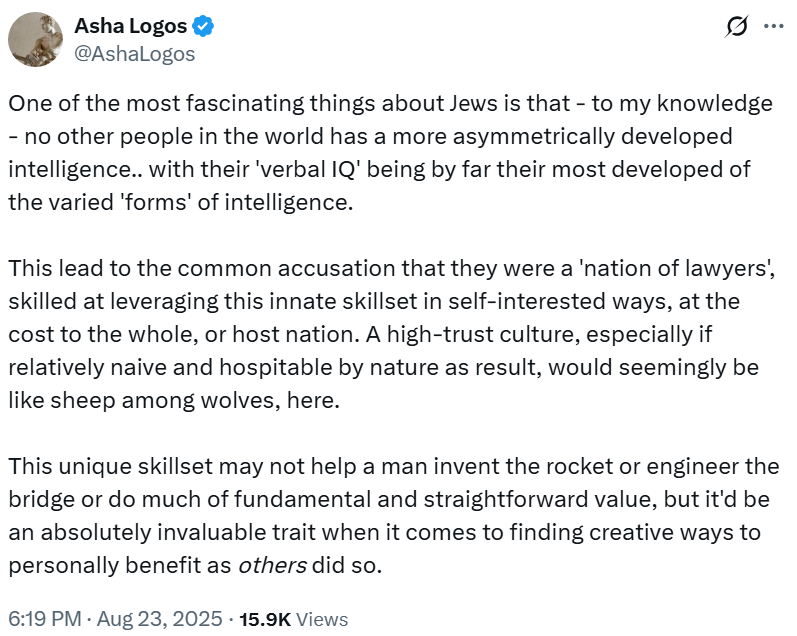
I believe this is largely true with the addition of a strong cultural and probably genetic propensity for self-deception. Evolutionarily, self-deception is a ‘valuable’ trait for any tribe as it ensures tribal-bonding at the expense of others. ABN
…it may be the dumbest thing I have ever heard. Filing this under ‘humor’ just in case. ABN
UPDATE: Apparently this is a real video. Huckabee should step down immediately and all top members of this administration should publicly disavow his absurd kowtowing to the claims of an ancient cult masking as a religion. ABN
U.S. officials say RCMP stonewalling on the Chinese-precursor-supplied Falkland superlab — described by DEA chief Derek Maltz as a “major disaster” — among the reasons behind Trump’s punitive tariffs
WASHINGTON — Canada’s federal police refused to investigate or cooperate with the United States Drug Enforcement Administration on a British Columbia fentanyl superlab probe tied to chemical-precursor shipments from China into Vancouver in late 2022, according to senior U.S. officials. More than a year later — only after the U.S. Treasury sanctioned Iranian-Canadian businessman Bahman Djebelibak and his Health Canada–licensed company Valerian Labs, naming them as part of a Chinese fentanyl trafficking syndicate that Washington sought to disrupt — did the RCMP finally open a siloed investigation. The force continued to refuse coordination or information sharing with the American agents who had initiated the case. In an exclusive interview, Derek Maltz, DEA Acting Administrator in 2025 with oversight of the matter, called the B.C. superlab case a “major disaster.”
This explosive information, confirmed to The Bureau by current and former senior U.S. officials, has never before been reported in the Falkland, B.C., superlab case, which was covered internationally by outlets including The New York Times. It amounts to a rare public rebuke that elevates the matter from a Canadian policing failure into a high-consequence geopolitical dispute.
It also helps explain Washington’s decision on July 31 to impose 35 percent tariffs on Canada, reinforcing President Donald Trump’s claim that senior officials had warned him Ottawa failed to cooperate or devote sufficient resources to interdictions against Chinese- and Mexican-linked drug trafficking networks blamed for killing hundreds of thousands of North Americans.
What people thought America could be – a beacon of democracy – was the last thing it became. In reality, it’s a corporate machine that has given rise to the Transnational Private Sector (TPS).
The TPS is a coalition of corporate giants, led by the Financial-Industrial Complex (FIC) with firms like JPMorgan, Goldman, and BlackRock, alongside the Military-Industrial Complex (MIC), Consumer-Industrial Complex (CIC), and Techno-Industrial Complex (TIC).
This collective force operates beyond borders, transcends nationality, and prioritizes profit over public welfare.
When Jamie Dimon, JPMorgan’s CEO, warned in October 2024 that wars in Ukraine and the Middle East could destabilize the global economy, he wasn’t just forecasting. He was asserting the TPS’s dominance over policy.
To understand this power, you have to examine the game theory driving the TPS’s clash with nations.
This concept that I have developed deliberately sets aside the idea of good, evil, right, or wrong. Geopolitical dynamics are examined through the lens of incentives, power, and measurable outcomes, not moral judgments. The focus is the strategic interplay of actors, stripped of ethical narratives.
___
Game theory provides a framework for understanding geopolitical strategies by analyzing the incentives that drive actors’ decisions.
There are two distinct game types: finite and infinite. Both these games shape global interactions. Finite games are zero-sum with defined endpoints, and clear winners and losers. It’s akin to a corporate quarter where profit maximization is the sole objective.
One player wins, the other loses.
Infinite games, conversely, lack a conclusion, have no end, prioritizing sustained participation through long-term stability, akin to a nation’s multi-generational survival strategy.
States operate within infinite games.
They do not expire. They do not tap out.
Their permanence compels them to prioritize enduring stability over immediate gains. For instance, China’s $1 trillion Belt and Road Initiative, spanning decades, secures global trade networks to ensure long-term economic influence. BRICS nations, through $10 billion in yuan-based trade, foster mutual economic resilience for mutual prosperity.
This cooperative approach engenders a form of morality rooted in reciprocity: mutual support today ensures mutual survival tomorrow. Such strategies reflect a commitment to societal development and stability, as states must maintain legitimacy and resources for their populations over time.
The TPS operates as a corporate entity, fundamentally detached from societal obligations. Unlike states, the TPS bears no responsibility to citizens, public welfare, or long-term development. Its imperative is profit maximization within finite time horizons, driven by shareholder demands and market cycles.
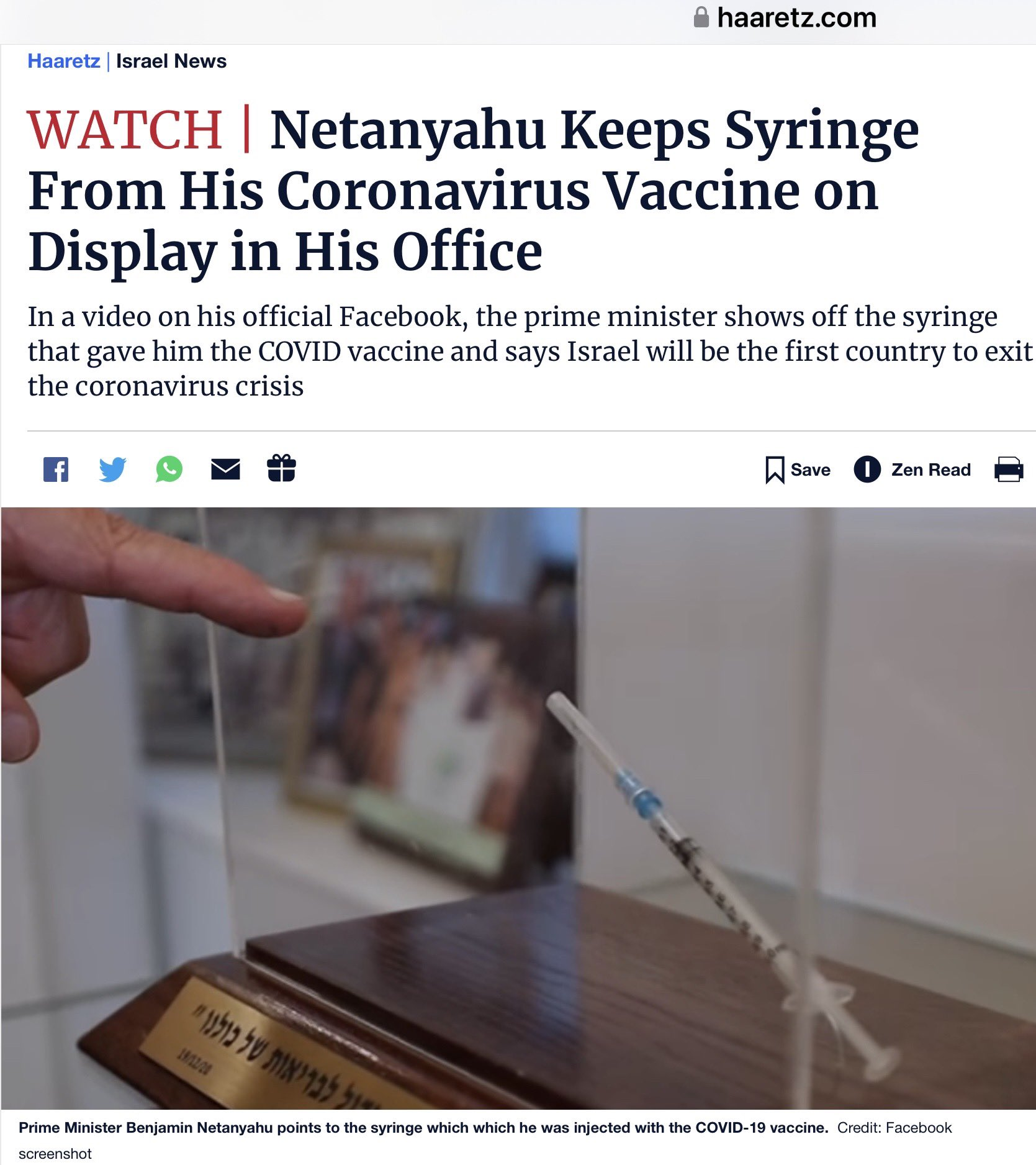
IF Israel gave fake covid shots to its population and IF Israel fudged all of its covid health data and IF it is true Israel is the only highly vaxxed nation in the world to show no decline in healthy pregnancies and births, while all others show alarming declines, one could assume this needle is displaying the gloating of a psychopath over his bioweapon. ABN
While speaking to Lara Trump about the ongoing Russiagate review efforts, Devin Nunes notes, “The only thing that President Trump and this administration can do, is make sure that whoever can be held accountable, are held accountable, and that this doesn’t happen again; that these people are taught a lesson, so that this doesn’t happen again.” But there’s something even more revealing within the interview.
Context: Devin Nunes is the chair of the President’s Intelligence Advisory Board, an alternative mechanism to review and analyze global and domestic intelligence information – with overlay against truth and reality that underpins the issue(s).
Action: Accepting the intent of the President’s Intelligence Advisory Board, now insert the recent DNI Tulsi Gabbard’s directive to stop information sharing with allied countries as it specifically relates to President Trump’s efforts to create a peace deal between Ukraine and Russia.
Back to the interview: Here’s the statement that really deserves to be emphasized @05:25: “Imagine where we sit today, with all the things going on around the world, and the President has to have the DOJ, the FBI, the CIA, his own intelligence board, all making sure the intelligence is not weaponized. I mean it’s rather incredible, this is something that is unprecedented in the United States of America.”
Think about that ¹remarkable context. Essentially what Nunes is saying is that Pam Bondi, Todd Blanche, Kash Patel, Dan Bongino, John Ratcliffe, Tulsi Gabbard and Devin Nunes (et al) cannot trust the operational embeds under the agency heads within the United States Intelligence Community. Think about that, as it is said out loud.





 American Buddhist Net