On this site we have claimed many times that words and semiotics are held together in networks. We have further hypothesized that “psychological morphemes” are also held together in networks.
A “psychological morpheme” is the smallest meaningful unit of a psychological response. It is the smallest unit of communication that can give rise to an emotional, psychological, or cognitive reaction.
Of course word networks, semiotic networks, and emotional, psychological, and cognitive networks all intertwine with each other.
FIML practice is designed to help partners untangle unwanted emotions from these intertwined networks. FIML practice focuses on psychological morphemes because they are small and thus rather easily understood and rather easily extirpated from real-time contexts (when partners are interacting in real life in real-time).
The hard part about FIML practice is it is done in real life in real-time. But the easy or very effective part about FIML is that once partners learn to do it, results come quickly because the practice is happening in real life in real-time. It is not just a theory when you do it in that way. It is an experience that changes how you communicate and how you understand yourself and others.
In FIML practice partners are mindful of their emotional reactions and learn that when one occurs, it is important to query their partner about it. They are mindful of psychological morphemes and as soon as one appears, but before the morpheme calls up a large network leading to a strong reaction, they query their partner about it.
This practice leads to a fairly smooth and effortless extirpation of unwanted psychological responses. This happens because the data provided by the partner that “caused” the reaction shows the partner who made the FIML query that the psychological morpheme in question arose due to a misinterpretation. Seeing this repeatedly for the same sort of neurotic reaction causes that reaction and the psychological network that comprises it to become extinguished.
A fascinating study from the University of Kansas by Michael Vitevitch shows that removing a key word from a linguistic network will cause that network to fracture and even be destroyed. An article about the study and a link to the study (pay wall) can be found here:Keywords hold vocabulary together in memory.
Vitevitch’s study involves only words and his analysis was done only with computers because, as he says, ““Fracturing the network [in real people] could actually disrupt language processing. Even though we could remove keywords from research participants’ memories through psycholinguistic tasks, we dared not because of concern that there would be long-term or even widespread effects.”
FIML is not about removing key words from linguistic networks. But it is about dismantling or removing psychological or semiotic networks that cause suffering.
Psychological or semiotic networks are networks rich in emotional meaning. When those networks harbor unwanted, inappropriate, or mistaken interpretations (and thus mistaken or unwanted emotions), they can cause serious neurotic reactions, or serious mistaken interpretations.
We believe that these mistaken interpretations and the emotions associated with them can be efficiently extirpated by revealing to their holder the “key” psychological morphemes that set them off.
The psychology of a semiotic network hinges on repeated reactions to key psychological morphemes and that this process is analogous to the key words described in Vitevitch’s study.
Vitevitch did not remove key words from actual people because it would be unethical to do so. But it is not unethical for consenting adults to help each other find and remove key psychological morphemes that are harmfully associated with the linguistic, semiotic, cognitive, and psychological networks that make up the individual.
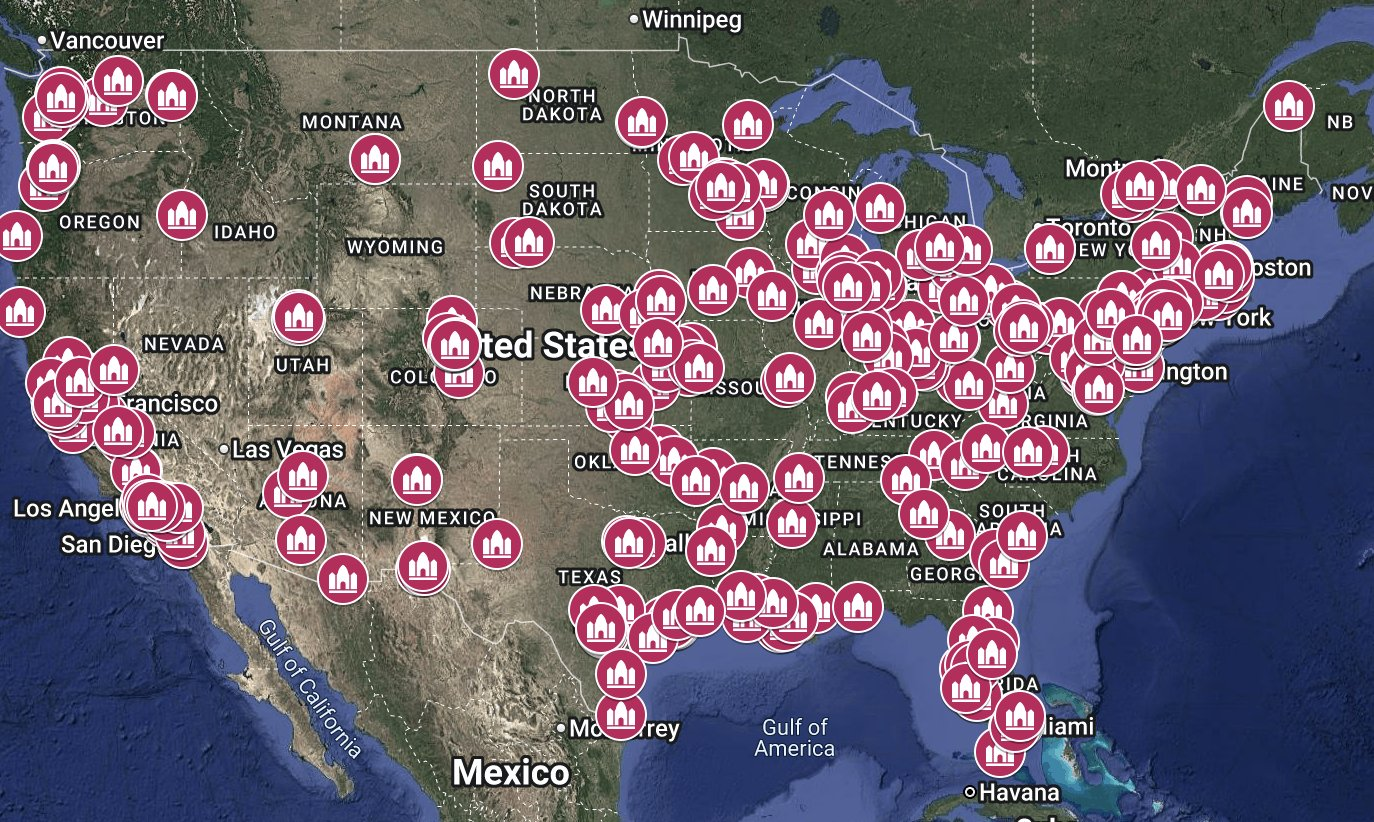
Since May 28, 2020, there have been at least 521 attacks against Catholic churches in the United States, including acts of arson which damaged or destroyed historic churches; spray-painting and graffiti of satanic messages; rocks and bricks thrown through windows; statues destroyed (often with heads cut off); and illegal disruptions of Mass. Attacks spiked dramatically after the draft Supreme Court opinion overturning Roe v. Wade was leaked in May 2022. At least 355 attacks have been perpetrated against Catholic churches since the Supreme Court leak, with many including graffiti with pro-abortion messages. Crucially, while a handful of the attacks have included thefts, the vast majority have only involved property destruction, indicating that the primary motive is not material gain.
The attacks on Catholic churches have been widespread across the country, affecting 43 states plus DC. The top ten states with the most attacks are California (69), New York (60), Pennsylvania (36), Texas (26), Florida (23), New Jersey (20), Ohio (18), Oregon (18), Colorado (17), and Massachusetts (16).
BIO: ‘It is time to go to The Hill and lobby that it is time for RFK Jr to go.’
On the eve before the US Senate reconvenes, a detailed secret trade-association memo plotting the removal of US Secretary of Health and Human Services Robert F. Kennedy, Jr. has leaked. It reads like a coup attempt against regulatory reform—and they are spending millions to make sure Kennedy is out of office by September.
It seems that the Biotechnology Innovation Organization (BIO), whose membership includes Pfizer, Merck, Novavax, Vaxcyte, and hundreds of biotech firms that profit from regulatory insulation, has a mole. This article critiques the documented lobbying behavior of the trade group BIO, not the internal operations or clinical data of its member corporations.
When the nation’s leading pharmaceutical trade group convenes a closed-door strategy meeting and openly discusses the need to “go to The Hill and lobby that it is time for RFK Jr. to go,” the issue is no longer health policy—it is democratic integrity.
According to the apparent leaked minutes, verified by the name of the creator of the file, on April 3, 2025, BIO held a “Vaccine Policy Steering Committee” (VPSC) meeting whose internal summary, soon to be publicly available thanks to whistleblowers, reveals a campaign of strategic deception, institutional capture, and psychological warfare and exposes a campaign of institutional deception, investor protection, and coordinated sabotage of the MAHA reform platform.
According to the leaked document, titled “BIO Vaccine Policy Steering Committee – April 3, 2025”, BIO has committed $2 million—half of its cash reserve—to counter what it calls the “threat” posed by Kennedy’s rise. But this is no ordinary PR push. It is a multi-pronged campaign designed to deceive the public, silence dissent, and preserve industry dominance through influence operations masquerading as science.
Barack Obama didn’t like Hillary Clinton. Barack Obama didn’t even care about Hillary Clinton in the 2016 campaign. Barack Obama would have liked nothing more than to watch Hillary Clinton go down in a ball of flames, until something happened in 2016 that changed the dynamic.
Suddenly, Barack Obama needed Hillary Clinton to win the 2016 election…
That my friends, is the reason why so many people get lost in the story of the 2016 election and the eventual Trump-Russia conspiracy. However, once you understand what changed in those April and May 2016 moments, everything reconciles.
The U.S. government under the President Obama administration was spying on American citizens.
It started with Barack Obama and AG Eric Holder’s use of the IRS database in the 2010 midterm, against the primary threat of the Tea Party movement. However, an IRS whistleblower from the Cincinnati field office took the continued use of the IRS off the table. From the period of mid-2012 to April-2016, the administration factually and demonstrably shifted to using the power of electronic surveillance to conduct political spying operations using the NSA database and the metadata captures within it.
However, once that NSA surveillance and spying was identified in April 2016, President Obama had a problem. That’s where the Obama alignment with the Clinton ‘dirty trick’ comes into play. After May 2016, Obama needed Hillary Clinton to win the election. The rest is “Russiagate” history.
Those who remember the 2015/2016 presidential race will remember President Obama never campaigned for Hillary Clinton during the 2016 primary. After all, Bernie Sanders was potentially going to upend Clinton until the DNC stepped heavily on the scales to assist her and team Sanders was furious. Then suddenly, following the California primary, Barack went all in.
There is a distinct timeline shift during this period that most seem to overlook because “Russiagate” was/is easily the shiniest thing for people to follow. However, it was the precursor scandal, ‘spygate’, that is more critical yet gets almost no attention.
After you have a done a good deal of FIML, you will start to see semiotics as things, similar to words or memories.
FIML facilitates this process by forcing us to pay close attention to the ways we use semiotics and the ways they affect us.
Our identities, such that they are, are based on our closeness to or need for semiotics that define us, assure us, make us feel at home, tell us who we are.
Our use of semiotics in that way is very common but it is hard to grasp if we have no other basis for our identity, which few of us do.
FIML practice provides a different basis for identity than “extrinsic” semiotics, the conscious and unconscious semiotics of culture, upbringing, media, advertising, schooling, what we may think others think.
FIML partners, by constantly paying attention to the play of interpersonal semiotics, gradually will shift the bases of their identities from largely static extrinsic signs to dynamic intrinsic, or interpersonal, processes. This is what makes semiotics start looking like things rather than abstract elements of linguistic analysis.
Semiotics are things as much as words are. They differ in that there is no dictionary of them; we have to see them for ourselves and understand how they have been formed and why they affect us as they do.
Once partners do this through FIML practice, they will eventually notice that their habitual extrinsic semiotics will start to slough off, to fall away from them. This happens very naturally as a rich dynamic realm of largely error-free communication develops between them.
The falling away of habitual extrinsic semiotics that had been used to define or maintain the identity is accompanied by delightful feelings of freedom and lightness, independence and assuredness that one’s being is better served by the intimate communication of FIML than the inculcated beliefs and values of the past.
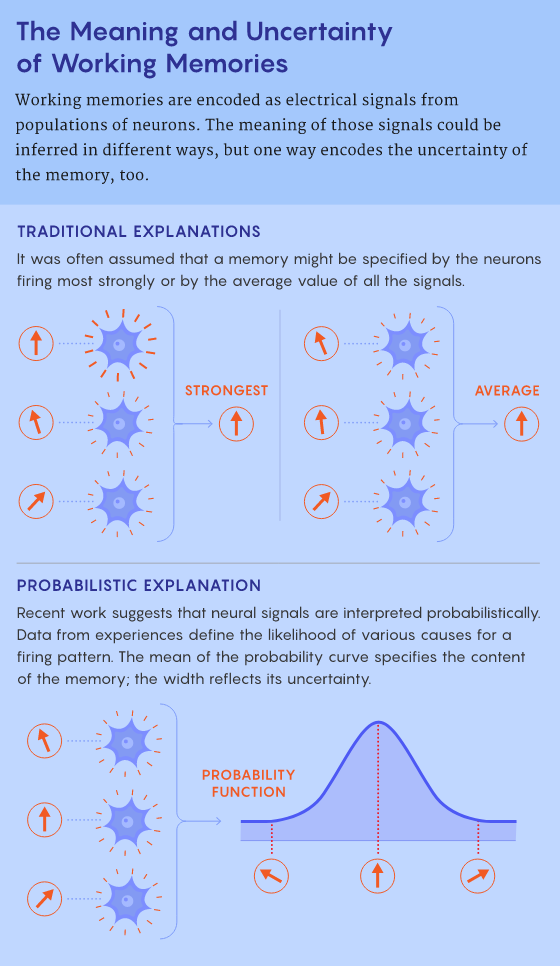
The uncertainty in working memory may be linked to a surprising way that the brain monitors and uses ambiguity, according to a recent paper in Neuron from neuroscience researchers at New York University. Using machine learning to analyze brain scans of people engaged in a memory task, they found that signals encoded an estimate of what people thought they saw — and the statistical distribution of the noise in the signals encoded the uncertainty of the memory. The uncertainty of your perceptions may be part of what your brain is representing in its recollections. And this sense of the uncertainties may help the brain make better decisions about how to use its memories.
…the idea that we are walking around with probability distributions in our heads all the time has a certain beauty to it. And it is probably not just vision and working memory that are structured like this, according to Pouget. “This Bayesian theory is extremely general,” he said. “There’s a general computational factor that’s at work here,” whether the brain is making a decision, assessing whether you’re hungry or navigating a route.
FIML practice works precisely with the probabilistics of working memory. If the range of doubt in a perception is stronger than normal, it may prompt a query. If the range is stronger than normal and may indicate danger, a query is more likely. It would make sense that our assessments of these factors would be Bayesian. When perceptions are psychologically important, any Bayesian analysis will require assessing the subjective context into which the perception enters, which implies further Bayesian analyses. It would be wonderful if we had machines that could do this for us, but they will only be invented years from now if ever. For now, we can use our own minds to accomplish this through FIML practice. If you can understand the linked article, you should be able to see the value of FIML which collapses a Bayesian probability curve into the certainty of a single point. Psychologically, when this is done hundreds of times, the results are extremely satisfying. ABN
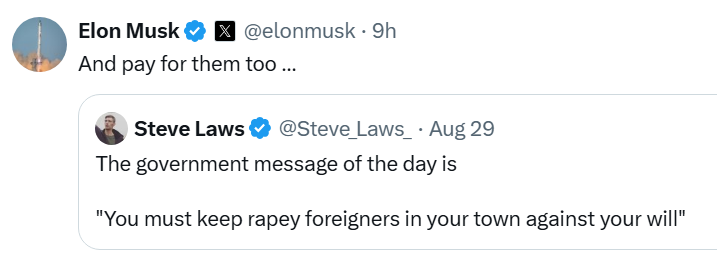
This will be part two of my reporting on this incident. Covering the police cover up, the fake articles by the Daily Mail and others in the UK media and an update of what has transpired since.
First let’s get to some additional details that were not reported by the police or the media regarding the gypsy migrant who describes himself as “the gypsy gangster.”
When the family arrived on scene Fatos Ali Dumana was seen assaulting the police officers, spitting on them and had to have a spit bag put on his head. After that, he was put into the back of police van where he went irate and was aggressively kicking the van from the inside.
According to the family, the original CCTV footage that would have shown the entire series of events has now “gone missing.” In addition to the CCTV footage’s miraculous disappearance, the family has tried to get hospital records from Ruby’s hospital visit. Unfortunately they were informed by the hospital that this request would take weeks. Have you ever heard of a simple hospital record taking weeks to get?
Because of all the fake reports from media organizations like Daily Mail, the families of the girls are in fear for their life. They’ve been harassed daily by the media, by the police, and by others in the community branding them “far-right racists” just for speaking the truth of what happened to their 12 and 13 year old daughters. The police have also given them “rape alarms” and locks to put on their doors as there are reports of violent threats against them.
It’s become clear that the UK system is now designed to help the criminals and punish the victims. I’ll continue to update this story as I hear more.
To be very brief, Karl Friston’s “free energy principle” says that the brain is an “inference machine” or “prediction machine” that uses Bayesian probability reasoning and is motivated to act by an inference seeming not true or “surprising” to it.
The free energy principle is a straightforward way to explain what FIML(note: this link will lead to recent posts and reposts, including this one, but just scroll down a bit for more) practice does, how it does it, and why it works differently than any other form of psychotherapy and in many significant ways why it works better.
A psychological “complex,” “neurosis,” “personality disorder,” or “persistent thought,” call it what you will, affects human behavior by being or having become a nexus of thoughts, ideas, perceptions, feelings, interconnected neurons and chemistry.
The same is true for any personality trait or skill, including very positive ones.
In Friston’s free energy terms, the psychological elements described above are surrounded by Markov blankets.
That means they are isolated or protected systems with their own variables. These protected systems (protected by Markov blankets) are hard to change because they have their own sets of rules and habitual inputs and outputs.
And that makes them stubborn candidates for most forms of psychotherapy, especially psychotherapy that requires a therapist. One reason for this is time & expense. A second reason is it is difficult for the patient to change without therapeutically experiencing for themself the complex or trait in real-world situations.
The key here is therapeutic experience in the real-world of the unwanted trait or complex that requires change.
The third reason most psychotherapies are ineffective is very subtle incisiveness in real-time is needed to penetrate psychological Markov blankets.
What FIML does is penetrate the Markov blanket enshrouding a complex with a series of small pricks. Each prick in the blanket is small, but each prick also allows some of the valence (gas) inside the blanket to escape.
FIML slowly punctures the Markov blanket with many small pricks, eventually causing it to collapse.
Once it has collapsed, the energies that were trapped inside it can be used for other things. In this way FIML optimizes even non-neurotic psychology by removing pockets of inefficiency held within psychological Markov blankets.
By using only small pricks to penetrate Markov blankets, FIML allows people to gradually and painlessly see what needs to be changed, why, and how to do it. Since FIML works in real-time real-world situations, even very small insights can bring about large changes.





 American Buddhist Net