Apair of Italian Air Force F-35 fighters forward deployed to Amari Air Base in Estonia were reported on August 28 to have intercepted one of the Russian Aerospace Forces’ small number of An-124 strategic transports, which are by far the largest transport aircraft fielded outside the United States.
The 32nd and 6th Wings at Amari Air Base are currently operating as part of NATO’s Baltic Air Policing mission, as the South European state has played a disproportionate role in bolstering Western Bloc air power both in Eastern Europe and in the Pacific.
The interception highlights the sustained tensions surrounding the Russian enclave of Kaliningrad, which is geographically surrounded by NATO territories placing any air, sea or land traffic between it and the Russian mainland at risk of being targeted by Western Bloc forces.
The incident follows an encounter two weeks prior between an Italian F-35 and Russian Su-27 and Su-24M fighters in the region.
Trump just put Soros on RICO watch. At the same time, Gates bailed on Arabella Advisors — the Left’s dark-money ATM. The Democrats’ secret funding sewer is collapsing. Let’s break it down. 🧵 1/21
Yesterday Trump posted: Soros & his son Alex should be prosecuted under RICO for “support of violent protests, and much more, all throughout the U.S.” 2/21
He didn’t mince words:
“We’re not going to allow these lunatics to rip apart America any more.” Elon Musk immediately backed him: “It’s high time action was taken against Soros directly.” 3/21
Meanwhile, the New York Times quietly admitted what they’ve hidden for years: Arabella Advisors — the massive dark-money machine bankrolling leftwing activism — is falling apart. 4/21
Arabella manages hundreds of funds that underwrite climate protests, ballot initiatives, racial justice groups, voter registration drives — the whole Leftwing “ground game.” 5/21
What the Times didn’t say? Arabella is tied to the Soros family. And for years it’s been the shadow money machine behind Democrat operations. 6/21
General Flynn has been warning since 2020: Arabella was the hub where billionaire money + taxpayer funds fused to fuel protests and elections. 7/21
Since virtually everything we do, think, and feel has some linguistic component it follows that our perceived valences of words and phrases will be reliable indicators of our psychological makeup.
This is especially true if our perceptions of these valences is “captured” in fraught contexts in real-world, real-time situations.
To be even clearer and more precise, it is fair to say that it is only possible to capture actual real valences in real-world, real-time situations.
When we do not work with real-world, real-time situations, we are capable only of working with the idea of them, a theory of them, a memory of them. And none of that can possibly capture the actual valence as it actually functions in real-life.
The theory, memory, or idea of a psychological valence associated with words and phrases occurs at a different level of abstraction or cognition from the valence itself.
Theories, memories, and ideas of psychological valences can be very interesting and are worth pursuing, but they are not the thing itself and as such have only a weak capacity to grasp the psychology exposed by actual valences in action in the real-world.
From these maps we can see that word groups have idiosyncratic arrangements, associations, and emphases.
And from this we can understand how analysis of interpersonal communication details can lead to beneficial changes in word group arrangements and thus also human psychology.
The video is very helpful for visualizing how words and word groups are organized in the brain. And this illustrates how and why FIML works as well as it does.
By “capturing” actual verbal psychological valences in real-time, real-world situations, partners gain immense insight into how their psychologies actually function in the real-world, how they actually deal with real life.
Focusing on very brief real-life valences has another very large benefit: though the valences are as real as they come, they are also very small, comprising nothing more than part of the working memory load at the time.
This is a bigger deal than it might seem. Virtually all of us have been trained by years of theorizing about our psychologies to see even very small incidents of real psychological valence as aspects of some theory or story about them.
No, no, no. Don’t do that. Just see each one for what it is—a brief valences that appeared briefly in working memory; and that has been “frozen” by the FIML technique as a small snapshot to be identified and understood as it is.
First get the evidence, get the data. Those valence snapshots are the data. Get plenty of them and you may find that you do not even need any theory about what they are or what caused them.
They just are. Indeed, theorizing about them makes them different, bigger or worse, while simultaneously hiding their real nature.
Most of us do not know how to think about real-world, real-time valences because we tend to always fit them into into an a priori format, a format we already believe in. That could be a theory of psychology or a take on what our personality is or what the other person’s personality is.
In the maps shown in the video, that would constitute a whole brain response to a small valence that appeared only briefly.
By using the FIML technique, you will find it is much easier and much more beneficial to reorganize small parts of the verbal map one piece at a time than to reorganize the entire map all at once based on some idea.
In practice, FIML deals with more than just words and phrases, but the whole practice can be largely understood by seeing how it works with language. FIML treats gestures, tone of voice, expressions, and so on in the same way as language—by isolating brief incidents and analyzing them for what they really are.
I don’t want to keep talking about crypto because it’s not my area of expertise.
But I want to respond to the post below because I’ve seen too many of these “feel good” assertions, as if we are on the verge of breaking away from a “dying” system and about to “earn our freedoms”.
These are luxury beliefs with no grounding in reality.
Bitcoin doesn’t dissolve the old frame. It proves how the TPS [Transnational Private Sector] rewrites frames.
Gold worked not because people “believed” in it,
but because a handful of people within states and empires enforced it with armies, trade routes, regulation and convertibility rules.
The masses just did as they’re told.
There’s a whole power structure mandate that you’re completely neglecting.
The dollar works NOT because of “habit,” but because the FIC transacts in it and the MIC enforces it globally.
Saddam shared a very similar philosophy on the dollar. That it was a fiat worth nothing based on false belief.
He quickly found out that it was much more than that.
So did Gaddafi.
Ok.
So it’s NOT just “belief” that adds value to a currency.
It’s enforcement of the power structure that punishes anyone who deviates from it.
I spoke with the mom of one of the girls (Mayah) and got the entire story that the media is covering up and lying about.
So first of all, the reporting got the names of the girls mixed up. There were 3 girls who were there who were accosted and attacked by the migrants.
Lola – Lola is the hero from the video. She’s the one with the axe defending her sister from the migrant attackers
Ruby – Lola’s older sister who was attacked and hospitalized
Mayah – Ruby’s best friend who was with them and went to call the police after Ruby was attacked by the migrants
Here’s the summary of what happened from Mayah’s mother:
“Yes. So what happened was the girls where out just walking and the man in the picture made comments to lola(the younger girl) calling her sexy and other sexual remarks then the girls started to tell this man to leave them alone and stop following them and making sexual remarks to them. After that the man’s sister (also in the picture) came around the corner and physically attacked ruby(the older sister) she grabbed her hair dragged her to the floor started to punch her then both the man and woman where kicking her in head while she was on the floor. At this point my daughter (mayah) called the police so my daughters account after that is all abit blurry. But that is when lola had the weapons she pulled them out to protect ruby. After that the man came back at lola recording her making sure she showed the weapons to the camera and antagonising her. Ruby was hospitalised after the attack with a severe concussion a tennis ball sized lump to the back of her head aswell as lots of bruises.”
Lot of people think companies like Apple, NVIDIA, Microsoft are sovereign giants calling the shots because of their multi-trillion dollar valuations.
That’s not how it works.
At all.
It’s the financiers that call the shot.
Through proxy voting and board control, they set policy on dividends, ESG, executive pay, even mergers.
Apple, NVIDIA etc may look powerful, but they’re ultimately operators inside an index fund empire. They are constrained by semiconductor subsidies, export controls, and defense-linked AI/Chip contracts.
These CEO’s rely on JPMorgan, Goldman Sachs, Citi, etc, for credit lines, bond issuance, and stock buybacks. This level of capital availability is political.
Tied to TPS interests.
Defense firms like Raytheon are structurally embedded in the MIC. Their demand is guaranteed by Pentagon budgets, not free markets.
Energy firms like Chevron are tied to FIC-MIC loops (petrodollar, US security guarantees).
The regulatory chokepoints that Trump loves to slap on US companies like export controls, antitrust threats, sanctions frameworks, making it look like he’s working for the people, is just a facade.
It’s all to simply remind firms that they’re licensed to operate within TPS rules.
The fact is that these companies are powerful at the operational level (deciding products, engineering, marketing) but subordinate at the strategic level (capital flows, bloc alignment, geopolitics).
Once a firm is swallowed by the TPS, it means financiers drive the decisions.
The Chinese People’s Liberation Army Navy and the Russian Navy have for the first time conducted a joint patrol in the Pacific, at a time of increasingly close defence cooperation between the two neighbours.
This follows the first ever deployment of Chinese submarines to Russia for joint exercises in late July.
The Russian Navy Pacific Fleet reported regarding the operation: “The joint patrol was launched in early August, after the Russian-Chinese drills Maritime Interaction 2025 had concluded in the Sea of Japan. The diesel-electric submarine Volkhov of the Pacific Fleet and a submarine of the Chinese People’s Liberation Army Navy took to patrolling along an approved route in the Sea of Japan and the East China Sea.”
The Russian submarine, a Kilo Class vessel, reportedly covered over 2,000 nautical miles during its voyage.
Russian Kilo Class Attack submarine
China has deployed warships for joint operations with the Russian Navy on multiple occasions, including in Eastern Europe and in the Eastern Mediterranean. A possible next step after joint short ranged patrols using diesel electronic submarines would be the deployment of much larger long ranged nuclear powered attack submarines for joint patrols or operations in the Pacific.
FIML is a specific semiotic, but it also says interesting things about the general semiotics of all languages and communication systems.
As a specific semiotic, FIML influences individual psychology, behavior, and thought. Since FIML rules can be generalized and taught, FIML also shows something about all languages and their uses.
FIML is a way that two people can check the specific semiotics that exists between them. Without FIML, or something like it, individuals cannot do this.
If an individual does not do FIML or something very similar in their primary relationship, that relationship will be characterized by semiotics extrinsic to the relationship and/or by illusions.
I don’t want to overemphasize the semiotic content of FIML practice, but a basic sense of how signs and symbols are interpreted can be a great help to understanding FIML.
In FIML practice, your partner can explain the “text” of what they said much better than you can interpret it. This can only happen if both partners are honest and trust each other and the interpretation/explanation of the “text” is brought up quickly enough that little or nothing has been forgotten by either partner.
As for honesty and trust, it is my guess that these areas can be a problem for people because we humans are almost always required to interpret what is said to us without any possible recourse to a better explanation. There are three major reasons for this: 1) convention, habit; 2) timing; and 3) emotion.
Taking the second reason first, timing makes it very difficult to get good information about what a speaker means because when we ask quickly enough for them to actually still be able to remember, we will appear confrontational or rude. The speaker will become flustered and often answer with an excuse rather than an explanation.
This happens due to factor three, emotion. Language evolved in hierarchical societies. To question someone quickly about what they said is to seem to question them, to doubt them. In hierarchies, we do not question the orders we are given. We wait our turn, we let the speaker finish, we don’t interrupt, etc. Yet, if we don’t act quickly—within a few seconds—the speaker will have forgotten the fullness of their mind at the moment they spoke. Their explanation for the “text,” for what they said, will be lost forever, even if we have a video recording of it.
Due to the quickness of human emotion, virtually all societies everywhere have constructed rules for listening and speaking that completely preclude a FIML-type inquiry. Most beginning FIML partners will, therefore, experience some difficulty getting used to FIML queries. Our moods, emotions, mental states, thoughts, and more have all been long conditioned by social forces that constrain us in the very place where we need more freedom—getting the real explanation from our partner to replace our interpretation.
You would never want to run a business or do an engineering project based on ambiguous interpretations, but most of us conduct our love lives and friendships in just that way.
FIML is a specific semiotic in that it deals with the communications between two specific individuals. FIML does not tell these individuals what to think, say, or believe. It merely provides a technique for them to fully explore the semiotics and all ramifications of those semiotics that occur between them. A general semiotic is one that says something about all languages. FIML fixes a general weakness that occurs, to the best of my knowledge, in all human languages.
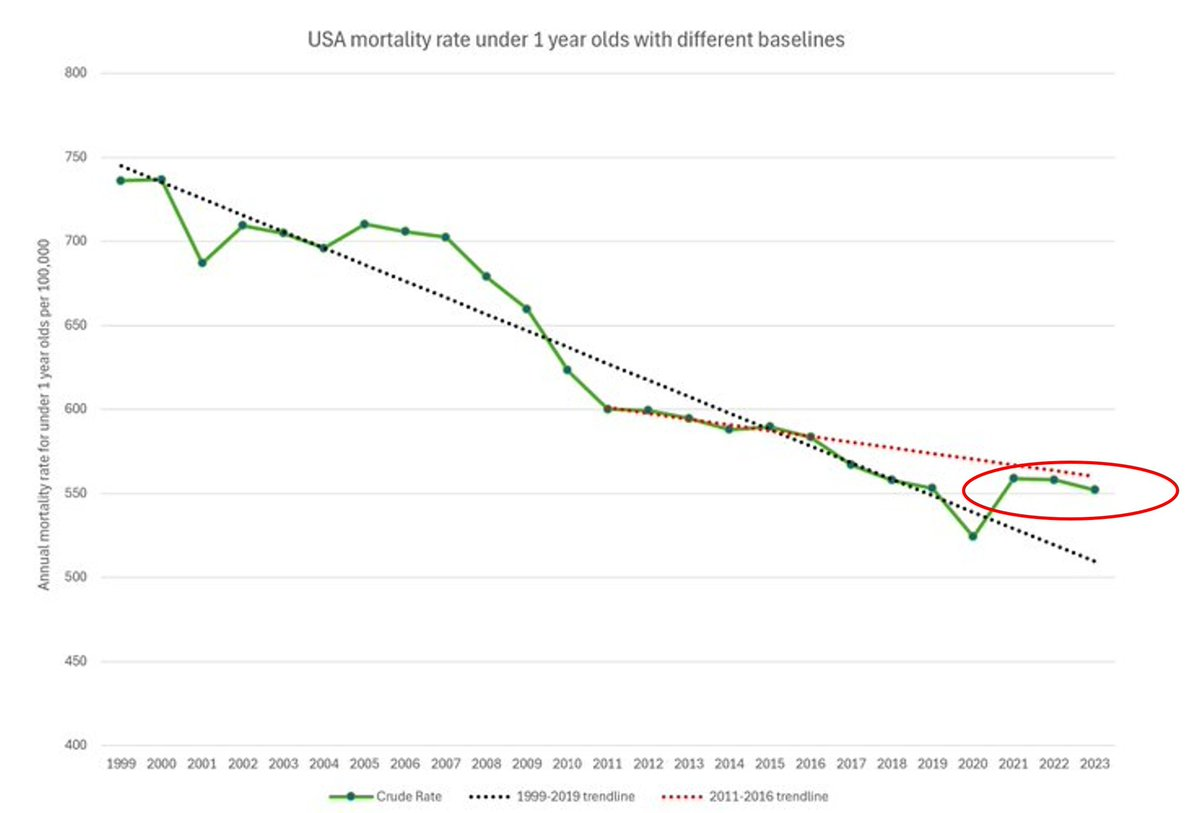
Craig’s analysis confirms Ethical Skeptic’s analysis. In her words: The prime suspect must be the injections given to and pushed on pregnant women from 2021 onwards. Until proven otherwise the injections must be stopped before more babies die. ABN
The strong and respective influences of conscious context and response-code on semantic processing of masked polysemous words demonstrate that unconscious verbal semantic representations are not automatic.
A polysemous word is a word with more than one meaning, such as bank, bark, or date.
I like this study because it works with real-time language processing and because it shows that what we consciously pay attention to greatly affects how we perceive what follows.
An article about the study says:
This series of experiments… demonstrates that unconscious cognition is not only highly complex, since it can reach the level of semantics (the meaning of words), but also shows that it seems to be extremely sensitive to conscious influences. At every moment, our conscious position influences the nature of the mental operations unconsciously unfolding within us. (Unconscious processing operates under conscious influence [emphasis added])
I would submit that when we consciously use FIML techniques when listening to our FIML partner, our listening changes greatly for the better because we have at-hand a technique to remove wrong interpretations. FIML allows us to see, as it were, the subliminal words in the study’s experiment and correct our thinking accordingly.
When we don’t use FIML, we tend to build one mistake on top of another. That is to say, listening mistakes that influence consciousness will continue to influence how we hear from that point on and that much of this influence will be unconscious.
WASHINGTON — The Food and Drug Administration on Wednesday removed emergency use authorizations for covid vaccines.
The moves were announced by Robert F. Kennedy Jr., the secretary of Health and Human Services, in a post on the social media site X, while the FDA did not put out a statement. Kennedy portrayed the actions as fulfilling a campaign promise to reverse Covid-era policies while still allowing people to access vaccines.






 American Buddhist Net