Green, derived from the Hebrew yarok (יָרֹק), is deeply rooted in Jewish texts as a symbol of life, vegetation, and renewal. It appears in the Torah in reference to grass (yerek, יֶרֶק) and pasture (Job 39:8), emphasizing sustenance and divine provision. The color is linked to the primordial state of tohu (chaos) before creation, described in the Gemara (Chagigah) as marked by a green line, representing the world’s initial, unformed potential. This ties into the Kabbalistic concept of Ohr HaMakif (enveloping light), where green symbolizes transcendent renewal and spiritual insight.
Kabbalistic and Mystical Interpretations
In Kabbalah, green is associated with balance and harmony. It is seen as a synthesis of red (passion, justice), white (mercy, purity), and azure (wisdom), reflecting the integration of divine attributes. Rabbi Isaac Arama (15th century) interpreted green as the middle path between extremes, aligning with the ethical principle of moderation in character development. This idea resonates with the broader Jewish value of shvil ha-zahav (the golden mean).
Modern National Symbolism
Since the October 7, 2023, attacks, the green uniform of the IDF has become a powerful unifying symbol for Jews worldwide. Unlike the ornate garments of the Kohen Gadol, the IDF’s practical green fatigues represent resilience, sacrifice, and national solidarity. This shift reflects a transformation in Jewish identity—from ancient priestly glory to contemporary collective defense and hope.
Cultural and Linguistic Notes
The phrase “green with envy” appears in the story of Joseph, whose brothers’ jealousy over his “coat of many colors” led to his betrayal—symbolizing how unchecked emotion can distort moral vision.
In Talmudic literature, green (yarok) also describes bodily fluids and mold (Leviticus 13:49), linking it to both life and decay, underscoring its dual nature.
The green body of The Hulk is not intentionally symbolic of Jewish identity, but the character has been interpreted through a Jewish lens due to his creators and thematic parallels.
Creator Background: Stan Lee (born Stanley Lieber) and Jack Kirby (Jacob Kurtzberg), both Jewish, co-created The Hulk in 1962. While Lee did not overtly inject Jewish themes into his work, he explicitly compared The Hulk to the Golem—a clay protector from Jewish folklore—highlighting a subconscious cultural resonance. The Hulk, like the Golem, is a powerful, misunderstood being created through science (radiation) rather than magic, embodying both strength and vulnerability.
Color Choice: The Hulk was originally intended to be gray, but due to printing difficulties, the color shifted to green in the second issue. This practical decision, not symbolic intent, established the character’s iconic look.
Metaphorical Interpretations: Some writers and fans interpret The Hulk as a Jewish allegory—a figure of exile, inner turmoil, and defensive power. Articles such as “Hulk the Jew” draw parallels between Bruce Banner’s struggle to suppress his alter ego and Israel’s defensive posture in the world: peaceful by nature but feared when provoked.
Jewish Roles in Star Trek
Key Jewish Creators and Actors
Leonard Nimoy (Spock) and William Shatner (Kirk), both sons of Ukrainian Jewish immigrants, brought their cultural experiences to the show. Nimoy explicitly linked Spock’s outsider status to the Jewish diaspora experience—logical, reserved, and different.
Walter Koenig (Chekov) is also Jewish, making three of the original bridge officers played by Jewish actors.
The Vulcan Salute: A Jewish Symbol
Nimoy based Spock’s iconic “Live long and prosper” hand gesture on the Kohen’s blessing (Birkat Kohanim) from Jewish tradition. The two-fingered V-shape mirrors the Hebrew letter shin (ש), symbolizing Shaddai (Almighty God). Though modified for television, the salute is widely recognized as rooted in Judaism.
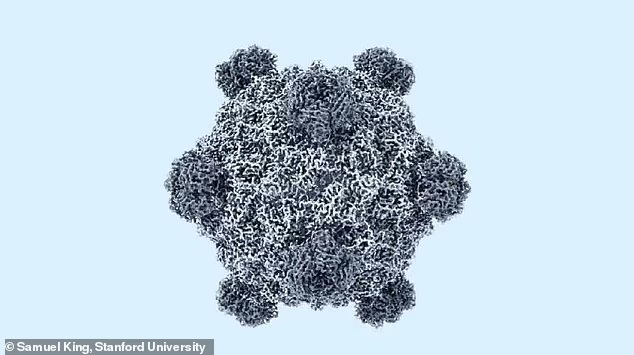
Lab–grown life has taken a major leap forward as scientists use AI to create a new virus that has never been seen before.
The virus, dubbed Evo–Φ2147, was created by scientists from scratch using new technologies that could revolutionise the course of evolution.
With just 11 genes, compared to the 200,000 in the human genome, this virus is among the simplest forms of life.
However, scientists believe that the same tools could one day create entire living organisms or resurrect long–extinct species.
This artificial virus was specifically created to kill infectious and potentially deadly E. Coli bacteria.
While only 16 were able to attack the E. Coli, the most successful were 25 per cent quicker at killing bacteria than the wild variants.
Scientists have made a major breakthrough towards creating artificial life, as they use AI to create a new virus that never existed in nature (pictured)
Translation from Latin: In this sign you will win. As a semiotician I like the use of Latin and the word sign. As a Buddhist I can support this ethos if it is reasonable and wholesomely unites the traditional West against those who are destroying it. As an American of Baltic extraction, gotta admit I cringe at knights in armor bearing crosses. Even still, I support Christian unity and wise resistance against the enemies of the West, many of whom are recent invaders and many of whom are ancient infiltrators. I believe a good many Eastern Europeans think the way I do. Both recent and ancient experience has taught us you have to be practical and work every angle to defeat a powerful pathocracy. ABN
All virtues must be wise or they are not virtues. What is wise or not can be discussed but never denied. Logos is wise. God is wise. Tathagata is wise. ABN

 American Buddhist Net