Psychedelic-induced mystical experiences: An interdisciplinary discussion and critique

Contemporary research on serotonergic psychedelic compounds has been rife with references to so-called ‘mystical’ subjective effects. Several psychometric assessments have been used to assess such effects, and clinical studies have found quantitative associations between ‘mystical experiences’ and positive mental health outcomes. The nascent study of psychedelic-induced mystical experiences, however, has only minimally intersected with relevant contemporary scholarship from disciplines within the social sciences and humanities, such as religious studies and anthropology. Viewed from the perspective of these disciplines—which feature rich historical and cultural literatures on mysticism, religion, and related topics—‘mysticism’ as used in psychedelic research is fraught with limitations and intrinsic biases that are seldom acknowledged. Most notably, existing operationalizations of mystical experiences in psychedelic science fail to historicize the concept and therefore fail to acknowledge its perennialist and specifically Christian bias. Here, we trace the historical genesis of the mystical in psychedelic research in order to illuminate such biases, and also offer suggestions toward more nuanced and culturally-sensitive operationalizations of this phenomenon. In addition, we argue for the value of, and outline, complementary ‘non-mystical’ approaches to understanding putative mystical-type phenomena that may help facilitate empirical investigation and create linkages to existing neuro-psychological constructs. It is our hope that the present paper helps build interdisciplinary bridges that motivate fruitful paths toward stronger theoretical and empirical approaches in the study of psychedelic-induced mystical experiences.

link

I have not yet read this paper but am posting it anyway because psychedelics are interesting in and of themselves and also in relation to Buddhist history and religious practice worldwide. From what I know about psychedelics, they can be very helpful to some people used the right way at the right time. I honestly do not want to encourage the use of any drugs, including many prescribed drugs and OTC ‘pain-killers’ (some are brain killers, imo), but also believe that there is abundant evidence that psychedelics have affected most religious traditions beneficially, including Buddhism. From a Buddhist point of view I wonder Are We Misunderstanding the Fifth Precept? For the record, I do not use any drugs at all except caffeine and a very occasional micro-dose of homegrown organic tobacco under the tongue for maybe 30 seconds. ABN

5 Things I Wish I Knew Before Transitioning

From a Buddhist point of view, you do not need an identity. You can walk around all day long without ever invoking any identity. An identity is a habit, a learned reference, a psycholinguistic category, one way of understanding your own name or words addressed to you, a psychological ball and chain. You do not need any of that. Your brain, life, and mind will work perfectly well with no identity at all. In fact, one of the goals of Buddhist practice is to be free of identity. Try it—walk around with no identity. You won’t fall down and will be able to get wherever you were going just fine. ABN

A Buddhist heuristic for thought & action

  1. Information arrives
  2. Analyze it; seek help & opinions of others
  3. Decide how to proceed based on what is ethically/morally right or best

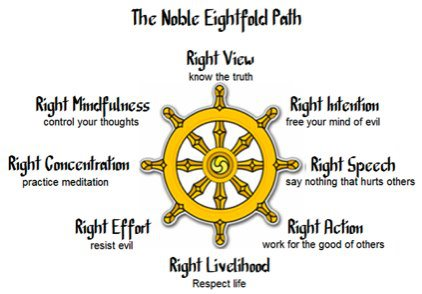
The above helps us decide where and how to enter the Noble Eightfold Path:

I noticed this morning that virtually everything I talk about with my wife and friends follows the heuristic stated above and all of that flows into the Noble Eightfold Path.

An example: The vaxxes. When they first appeared as information, I discussed them at length with anyone I reasonably could do that with. We all saw roughly the same thing—they were experimental, dubious, probably harmful, and not necessary: ergo, best to wait. Later on, after a couple of months, we were all certain that we should not take the vaxxes. Some of us also felt that we should speak about this conclusion and share it with others when opportune.

There was and still is a telling divide in the people I know. Many of my friends and family members willingly and very naturally engaged in analyses of the vaxxes and continue doing so to this day. The ones who did not want to engage in any analysis in the beginning, still will not do so to this day; all of the ones in this group took the vax.

Only one of the people who analyzed them early on took the vax, twice. Both he and his wife have vax injuries. His appear to be minor, hers are very serious. He openly regrets having taken the shot, continues analyzing vaxxes, and now also actively tries to explain to others in our circle why they should stop getting them.

Notice that propaganda and mind-control work most of all with getting people to skip analyzing information themselves and accept conclusions first being offered, then demanded. With only cursory analysis of the people making those offers and demands, it is not hard to see that their analyses are hidden, poorly done, or not done at all and that obvious objections to their demands are not answered reasonably.

I think this simple heuristic cuts to the heart of many matters, many kinds of information that arrive in our lives, both personal and public. It seems to highlight that when reason, thought, and analysis are skipped or skimped on, morality and good sense are harmed. We not only vax ourselves, we also vax our children and council others to make the same mistake. ABN

Complex Post-Traumatic Stress Disorder: a discussion

Linked below is a thoughtful discussion of Complex Post-Traumatic Stress Disorder (CPTSD).

Personally, I think we all have CPTSD for how can the basic needs of a child (acceptance and security) ever be fully met?

A core aspect of Buddhist mindfulness training is noticing disturbing psychological responses the moment they arise. The ways these responses are dealt with and cured is a major focus of Buddhist practice.

The discussion linked below explores mindfulness in CPTSD therapy. It also describes the therapeutic concept “co-regulation,” which entails two people mindfully regulating or curing unwanted stressors together. (FIML does that extremely well, btw.)

Here’s the discussion. It’s a good read.

-Behaviors serve a purpose and are maladaptive attempts to meet an unmet need and trauma survivors generally have maladaptive behaviors which came from shame and recreate shame. If you struggle with an eating disorder, substances, or other compulsive or destructive behaviors, honor the need you were trying to get met, the feeling you were trying to feel/not feel, and work on addressing that in a substantial way instead of focusing on controlling symptoms or shaming yourself for “bad” behavior

-our childhood relationship solutions are our adult relationship problems. Complex trauma is attachment trauma, so we are all impacted primarily in our ways of relating to ourselves and others. Be gentle with yourself for the childhood solutions (fawning, complying, running, clinging, manipulating, avoiding, etc) that are now causing adult relationship problems. Don’t label yourself as co dependent or rush yourself to not feel what you feel – you’ve been programmed this way and it takes conscious unlearning and practice to create new patterns

-there is nothing wrong with craving deep, meaningful, secure relationships. We are meant to be connected and healing takes place not just in our relationship with ourselves but our relationship with others. Often children with complex trauma will develop one of two attitudes to cope. A) if I’m good enough I’ll be lovable or B) fine I don’t need these people anyways. If you need love and the needs are unmet those needs become so painful we sometimes shut them down, which creates inner tension because the deep need for attachment and love never truly goes away, it’s just repressed. Unfortunately, some “recovery from co-dependency” can mimic this message of needing to be independent, self sufficient, and shut down the need for co-regulation and attachment.

-co dependency isn’t about your relationship with anyone else,‘ it’s about a lack of a relationship with yourself

-identifying and healing my nervous system and attachment patterns and rebuilding self trust are the two most important parts of my healing (The main things I’ve learned as a CPTSD survivor and trauma therapist so far)

first posted FEBRUARY 18, 2020

The original post linked above has been deleted. The excerpt above is either all of it or the gist of it. I posted it because it is a very natural voice of someone with real life experience. I also like it because it is a clear description of what underlies poor interpersonal communication. FIML not only fixes problems like these but also raises interpersonal communication to its full potential. ABN

Reframing Race

This reframe is very close to how Buddhist karma should be understood. Karma is mainly a forward-looking understanding of the mind-stream. The only thing I would add to Scott’s talk’ is the networking should be sincere. Phucktons of phony networking is one reason our politics and major institutions have become bloated, rotten, ineffectual, virtue-signaling, civilizational dead-ends (which are so lost in the dark they’ve allowed CRT to flourish). ABN

If you are a conservative Christian who feels there is a “woke” movement attempting to subvert your civilization out of your hands

You feel exactly like a Roman Pagan did 1700 years ago

Christianity was the woke movement of Rome

And this is it’s bizarre story

Christianity was an urban bureaucrat movement

It seized control of the late empires bloated institutions and used them to impose their ideology

This is just like the Woke activists in your government

And just like you – the wholesome rural Roman people did NOT want this

[This is a good thread but the images do not unroll well. I added one editorial comment in the text near the end. This tale is stated simply but the analogy is highly appropriate. ABN]

Continue reading “If you are a conservative Christian who feels there is a “woke” movement attempting to subvert your civilization out of your hands”

A beautiful contemplation

Some twenty percent of the world stood up against covid malfeasance—the lies, the harmful non-treatments, mandates, and bans. Despite censorship and name-calling, this twenty percent of the world found each other. We found cures, effective medications and how to get them. As our families and friends rejected us, we found each other and shared humor and wisdom. It’s worth spending some real time just contemplating how wonderful and beautiful this side of covid has been and still is. This is the energy that will lead us away from evil and toward the good. With no one to help us but ourselves, with no indispensable leaders, about twenty percent of the world chose freedom, reason, compassion and wisdom. ABN

New AI filter rolled out on tiktok. 😳

I see this AI filter as an illusion similar to Buddhist illusions of the small self or ego; the deluded self which clings to imported illusions akin to AI filters or self-generated illusory filters such as narcissism or almost any personality construct since all of them are false constructs—communicative illusions and expectations—that cover over and obscure authentic thusness of real being. The day may come when AI will help us see through all this. Our real fear of AI transhumanism is that it will be the false-humanism we have always known but made stronger and even harder to escape from. Buddhism is all about escaping the delusions of the false self, escaping the cage the false self constructs around itself and projects at others. A good AI program might be one whose highest level of thought is the Buddhadharma complete with its morality/ethics and realization that all identities, selves, and filters are false constructs. ABN

Continue reading “New AI filter rolled out on tiktok. 😳”

Buddhists ran sophisticated medieval hospitals in Sri Lanka — heated pool, forceps, acupuncture

Acolossal statue of the Buddha, surrounded by cells for monks who conduct daily prayer services. That might be how we imagine a Buddhist monastery today. But for many who lived in present-day Sri Lanka a thousand years ago, that was what a hospital looked like.

Religious leaders throughout history have sought to care for their followers in various ways, and Buddhists were no exception. In fact, excavation projects in Sri Lanka have come up with the ruins of medieval monastic hospitals of a scale that hasn’t yet been seen anywhere in South Asia—even in India, with its long-standing Ayurvedic tradition. With new archaeological data, historians can now reconstruct these medieval healthcare administrations, endowments, and facilities.

link

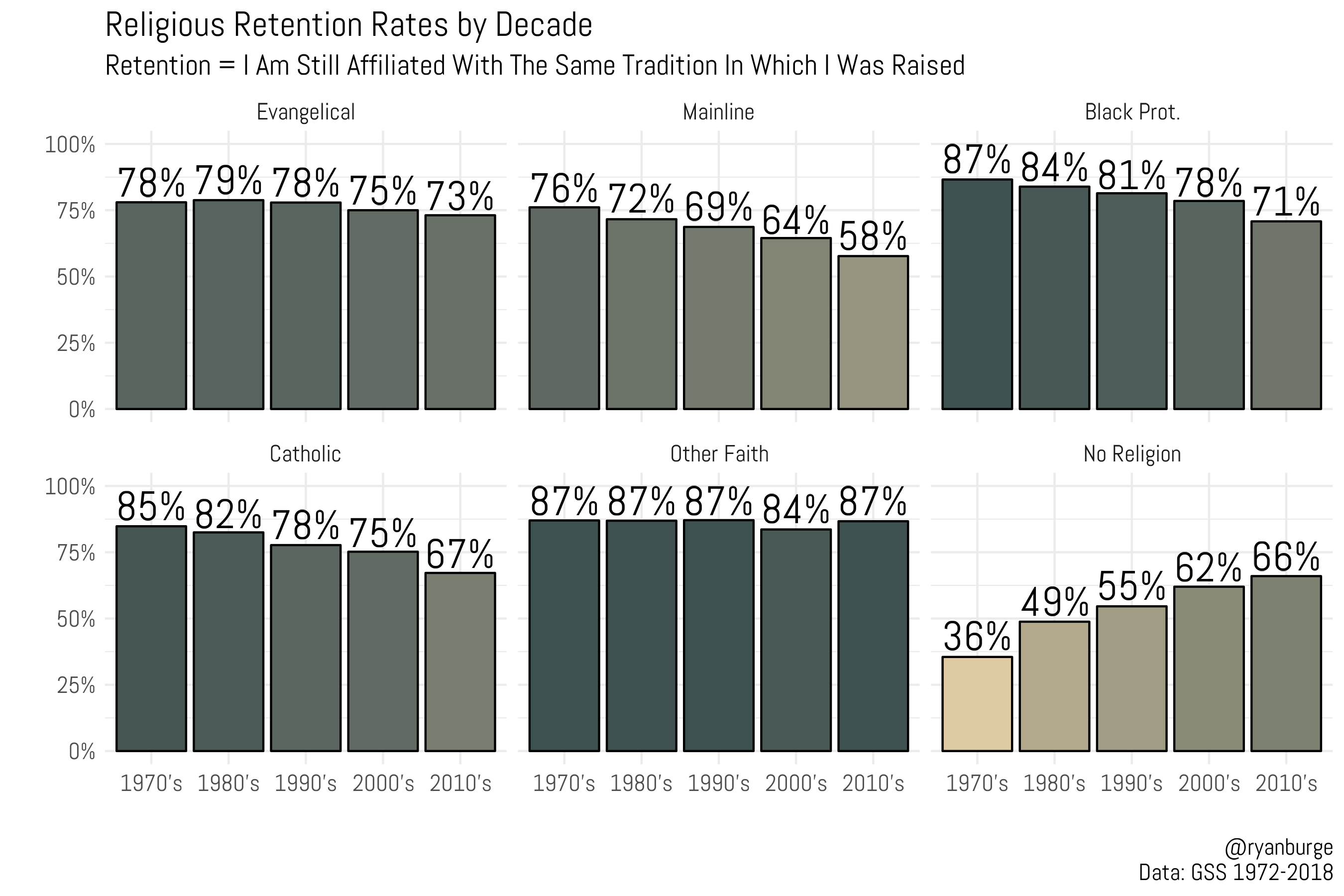
Religious retention rates

Fundamentally a religion is held together by a vocabulary. The vocabularies of many religions have overlapping meanings or mutually understandable interpretations. This does not mean they are the same but it does mean that today and throughout human history, religions have more or less aimed at similar ideals and goals while also differing about what those are and how to get them. Religion is a top-level meaning which determines the meanings of words (and values, beliefs, etc) beneath it. In this sense, atheism is a religion, scientism is a religion, as are many political movements and sometimes science itself.

For some, gender, sexual, or racial identities are also religious. This shows how strong the power of top-level vocabularies can be in that they can be based simply on physical attributes or imagined ones. It would be good if more people understood that no person knows what God is or what happens after death or what the Buddha meant by never discussing these issues because to describe them is to reify them in ways harmful to experiential religious understanding. I wish more people would see religion as described here because this illuminates religion’s: 1) enormous importance; 2) its ever-present variety; 3) its depths of possibility; and 4) its universal nature. Fundamentally, a human language (with attendant beliefs, values, etc) cannot exist without a religion. ABN

Global Workspace Theory: mistake awareness (and correction)

Global workspace theory is a description of how our minds work. The word global refers to the whole mind or brain, not the world.

The central feature of this theory—the global workspace—is conscious working memory, or working memory that could be made conscious with minimal effort.

This global workspace is also what a great deal of Buddhist mindfulness attends to. If we focus our attention on what is coming in and out of our global workspace, we will gain many insights into how our minds operate.

The Buddha’s five skandha explanation of consciousness can be understood as a form (or percepta) entering the global workspace.

Consciousness is the fifth skandha in the chain of skandhas. It is very important to recognize that whatever we become conscious of is not necessarily right.

With this in mind, we can see that being mindful of what is entering and leaving our global workspace can help us forestall errors from forming and growing in our minds.

In the Buddhist tradition, ignorance (a kind of error) is the deep source of all delusion.

But how do I know if the percepta or bits of information entering my awareness are right or wrong?

Well, there is science and Bayesian thought processes to help us, and they are both very good, but is there anything else?

What about my actual mind? My psychology? My understanding of my being in the world? How do I become mindful and more right about these?

Besides science and Bayes, I can ask an honest friend who knows me well if the percepta I think I just received from them is right or wrong.

If my friend knows the game, they will be ready to answer me before my global workspace changes too much. If my friend confirms my interpretation of what they just did or said, I will know that my interpretation (or consciousness) is correct.

If they disconfirm, I will know that my interpretation was incorrect, a mistake.

This kind of information is wonderful!

We calibrate fine instruments to be sure we are getting accurate readings from them. Why not our own minds?

This kind of calibration can be done in a general way, but you will get a general answer in that case. If you want a precise reading, a mindfulness answer, you need to play the FIML communication game.

first posted

Elizabeth Koch ridiculed for NYT interview in a weird (but all too normal) manifestation of her main fear

Elizabeth Koch, 47, who grew up in in a $13 million mansion in Wichita, Kansas, spoke to the Times about the trauma she faced thanks to her wealthy upbringing, and her comments sparked fierce fury from social media users who branded the outlet as ’embarrassing’ and ‘humiliating’ for giving the billionaires a platform ‘to rehabilitate their public images.’

Elizabeth stated that being around so much money as a kid left her severely damaged, thanks to the deep ‘fear’ she developed over being judged for her riches and her long-lasting struggle to impress her powerful father.

link

One of the core concepts in Buddhism is that life in the “heavenly realm” can be a negative thing, principally because there is no impetus to comprehend the Four Noble Truths. A life without knowledge of suffering encourages clinging, which generates even more problems. I am instinctively on Elizabeth’s side, even without reading the NYT interview, because I am certain her suffering is real. Her audience of people who can understand her is obviously small, and that makes her position even more lonely. Very good-looking people, especially if they are also talented, can also suffer enormous pain due to the envy of the people around them. Envy and hatred of people who are wealthier or better than us generates terrible karma. When someone like Elizabeth speaks her mind, why not listen respectfully and take it in? I personally live simply and generally relate more to lower and middle class people than to wealthy ones, but I know wealthy people also suffer and can be excellent human beings. The Buddha himself was born into a very wealthy royal family. ABN

Buddhism and ethical signaling

Buddhism is very much a system of ethics. Buddhist practice is founded on the Five Precepts of refraining from killing, stealing, sexual misconduct, lying, and the irresponsible use of alcohol.

In most Buddhist traditions, these precepts are often taught as if they were fundamental to the workings of the universe. But how can morality be fundamental to the workings of the universe? Why does morality even matter to human beings?

If we think of a human being as a signaling system, we may be able to show that ethical thoughts and behavior are of fundamental importance to the system itself.

Human signaling systems signal internally, within themselves, and externally, toward other people. Our most important signaling system is the one we share with that person who is most important to us, our mate or best friend. Let’s confine our discussion to this sort of primary signaling system.

If I lie to my partner or cheat her, I may gain something outside of our shared signaling system, but that signaling system will suffer. And when that shared system suffers, my own internal signaling system will also suffer because it will contain errors. It will no longer be in its optimal state. Similarly, if she lies to me or cheats me, our mutual signaling system will become less than optimal as will both of our individual, or internal, signaling systems.

My own signaling system cannot grow or become optimal without my partner treating me with the best ethical behavior she can muster. And the same is true for her with respect to me. And we both know this.

We would be good to each other anyway, but it is helpful to see that our being good to each other has a very practical foundation—it assures us optimal performance of our mutual and internal signaling systems.

FIML practice is designed to provide partners with a clear and reasonably objective means to communicate honestly with each other. FIML practice will gradually optimize communication between partners by making it much clearer and more honest. In doing this, it will also optimize the operations of their mutual and individual signaling systems.

To my knowledge, there is nothing like FIML in any Buddhist tradition. But if I try to read FIML into the tradition, I may be able to find something similar in the way monks traveled together in pairs for much of the year. I don’t know what instructions the Buddha may have given them or how they spoke to each other, but it may be that they did a practice with each other similar to FIML practice.

In any case, if we view human being as a signaling system, we may be able to claim that clear signaling—that is, ethical signaling—is fundamental to the optimization of that system.

First posted 02/03/13, revised 09/25/17

Lokavipatti Sutta: The Failings of the World

“Monks, these eight worldly conditions spin after the world, and the world spins after these eight worldly conditions. Which eight? Gain, loss, status, disgrace, censure, praise, pleasure, & pain. These are the eight worldly conditions that spin after the world, and the world spins after these eight worldly conditions.

“For an uninstructed ordinary person there arise gain, loss, status, disgrace, censure, praise, pleasure, & pain. For a well-instructed disciple of the noble ones there also arise gain, loss, status, disgrace, censure, praise, pleasure, & pain. So what difference, what distinction, what distinguishing factor is there between the well-instructed disciple of the noble ones and the uninstructed ordinary person?”

link

These “eight worldly conditions” are often referred to as the eight winds. Contemplating these eight conditions is a beneficial Buddhist practice. Contemplation prepares us for them and informs us how to respond. ABN

How Lamborghini-driving grifter posing as a weed mogul swindled $35 million out of LA’s elite from his Calabasas mansion – once owned by Kylie Jenner – to fund his lavish lifestyle before it all went up in smoke

The handsome international sportsman, who represented UCLA and the Philippines in the decathlon, roared around Los Angeles in his yellow Lamborghini, returning home to his wife – a former model – and daughter – a model – for lavish parties in the mansion once owned by Kylie Jenner.

To his friends he was a jet-set businessman who generously included them in his lucrative deals and was involved in California’s booming marijuana business.

The pristine image fell apart when friends learnt to their horror that Bunevacz’s seemingly-gilded existence was indeed a sham – after he was arrested and charged last year over a $35million fraud. 

link

The eight winds of Buddhism formed a cyclone around Bunevacz and many were blasted and battered by the turbulence. ABN