Narcissistic vengefulness. They view the exposure of that text thread as the beginning of the public recognition that Charlie was betrayed.
It was the launch pad for people with common sense asking “why hide the fact that Charlie’s views were changing about Israel, unless it’s somehow relevant to his assassination?”
“Why didn’t Turning Point, or Erika back Candace up when she told the truth?”
It was the first crack in their narrative. Were they not guilty, they would be tremendously grateful to the people who exposed the truth about Charlie’s final days.
As I have said many times, Turning Point execs possess a dangerously low emotional IQ. They don’t know how innocent parties behave. They can’t even imitate innocence. Anger towards Joe Kent makes them look worse. Were I running their PR, I would have had Joe Kent on the Charlie Kirk show. Instead, they send Israeli attack dogs on him.
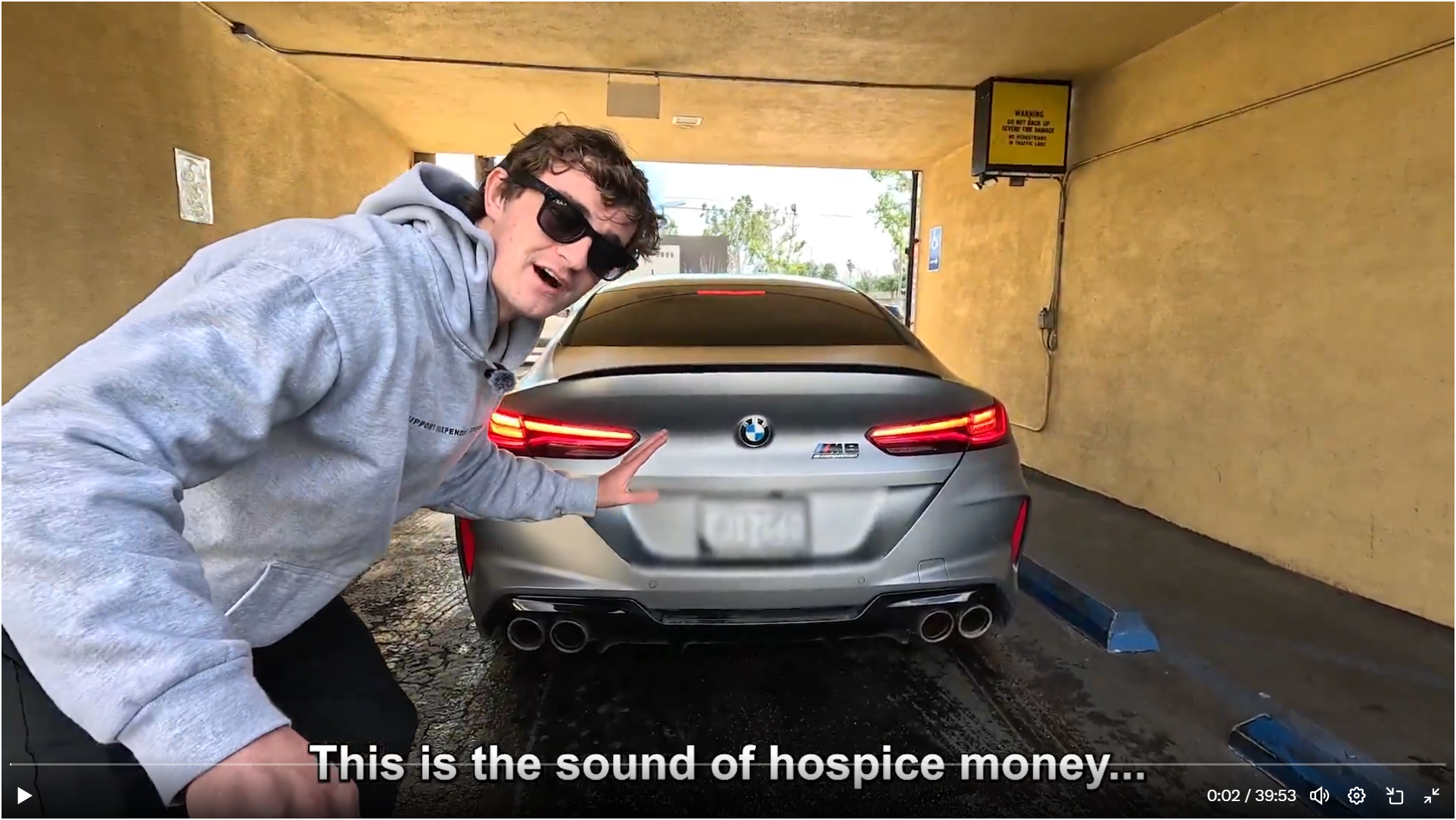
Here is the full 40 minutes of my crew and I exposing California fraud, Minnesota was big but California is even bigger… We uncovered over $170,000,000 in fraud as these fraudsters live in luxury with no consequences. Like it and share it, the fraud must STOP.
We ALL work way too hard and pay too much in taxes for this to be happening. These fraudsters have been able to defraud American taxpayers for years without any pushback from the public and politicians.
It is time to EXPOSE IT ALL and end America’s fraud crisis.
…One he witnessed handling the solitude better than most was Kaczynski, who didn’t speak to him for months.
‘He was able to handle the Supermax almost to a point of surprising the staff,’ said Hood. ‘He beat the system in one sense because it never seemed like it ever got to him.
‘He would always have books and in various languages, I think it was six or seven different languages he knew.’
Met with Kaczynski’s initial silence, Hood decided to employ similar tactics to those of the TV detective Columbo.
‘I said, “Kaczynski, over the weekend, I was reading some stuff,” and again very distant, he said, “That’s good, what was it?” I said, “The manifesto that you wrote.” And that’s the first time, after like six months or seven months, that he finally really connected with me. I could tell that I hit a nerve.
‘He goes, “You read my manifesto?” I just simply said, “I read it,” and then I played the Columbo guy. I said, “You know what, Kaczynski, it’s almost like Shelley, the lady that wrote Frankenstein. That was almost like the manifesto, where there’s a monster but it’s technology. Technology could be for the good. In this case, you’re seeing the negative part of the technology.”‘
Brief, mildly interesting glimpse into their dismal lives. Kaczynski was an exception to the rule because he was very intelligent and had been manipulated/ programmed by MKULTRA. He was not a born criminal or someone who turned to crime due to social and biological deprivations. ABN
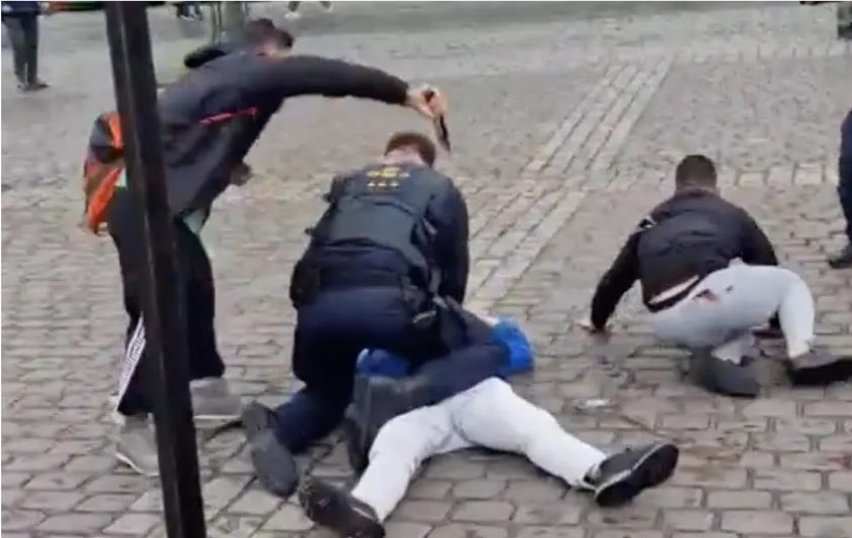
This happened not too long ago, and if you focus on it really hard and think about it over and over, you will understand what is happening to White countries.
A Muslim was trying to stab Germans in Germany.
A brave German stopped the muslim.
The German police arrested the German defending his people instead of the m*slim attacking his people.
The Muslim then stabbed the police officer arresting the brave German.
White people are stopping white people from defending white people from all of the filthy third world monsters that have invaded our homes.
I don’t understand why any white man would do this to his own kind, but if they don’t stop, there will be nothing left in 10 or 20 years.
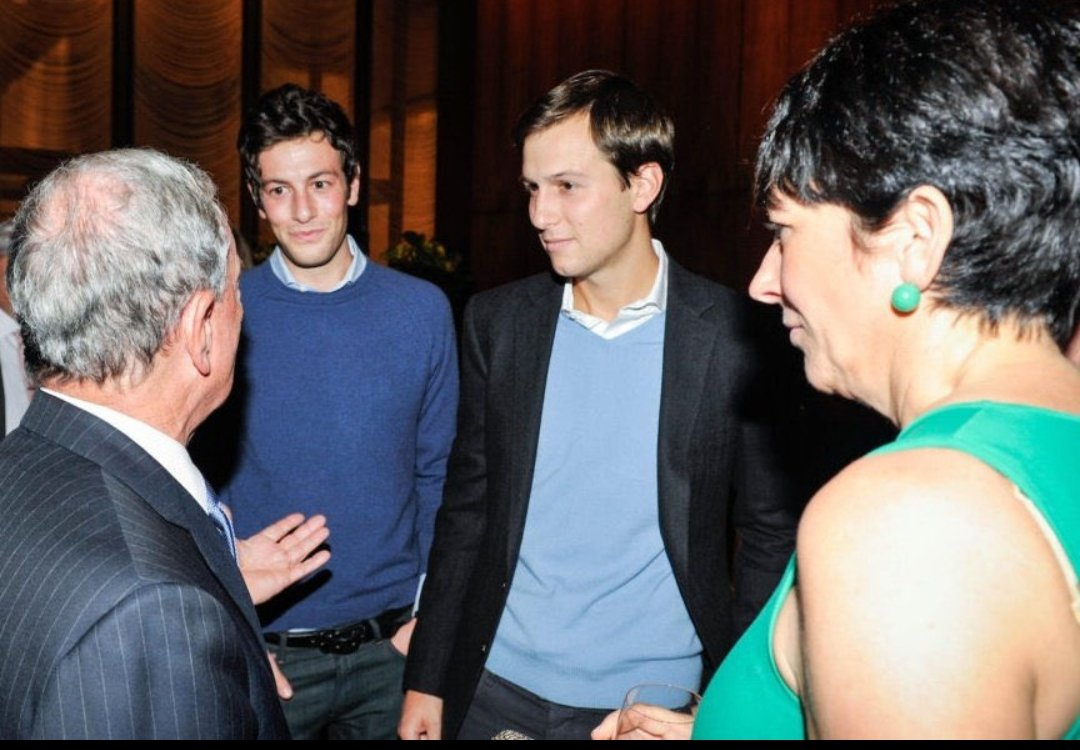
You want to know why I wasn’t surprised to see Jared Kushner in this picture with Ghislaine? Because sexual blackmail is normal for these people, and they get rewarded for it!
Look at his father. It’s the Epstein playbook.
Charles Kushner, Jared Kushner’ father, pleaded guilty in 2005 for fraud, tax evasion, and witness tampering. Court documents detail how he paid a prostitute $10,000 to lure his brother-in-law (a cooperating witness in the tax probe) to a New Jersey motel, where the encounter was covertly recorded. Kushner then mailed the video to his sister (the witness’s wife) to silence her testimony.
What kind of person does this to their sister?
He served about 14-16 months before release. Kushner was then pardoned by President Trump on December 23, 2020, which cleared his record and allowed him to resume professional activities (he had been disbarred in New Jersey, New York, and Pennsylvania). Trump then nominated him as the U.S. Ambassador to France on November 30, 2024; he was confirmed by the Senate in early 2025 and assumed the role in July 2025.
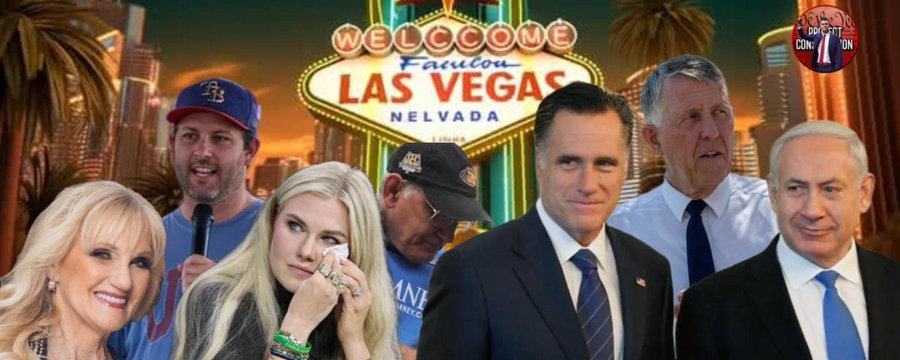
Listen, I’ve spent the last six months buried in this research, and let me be blunt—it’s the kind of revelation that hits you like a freight train. We’re talking about the “Mormon Mafia,” a sneaky, slithering network of Latter-day Saints elites who’ve been wrapping their coils around American politics, gambling empires, and global intrigue for generations. And right at the head of this venomous snake? Mitt Romney, that smooth-talking, flip-flopping senator from Utah who’s been doing shady business with Israeli Prime Minister Benjamin “Bibi” Netanyahu for over 50 years—yes, you read that right, more than half a century, starting back in 1976 when they were young guns at the Boston Consulting Group, scheming up corporate plays that reek of elite control.
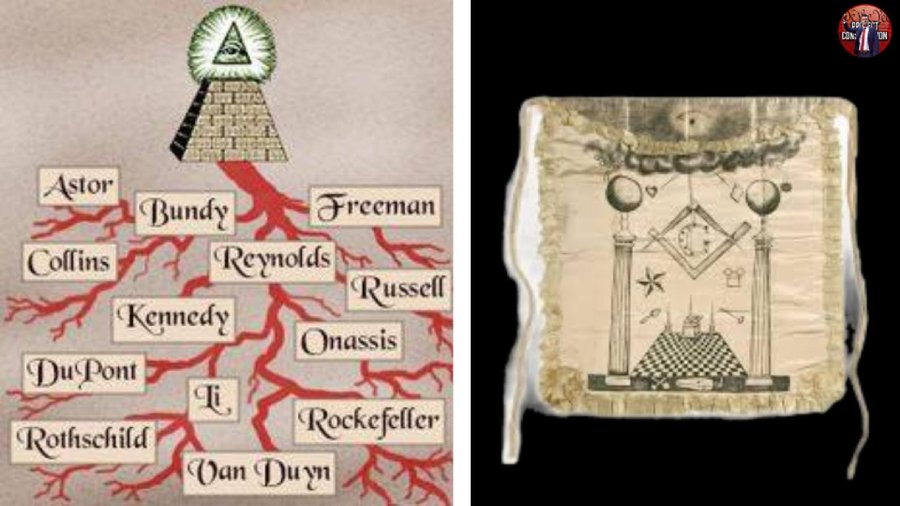
This isn’t some casual bromance; it’s a calculated, poisonous alliance blending Mormon secrecy with Israeli intelligence and Rothschild banking muscle. But here’s where it gets personal and explosive: This web ties straight into the Charlie Kirk investigation. Through Utah/Arizona’s slimy Mormon families like the Farnsworth’s and the Frantzve’s (Erika Kirk’s crew), we begin to see how this mafia could have struck Kirk down in Utah— a state they have a tight grip on with an iron fist, squeezing out any opposition. Erika, now calling the shots as TPUSA CEO, comes from a lineage steeped in gambling grifts and government scams. I’m laying it all out with the receipts, so buckle up: From Freemasonic origins to Vegas takeovers, this is the truth they don’t want you to see.
I’m not here to play games or soften the blow—this is about calling out the snakes who hide behind piety while sinking their fangs into taxpayer pockets and silencing threats. I’ll break it down piece by piece, drawing from ironclad sources like The New York Times, Politico, The Times of Israel, NPR, The Telegraph, Mother Jones, and Fritz Springmeier’s eye-opening Bloodlines of Illuminati. By the time we’re done, you’ll see why Utah was the perfect kill zone for Kirk, and how the Frantzves’ casino roots and the Farnsworths’ charter school hustles are just tentacles of this monstrous beast.
The Mormon Mafia’s Dark Beginnings: Freemasonry, Secret Rituals, and the Illuminati Connection
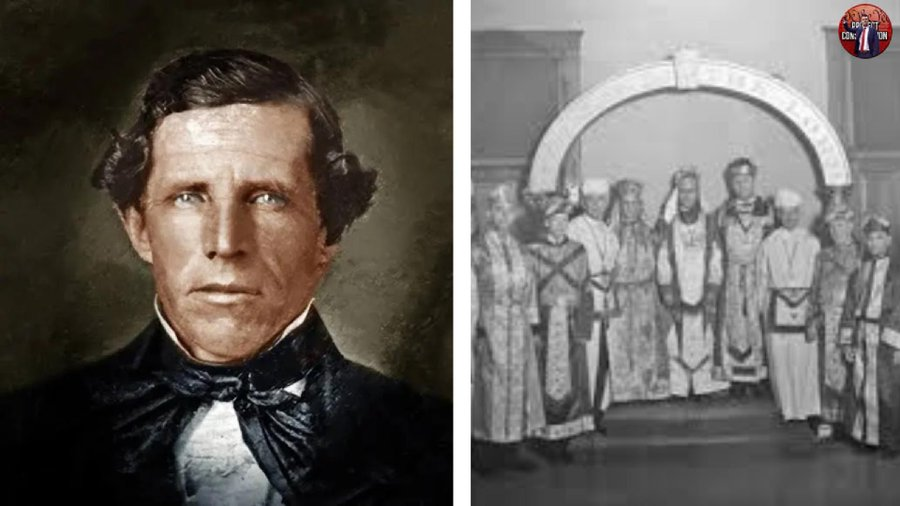
To understand this mafia, you have to start with the founder of Mormonism himself, Joseph Smith—and trust me, it’s not the squeaky-clean story they tell in church. In 1830, Smith launched the Church of Jesus Christ of Latter-day Saints (LDS), but by 1842, he was deep into Freemasonry, the secretive fraternity known for its elite networks and occult symbols. On March 15, 1842, Smith was initiated by Abraham Jonas, Grand Master of the Illinois Grand Lodge, in Nauvoo, Illinois. The very next day, he was raised to Master Mason—the top level. Boom— the Nauvoo Lodge exploded to over 1,500 members, mostly Mormons, in record time. This wasn’t organic growth; it was a takeover.
Take Smith’s Masonic apron from 1842–1844: A silk piece backed with muslin, emblazoned with symbols like the square, compass, and all-seeing eye—straight from Freemasonic rituals. These elements seeped into LDS temple ceremonies, including secret handshakes, oaths, and penalties for breaking silence (though the church toned them down later). Fritz Springmeier’s Bloodlines of Illuminati (1995) nails it: “The Mormon Leadership” is one of 13 Illuminati bloodlines, with Smith borrowing Masonic rites to build his empire (see page 1: “The people of the world are an audience to which the Illuminati entertain with propaganda… the whole world lies in the power of the wicked one”). Springmeier argues this ties Mormons to global occult control, including the Rothschilds as puppet-masters.
Why does this matter? Freemasonry’s core—secrecy, loyalty, and brotherhood—created the “mafia” ethos: An inner circle that operates above the law, blending religion with power. Brigham Young, Smith’s successor, expanded this into polygamous colonies in Utah and Mexico, building insulated communities with ties to Mexico (key for the Farnsworth family, who have roots there). The Farnsworths exemplify this legacy: Eddie grifted millions from charter schools accused of taxpayer scams, while David pushed bills for connected interests like Lori Frantzve’s EMP panic play. Terryl Farnsworth, the TPUSA camera tamperer, grew up with Tyler Bowyer—same neighborhood, same high school, generations of Mormon bonds. This isn’t chance; it’s a deliberate network, rooted in Smith’s Masonic playbook.
And the crypto-Jew twist? Mormonism has hidden Jewish elements, with Smith’s rituals echoing Kabbalah (Jewish mysticism). The Rothschilds, as banking overlords, are said to fund such “crypto” ops to infiltrate Christian groups—positioning Mormons as a controlled “bloodline” for bigger agendas (Springmeier, p. 1). This sets the stage for the mafia’s jump to big business.
A disgraced Catholic bishop who was accused of visiting a notorious Mexican mega-brothel 12 times in one month was abruptly arrested on his way out of the country.
Bishop Emanuel Shaleta, 69, was detained at San Diego International Airport on Thursday after church members accused him of pocketing up to a million dollars from the Chaldean Catholic Eparchy of St. Peter the Apostle.
According to the San Diego County Sheriff’s Office, Shaleta was charged with eight counts of embezzlement, eight counts of money laundering and one enhancement of ‘aggravated white collar crime.’
The Pillar previously reported that the bishop was expected to travel to Rome this week.
A church member originally contacted police with accusations against Shaleta in August 2025.
The Vatican ordered an investigation alongside the Sheriff’s department after allegations of financial fraud and personal misconduct came to light.
Investigators alleged that Shaleta took at least $427,345 from parish accounts, issuing so-called reimbursement checks that he signed himself.
Shaleta was also allegedly seen frequenting a Gentleman’s Club in Tijuana that has been described as a brothel where women and girls have allegedly been trafficked and forced to work.
The FBI claims a rifle was fired from 142 yards away at a UVU event.
So we did something no one else has done — we used the physics of light vs. sound across 6 independent cell phone recordings to measure the actual distance to the source.
Light arrives instantly. Sound at 343 m/s. The delay = the distance.
Expected delay at 142 yards: 379ms Measured delay: 35ms
It looks like the sound of the shot was merely sound effect used to make it appear Kirk was killed by a rifle shot from the roof. Imo, Bray’s work on the weapon used to kill Charlie is the best to date. ABN
This is oldish news but Dore puts it well. It is almost as likely that Ghislaine Maxwell is free as a bird and not in prison. Both of them were valuable members of the ruling elite and spent decades working for their tribe. To fake Epstein’s death is child’s play at those levels as is finding a live body-double to serve Ghislaine’s time. Just as they never went into Fort Knox to check on the gold, they will never check the DNA of Ghislaine’s body-double or Brigitte’s to determine her sex. Epstein’s body-double was quickly cremated. ABN

 American Buddhist Net