Roy Kelton Orbison (April 23, 1936 – December 6, 1988) was an American singer, songwriter, and musician known for his impassioned singing style, complex song structures, and dark, emotional ballads. His music was described by critics as operatic, earning him the nicknames “The Caruso of Rock” and “The Big O”. Many of Orbison’s songs conveyed vulnerability at a time when most male rock-and-roll performers chose to project machismo. He performed while standing motionless and wearing black clothes to match his dyed black hair and dark sunglasses.
It is very easy to understand the fear and hatred Poles and Lithuanians have for Russia which dominated them for centuries. Still, I think they are making a big mistake if they widen this war. And that mistake is based on the mistake of three decades ago when Lithuania, at least, could have declared neutrality and worked as a bridge between Russia and Europe. There is karma at work in this. How it will unfold is impossible to predict. But neither country has the military might to defeat Russia. Even all of Europe does not. So the US neocon proxy war against Ukraine will expand to involve more of Europe and possibly all of Europe. No one will gain except the neocons who will stand over the ashes of Europe and Russia, sole ruler of the West. Incidentally, precisely this scenario—with a ruined America included—is a common Chinese fantasy of how China will come to dominate the earth. ABN
Ten men accused of being part of the Rochdale grooming gang are set to stand trial charged with sexually abusing girls as young as 13 in the early 2000s.
The men are accused of 74 offences, including rape, sexual activity with an underage girl and human trafficking within the UK for sexual exploitation.
The charges relate to alleged incidents involving two teenage girls between 2003 and 2008.
Eight of the men appeared on Wednesday at a pre-trial hearing at Manchester’s Minshull Street Crown Court. Two did not attend court due to medical issues.
They spoke only to confirm their names and no pleas were entered for the multiple horrific crimes each is charged with.
I am posting this because it was a huge story some years ago. The main complaint about it was nothing was happening to correct the problem. Its distinguishing feature was Pakistani male gangs sexploiting white British girls. ABN
Conclusion : After a thorough investigation, it has been determined that the Marianne Bachmeier video is indeed real. The full, original footage of the video is available online, and its authenticity has been supported by eyewitness accounts, expert opinions, and analysis of the video quality and context. While the video remains a controversial and tragic moment in history, its impact on the justice system and society at large continues to be felt.
Section Six of the Diamond Sutra has been added. A link to the sutra can be found at the top of this page.
This section starts with Subhuti’s direct question: “World-honored One, can sentient beings, upon hearing these words, really be expected to believe them?”
In his answer, the Buddha emphasizes morality and goodness: “Even after I have been gone for five hundred years there will still be people who are moral and who cultivate goodness.”
Morality or “goodness” (without modern semiotic baggage) is the foundation of the “three trainings” which are essential to attaining enlightenment. The three trainings are morality, meditation, and wisdom.
Morality is the foundation because only when we are behaving morally and have a clear conscience can we meditate properly. Meditation can also be understood as concentration or mindfulness. An impure or immoral mind is confused and distracted by lies and harmful behaviors. The Buddha emphasizes this point when he says just below the line quoted above that “…if someone has so much as a single pure moment of belief concerning this teaching… they will be intimately known and seen by the Tathagata.”
Buddhist teachings often stress the importance of “belief,” “faith,” or simply having “confidence” in the Dharma. Belief alone or blind faith is not what is called for. But having enough belief or faith in the teachings to pursue them and continue learning from them is.
If you enroll in a school to learn some skill, it is important to believe that the school will teach you that skill and it is important to have faith in your teachers and confidence in the course material. It is also very helpful if you really want to learn that skill. It is in this sense, that “belief” and “faith” are stressed. In different times and places, this sort of faith or confidence will manifest in different ways. In some cultures, a scientific “coolness” will seem right. In others, reverence and warm acceptance will seem better.
“…if someone has so much as a single pure moment of belief concerning this teaching… they will be intimately known and seen by the Tathagata.”
To be “intimately known and seen by the Tathagata” is to awaken the Buddha mind in yourself, to sense your Buddha nature.
The Buddha then says: “And what is the reason that these sentient beings will attain so much infinite goodness? These sentient beings will not return to the laksana of self, the laksana of human beings, the laksana of sentient beings, the laksana of souls, the laksana of laws, or the laksana of non-laws.”
Laksana means “mental dharma” or “mental thing.” It is often translated as mark or characteristic. Readers of this site might appreciate that laksana are quite similar to semiotics. Semiotics are communicative signs that operate in the mind both internally (when alone) and externally (when communicating with others). If we do good deeds while dwelling on the semiotics of our selves, our actions are less pure than if we have no semiotics that reify the inauthentic “self.”
In section three of the Diamond Sutra, the Buddha said: “Subhuti, if a bodhisattva has laksana of self, laksana of human beings, laksana of sentient beings, or laksana of a soul, then he is not a bodhisattva.”
In this section, the Buddha says that the goodness attained by “a single pure moment of belief” will keep a sentient being “from returning to the laksana of self…” The purity and clarity of insight will be great enough to turn the sentient being away from confused and false semiotics toward enlightened Buddhahood.
The Buddha adds “laksana of laws, or the laksana of non-laws” to his statements on laksana. In this case, “laws” means the Buddha’s basic teachings on the five skandhas, the eighteen realms, the twelve nidanas, and so forth. “Non-laws” mean his teachings on emptiness.
To be clear as a bell, the Buddha repeats his point saying that a Bodhisattva “…must not cling to laws or non-laws, and this is why I have often said to you monks that even my teachings should be understood to be like a raft; if even the Dharma must be let go of, then how much more must everything else be let go of?”
We can see that the Buddha is not asking for belief alone or blind faith, but rather clear comprehension that the enlightened mind cannot be found among laksana/semiotics. At the same time, he also recognizes that laksana/semiotics are necessary at many stages of our development. This is what the raft metaphor means—you use a raft to cross a river, then you leave the raft and keep going. Similarly, you use laksana/semiotics/ideas/concepts/beliefs/confidence to get you further along and then you leave these “mental things” once they have served their purpose.
House Republicans are demanding increased transparency from President Joe Biden on his personal tax returns after an investigation found one of his corporate entities reported nearly $10 million in revenue without detailing the sources. The president’s critics believe the sudden influx of money may be related to allegations of bribery against the president.
CelticCapri Corp, an S-corporation for the president, was not listed on the president’s personal tax returns or campaign website, raising eyebrows as to why the 46th president would conceal such a large income source from the public. While it is common to not list corporate revenue on a personal income statement, politicians running for national office typically disclose all sources of income in an attempt to appear as transparent as possible.
The fifth section of the Diamond Sutra has been added. A link to the sutra can be found at the top of this page or here.
In this section, the Buddha continues his discussion of laksana (marks, characteristics) by asking, “Subhuti, what do you say, can you see the Tathagata in his bodily laksana?”
In this context, Tathagata means an “enlightened Buddha,” with an emphasis on enlightened. This question could reasonably be interpreted to mean, “…can you perceive the enlightened state of a Buddha through mundane (bodily) characteristics or marks?”
Subhuti answers, “No.” He then explains himself by negating “bodily laksana,” which are essentially delusive and thus not profoundly real.
The Buddha confirms his answer and emphasizes its import by saying, “All laksana are delusive. If you can see that all laksana are not laksana, then you will see the Tathagata.”
Thus, enlightenment and the generosity and wisdom upon which it is based or of which it is a manifestation cannot be perceived by mundane (bodily) laksana. In fact, the Buddha says, to become enlightened you must be able to see that “all laksana are delusive.”
A common interpretation of this section is that that the word laksana refers to the thirty-two marks of a Buddha. Since these thirty-two marks are discussed later in the sutra, it probably makes more sense to interpret them straightforwardly as “bodily laksana,” indicating mundane perception of the enlightened state.
The thirty-two marks or signs are also know as the thirty-two marks of a great man.
Interestingly, the Wikipedia entry on the thirty-two marks says the twenty-ninth mark is “Eyes dark brown or deep blue.” A few other pages I checked on Google claim the eyes are are “clear” and the pupils dark. Traditionally, this laksana has been translated as “blue” or “very blue.”
The Dhammawiki page linked above has this:
He has very blue eyes (Pali: abhi nila netto). Note 1: “very (abhi) blue (nila) eyes (netto)” is the literal translation. Nila is the word used to describe a sapphire and the color of the sea, but also the color of a rain cloud. It also defines the color of the Hindu God Krishna. Note 2: “His lashes are like a cow’s; his eyes are blue./ Those who know such things declare/ ‘A child which such fine eyes/ will be one who’s looked upon with joy./ If a layman, thus he’ll be/ Pleasing to the sight of all./ If ascetic he becomes,/ Then loved as healer of folk’s woes.'” (Lakkhana Sutta)
In Chinese, the Buddha’s eyes are described as “blue” or “jade-like.” Some years ago, I had a discussion with a very capable Pali translator on this point. He wanted to know what I thought (as someone who knows the Chinese) about describing the Buddha’s eyes as “clear.” I said I did not think that that was what the Chinese was saying and that, furthermore, that would be a strange meaning for ancient Chinese, as “clear eyes” is not the kind of thing they would have written. He agreed with what I said, and being an intelligent man, was amused by the whole controversy.
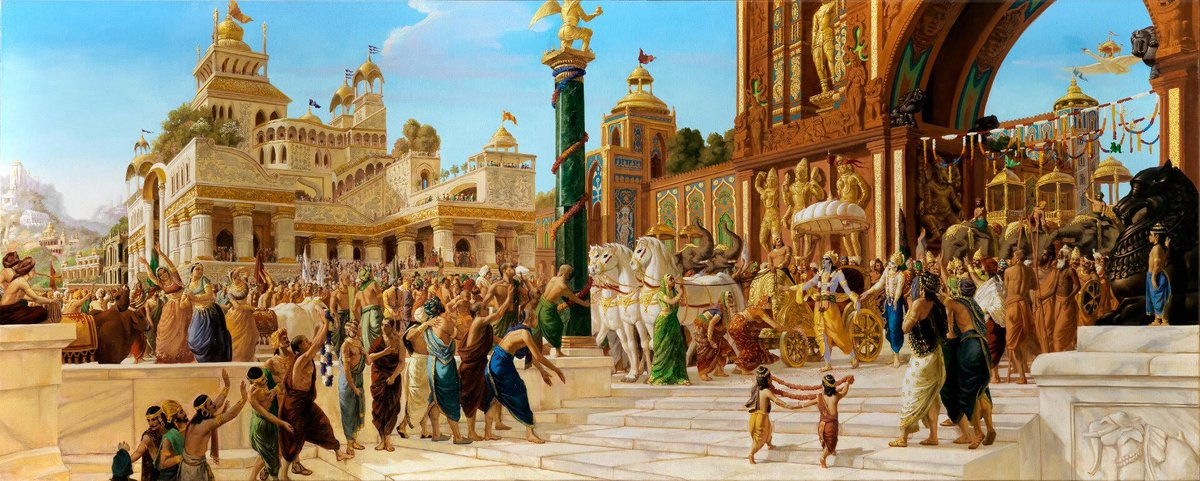
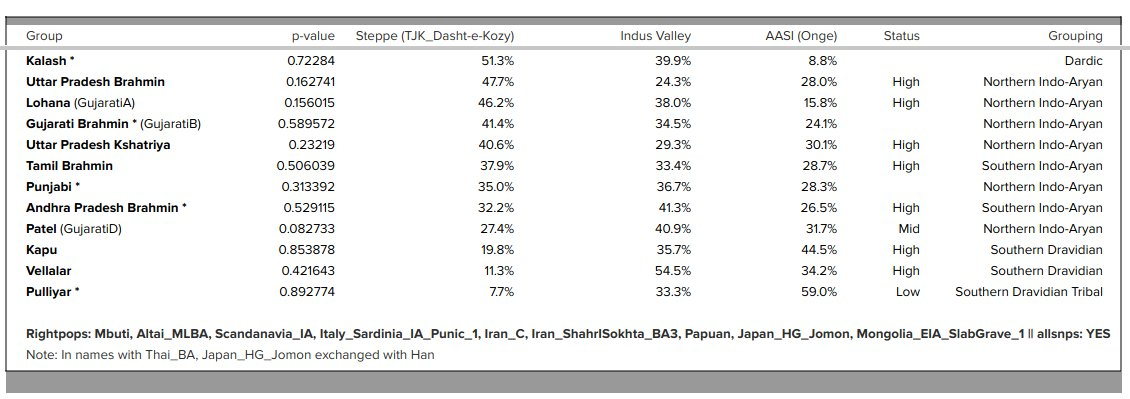
Whatever the case, I suppose it’s inevitable that PC sensibilities will enter even the history of Buddhism. It does seem likely that the Buddha, who is frequently referred to as an “Aryan,” was born into an actual Aryan family. We know he spoke an Indo-European language (Magahi) and that he could easily have had blue eyes. Alexander the Great had blue eyes as did many other people in those days.
A major interpretation of the thirty-two marks is that they are mystical and only an enlightened being can see them anyway. They are not a very important part of Buddhism. As the Diamond Sutra itself says, “All laksana are delusive.”
Still, it is fascinating to observe how people react to imagining a blue-eyed Buddha. In my experience, most Westerners who have not studied much Buddhism, imagine the Buddha to have looked Chinese. Some imagine he looked Indian. Just as Christ gained blond hair and blue eyes in some European portrayals of him, so possibly, a blond-haired blue-eyed Buddha gradually morphed into having a Chinese visage in the northern tradition and a darker Indian one in the southern tradition.