Clélia Verdier has vivid memories of giving birth to triplets. She remembers the agonizing pain of labor, the joy of holding her daughters for the first time and the devastation when one died soon after.
The only catch? She was never pregnant, never went into labor and never became a mom. In reality, she was in a medically-induced coma in a hospital the entire time.
Verdier isn’t the first to dream up a whole life for themselves while in a coma, only to wake up and discover that none of it was real.
But for Verdier, 19, from Lyon, France, it was especially complicated to come to grips with the realization that the babies she felt like she had given birth to never even existed.
While she was only in the coma for three weeks, she said the realistic dream spanned across seven years
She explained to the Daily Mail that she ‘made a serious suicide attempt by taking a large amount of medication’ in June 2025, and was placed into a medically-induced coma for three weeks.
She remembers having ‘extremely intense’ dreams and nightmares during the coma, but because she was ‘not aware that she was in a coma’ at the time, they ‘became her reality.’
One dream, in particular, has stuck with her: the one in which she became a mother.
She explained that it seemed so real and she could feel both physical and emotional pain throughout the hallucination.
Question Is higher meat consumption associated with better cognitive health among individuals with APOE genotypes ε3/ε4 and ε4/ε4, and does this association differ from that observed in other genotypes?
Findings In this cohort study among 2157 older adults without dementia, higher total meat consumption was associated with slower cognitive decline and a reduced dementia risk among older adults with APOE ε3/ε4 and ε4/ε4 genotypes. Interactions by APOE genotype were observed for trajectories of global cognition and episodic memory.
Meaning These findings suggest that higher meat consumption than conventionally recommended may be associated with benefits in a genetically defined subgroup comprising approximately one-quarter of the global population.
A specialized network responsible for washing away cellular waste in the brain might play a role in the development of schizophrenia and other psychotic disorders. In a recent brain imaging study, researchers found that young people at a high genetic risk for psychosis showed early signs of a malfunctioning brain clearance system, which was linked to a toxic buildup of stimulating chemicals. The research was published in the journal Biological Psychiatry Global Open Science.
Every day, the brain generates metabolic waste as it processes information. To keep the biological environment stable, a network called the glymphatic system flushes out this debris. This system pushes cerebrospinal fluid into the brain tissue, where it mixes with the fluid surrounding the cells. The fluid then washes away extra neurotransmitters, inflammatory proteins, and misfolded proteins.
This fluid movement is driven by star-shaped brain cells called astrocytes. Astrocytes have specialized water channels, called aquaporin-4 channels, that act like tiny valves. When these channels fail to work properly, or when the blood vessels leak, the entire clearance process slows down. Waste products then accumulate in the brain tissue, potentially causing damage.
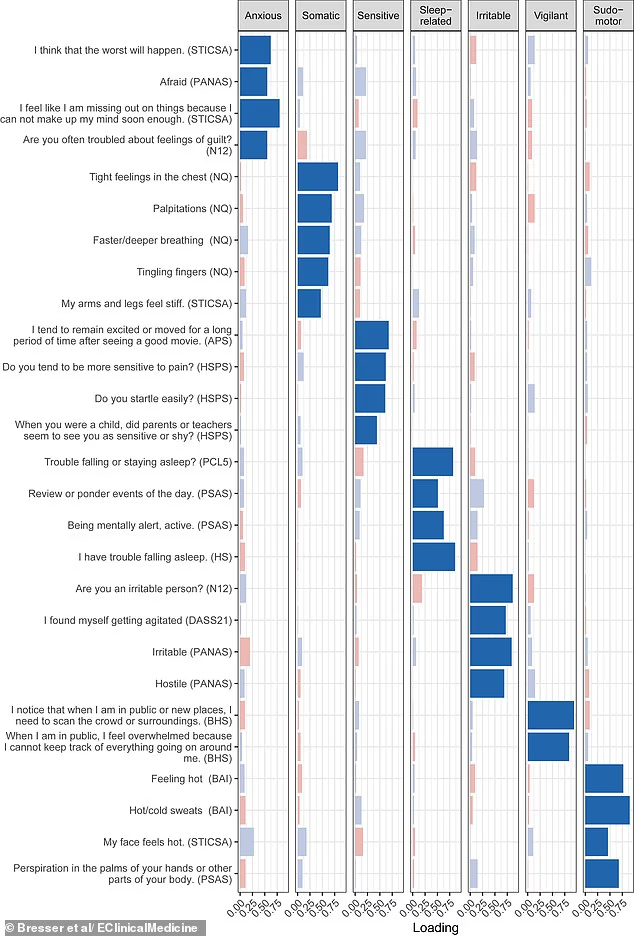
Most of us go through periods of stress in our everyday lives – but there are actually seven types of ‘hyperarousal’, according to a new study.
Researchers say the feeling of tension can be teased out into distinct subgroups.
This includes anxious, somatic, sensitive, sleep–related, irritable, vigilant and sudomotor – and each are characterised slightly differently.
Perhaps the most well–known, the ‘anxious’ feeling of tension, is defined by being worried or concerned about something bad happening in the future. It can also indicate feelings of guilt or fears about missing out on things.
Feeling ‘sensitive hyperarousal’ indicates emotional vulnerability and being easily startled, the scientists explained.
Another common source of tension is ‘sleep–related’ – defined by trouble falling or staying asleep and leading to trouble being mentally alert.
‘No previous study has addressed the unresolved question of whether hyperarousal may be one common…construct or rather has multiple dimensions,’ the team, from the Netherlands Institute for Neuroscience, wrote in the journal EClinicalMedicine.
‘This study discovered seven different dimensions of hyperarousal and provides a concise instrument to assess them.’
Psychology gets lots of stuff wrong, but generally does a good job with descriptive overviews like this. This study is based on a questionnaire of 467 adults, all of whom had some sort of psychiatric diagnosis. Seems worth thinking about. Anything well described constitutes or can lead to useful explanations, which may yield methods of control or intervention. ABN
Public opinion matters. Public opinion stopped the monkeypox bs. The more the public knows, the more reliable its opinions are. Elections matter, but it is public opinion which fuels them. Public opinion strongly favors IDs for voters. Pragmatism enjoins us to support and encourage valid public opinions. The recent ‘rise in antisemitism’ is nothing more than rising public awareness of how crazy and violent Jewish Supremists are. It is because of them and them only that we are on the verge of WW3 and the use of nuclear weapons. ABN
The revelation of the US operation marks a dramatic turn in a perplexing case that has divided US intelligence agencies for years, according to a new report by CBS’ 60 Minutes.
The secret operation used undercover Homeland Security agents to purchase the miniaturized microwave weapon from a Russian criminal network for about $15 million in 2024.
The weapon was described by CBS sources as a small, portable, concealable and unlike a traditional gun.
The mystery device is silent, does not generate heat like a microwave oven, can be programmed for different scenarios, operated remotely, and has a beam range of several hundred feet. It can reportedly penetrate windows and drywall.
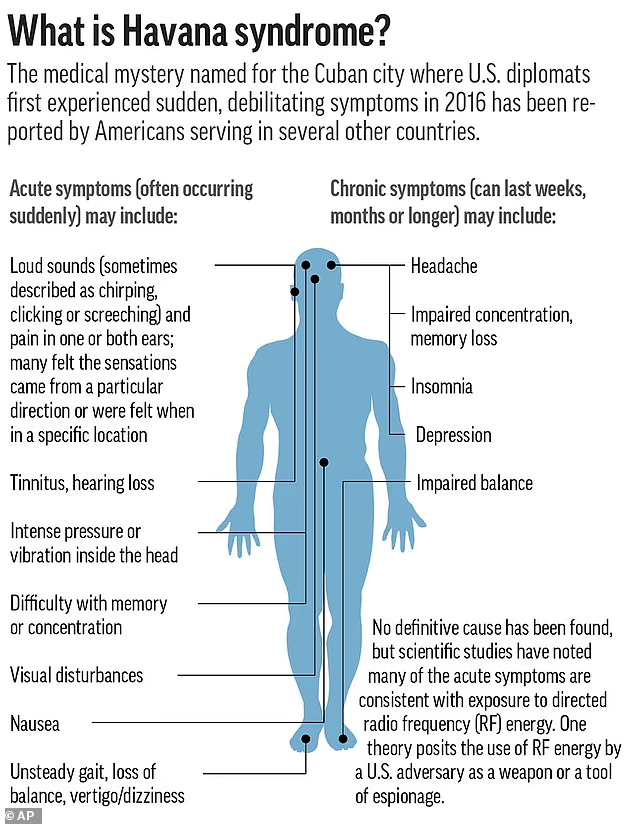
The ‘Havana Syndrome’ phenomenon began in 2016 when American diplomats, CIA spies and military personnel reported sudden, crippling symptoms.
CBS News said it did not see the weapon itself, but sources described it as small, portable, concealable and unlike a traditional gun.
The ‘key,’ sources told the program, is not just the hardware but the software – code that shapes ‘a unique, electromagnetic wave that rises and falls abruptly and pulses rapidly.’
Symptoms of Havana Syndrome include loud noise, ear pain, intense head pressure or vibration, dizziness, visual problems, and cognitive difficulties
I do not believe for one second USA did not know about this weapon. It is interesting that it can be made so small, something I did not know but am not surprised to learn. Ofc, a weapon like this sold by a ‘Russian criminal network’ is going to be well-known and owned by many intelligence agencies, both governmental and private. Attacking opponents with this sort of weapon can disable them for years, and discredit them permanently. I am sure there are many subtle levels of damage available for hostile use. We can be sure this news is coming out now for reasons other than gee-whiz or just coming clean; but I am not sure what they are. Gentle reader, do not be so naive as to think weapons like this are not used widely to disable opponents of whichever gang owns them. Covert, internecine violence in USA and throughout the West is much, much, much higher than most realize. A great deal of covert violence is done to young people, especially boys and young men, because it is close to impossible to identify what has happened to them. If your gang wants to take over USA and rule the world, they would not stop at culling the strongest and most talented young people, who might grow up to oppose them, by using weapons like this. ABN
And distorted motives warp human interactions, which in turn degrade individual psychology.
There is no way around it—the ways almost all people communicate are much cruder than their brains are capable of.
And that is the cause of most of what we now call (non-biological) “mental health” problems.
Here is an example: I want to say something very complex to my primary care doctor. I can give her the gist in a minute or two but I do not want to have that go on my medical record.
So I ask her if I can start a discussion that she will promise to keep off my record.
She says, “I’ll think about it.”
A week later I get a letter from her nurse saying she is not willing to do what I asked.
No reason why was given. Do rules prevent her from doing that? I have heard of doctors allowing patients to keep some concerns off the record, but who knows what the reality is? Do you?
If I insist, will that go on my record? Did what I asked in the first place go on my record? My doctor is trapped within or is voluntarily following some guideline that is most decidedly not in my best interests.
This same sort of thing can happen interpersonally. If I raise a topic that is psychologically important to me with even a close friend, I have to wonder will they understand? Will they allow me to expand the subject over a few weeks or months or longer? Will my initial statements change our friendship?
The basic problem is how do you discuss complex psychological subjects with others?
One of my friends works in alternative health care. She knows what I want to bring up with my doctor and admits that even in her professional setting where patients have an hour to open up, there is not enough time.
Back to my primary care doctor. I saw her again a year later and she asked if I remembered her. I said, “Of course I remember you.” She said no more and neither of us raised the off-the-record topic. An intern was with her.
I wonder what she thinks of me. Did she interpret my slightly nervous behavior when I first asked as a “sign” of something? Does she think I am volatile or bipolar or just nuts? (I am not.)
I am 100% sure that she cannot possibly know what I wanted to bring up with her. In this case, I have all of the information and I want to give it to her but she cannot or will not allow that unless my initial fumblings toward a complex subject are made public.
Even a close friend could find themselves in a similar position. And I wonder if I have done that myself to someone. Most people most of the time are not able to scale those walls that divide us.
On either side of the wall is a complex person capable of complex understanding, but one or both persons cannot scale the wall. My doctor is smart enough to have become an MD and yet I cannot tell her about a complex medical condition that is of great importance to me.
I know that I do not want to open the subject and risk a shallow public label (a common hindrance to many potential communications). I honestly do not know what my doctor is thinking. Maybe I will try again the next time I see her.
One year later: I didn’t try again. After much thought, I decided to switch doctors. And I will not bring this subject up with my new doctor. It’s a sad reality that trying at all ruined (in my mind) my relationship with my first doctor and convinced me that the topic is not one I can discuss with any medical professional in a professional setting and maybe in any setting.
__________
UPDATE: I first posted the above a few years ago. The world has changed. What I wanted to discuss with my doctor is the attacks I have suffered at the hands of Jewish Supremists. ABN.
How maladaptive and harmful signaling within the body causes complex chronic illnesses and how to fix it
Story at a Glance:
•Cells have a variety of adaptive processes they undergo to handle stress. One of the most consequential ones is cells ceasing normal functioning via their mitochondria to enter a defensive mode (the Cell Danger Response) and then initiating a healing cycle to repair themselves.
•In health, this cycle resolves itself, but in chronic illness, the CDR becomes stuck, creating weakened tissue, inflammation, fatigue, and a variety of systemic illnesses.
•Extensive research has shown that autism results from a sustained CDR, and that when appropriate CDR blocking therapies are given, significant improvement can be observed in autistic children.
•A sustained CDR underlies many chronic illnesses, and in turn, many effective natural therapies, work, in part, by alleviating the CDR, often by creating an environment which signals safety to the body. As such, understanding the CDR is necessary to understand a myriad of chronic illnesses.
•This article will discuss the treatments that have been discovered to treat the CDR, detail how we use them in practice to ensure they benefit patients, and highlight many of the different types of illness (e.g., fatigue, hair loss, COVID spike protein injuries, autism, Alzheimer’s, the inability to exert oneself with age or injured tissues that refuse to heal) which respond to appropriate CDR treatments.
In addition to all of the problems Whitaker describes in the linked article—failed diagnostics, failed theories, failed “disease models,” failed treatments, making matters worse for the mentally ill, and drugging children and minors without their consent—I would further submit that our generally accepted model of the human mind itself is as deeply flawed.
Rather than starting with the idea that humans have or develop personalities that do or don’t adapt well to some ambiguous social standard, we would do better to start with the idea that humans are fundamentally interactive beings, beings that communicate.
If our interactions are good, we will be well enough. If our communications with even one other person are deeply satisfying and as truthful as we are able, we will be even better than well enough.
People go crazy because their relations to no one are satisfying. In a very real sense, poor communication and shallow interaction condemn most humans to a sort of solitary confinement, where the inner network of semiotic reality cannot interface satisfactorily with the network of any other person’s semiotic reality.
For individuals who are fortunate enough to have a suitable partner, FIML practice will likely fix this problem while also fixing most emotional dissatisfaction. It accomplishes this by providing a means for people to fully engage their inner semiotic networks with each other.
The dead end of the traditional mental health model of a “personality-being-well-adapted-to-a-group-or-culture” is, sadly, best illustrated by the profession of psychiatry itself. I believe Whitaker is right in saying that
… it is going to be so hard for psychiatry to reform. Diagnosis and the prescribing of drugs constitute the main function of psychiatrists today in our society. From a guild perspective, the profession needs to maintain the public’s belief in the value of that function. So I don’t believe it will be possible for psychiatry to change unless it identifies a new function that would be marketable, so to speak. Psychiatry needs to identify a change that would be consistent with its interests as a guild.
If even psychiatry as a group needs to “identify a change… consistent with its interests as a guild,” it is clear that groups cannot be taken as a standard for wellness.
If even a group of doctors of the mind cannot get it right, how can any other group be expected to?
And if groups cannot, neither can cultures. And if none of that is right, neither is the notion of a “personality” that “adapts” to those vague standards.
This is an important point: groups can be and are just as crazy as individuals. In fact, many groups are crazier than individuals. The idea that people have “personalities” that must “adapt” in a way that is “satisfying” to an extremely dubious group standard is bankrupt and cannot be fixed. Of course individuals can adapt to laws and clearly stated mores and taboos, but adaptations based on such emotionally unsatisfying generalities will never produce wellness.
The individual can only be well when the individual can communicate their authentic semiotic reality with another, and in turn, receive similar communication from that other.
Semiotics is the right word to use here because its definition includes communicative signs and the meanings of those signs as they are variously interpreted by the individuals using them. Furthermore, the term semiotics implies, or necessarily extends to, networks of communicative signs and their inevitably differing individual interpretations.
“Alcoholism is one of the leading causes of disease and death worldwide, yet despite its social and health impact, available therapeutic options remain limited”
…the study focused on analysing the neurobiological mechanisms associated with alcohol use disorder by examining post-mortem brain tissue from individuals who had consumed alcohol chronically for an average of 35 years. Specifically, the researchers investigated changes in the endocannabinoid system, which is closely linked to reward and addiction mechanisms.
The endocannabinoid system is a chemical communication network that regulates essential functions such as pleasure, memory, mood, and stress response. It is composed of receptors such as CB1 and CB2, their natural ligands, and enzymes responsible for their degradation, including FAAH and MGLL. “This system acts as a fine modulator of brain function and plays a central role in reward and motivation processes”, explains Manzanares.
The researchers analysed two core areas of the mesocorticolimbic system: the prefrontal cortex, which is associated with judgement, planning, and decision-making, and the nucleus accumbens, considered the central hub of reward and habit formation.
By comparing samples from individuals with alcohol use disorder with those from non-addicted individuals, the team observed a marked imbalance in the expression of several endocannabinoid system genes. In particular, they detected a strong increase in the CB1 receptor: expression of the gene encoding this receptor rose by 125% in the prefrontal cortex and by 78% in the nucleus accumbens. “This receptor is closely involved in the reinforcement of addictive behaviours and the risk of relapse”, notes researcher María Salud García Gutiérrez, first author of the study.
In contrast, expression of the CB2 receptor gene was reduced by approximately 50% in both regions. “Since the CB2 receptor plays neuroprotective and anti-inflammatory roles, its reduction suggests an impairment of the brain’s defence mechanisms against alcohol-induced damage”, explains the researcher.


 American Buddhist Net