
Tag: psycholinguistics
Humans as networks
The advantage of seeing humans as networks is we can say interesting things about them parsimoniously.
A network is an organization of parts that are all connected.
Humans are networks of language. It is quite easy to see that language is a kind of network. Words connect in many ways and any word can be added to an existing network without difficulty. One word is defined by other words and we understand how it is used by how it functions among other words.
Humans are networks of semiotics. Semiotics function and are networked much like words, though a single semiotic may require many words to describe.
Meaning or what things mean is another network that is a fundamental part of being human. Meaning can be expressed in words, it can be apprehended through semiotic analyses, and it very often has a strong emotional component.
Emotions are another network that is fundamental to humanness. Emotions are often not as easily analyzed as the other networks since they can be vague, changeable, and based on complexities that are difficult to see while the emotion is happening. I am pretty sure that most, if not all, complex emotions are socially determined. Since semiotics are by definition communicative, the emotional aspect of all semiotics is a major aspect of both the semiotic and emotional networks. For this reason, emotions are often best analyzed through their accompanying semiotics.
Humans also have biological networks, perceptual networks, chemical and electrical networks.
All of these networks are hooked up with each other and all of them send signals internally and to the other networks.
If we conceive of a single human being as being a vast network that includes all of the above mentioned networks and others that have not been mentioned (aesthetic, gustatory, sexual, etc.), we can see that that vast network that is all of the other networks must have a basic need to be unified.
The biology must cohere and be healthy and the mind and feelings that exist together with that biology must be unconfused enough to guide the biology toward what it needs to maintain itself.
The cognitive networks (language, semiotics, feeling, reason, etc.) must have a strong tendency to forming basic conclusions about the world around them.
For example, all humans live in fundamentally uncertain circumstances. We don’t know when we will die, what happens after we die, how stable our social lives are, our economics, our biology, and so forth. To function, our cognitive network(s) must have a basic answer to the question of uncertainty. Here are some ways that people answer or respond to the fundamentally uncertain nature of human existence:
- Many just declare that this is how it is. People like this might say, “Life is tough and you gotta do what you gotta do ’cause that’s how it is.” Or, “I growed up poor so I gots to be rich now and that just how it is.”Answers of this sort, while not complex, can be very motivating. I am sure that many conventionally “successful” people deal with uncertainty on terms like these.
- For many, religion, science, or philosophy answers this question. “God said so.” “Science has shown that.” “Do as thou wilt.”
- Another common response is “No one has ever been able to answer that question, so I am going to ignore it and get all I can because you only live once.”
- In my limited experience (wish it were more limited), a good many alcoholics love the feeling of being sure or of knowing how things are. Booze activates an easy confidence of this sort and can even be charming in an occasional drunk. By the time booze is an addiction, though, this form of confidence becomes a bad habit, declining in charm as the cognitive functions are eroded by the alcohol.
- In cultures that have a belief in rebirth, the question of uncertainty is often answered by what happened in the past or resolved by what might happen in the next life.
- Some people deal with this question by focusing entirely on one thing—their career, their children, their nation, their business, etc.
- Some deal with it by facing it and finding that nearly everything produces a sense of wonder because hardly anything is known for sure. Others feel anxiety by facing it. Others anger or frustration.
I am sure that readers can add many more examples of how humans deal with fundamental existential uncertainty. What I find most interesting in thinking in this way is you don’t need to imagine a person’s ego or wonder too much about how or why their emotions developed as they did. You really just need to ask them how they deal with uncertainty and they will tell you.
The vast cognitive and biological networks of individual humans often can be understood as being based on a simple answer to a simple question like that.
Since psychological explanations are the coin of the realm today, many people will confuse themselves and others by further adding long stories about the development of their personality or how their parents treated them. These factors can be interesting and are real, to a point, but it is much simpler and more profitable to focus directly at the answer/response to the basic question of life’s uncertainty. A major bias or unifying principle of the human network can be found in a straightforward answer to that question.
Beyond this basic question discussed above, there are many other questions we can ask about a particular human network. Is the network closed or is it open? Is it complex or simple? Is it independent of social definitions/constraints or dependent on them? How well does it see itself, understand itself? Does it perceive other networks or does it see other people as two-dimensional aspects of its own network? Is it willing to interface with other human networks in complex ways or only in simple conventional or established ways? Is it secretive? Does it see the vastness of the networks outside and beyond itself? Does it see how it is connected to them?
The advantage of analyzing humans as networks is it avoids many of the ambiguities of psychological analysis. Rather than focus on such dubious concepts as personality, ego, the subconscious, or self, a network analysis simply asks how is the network functioning. From a network point of view, a personality or self is little more than a focal point, a unifying principle that provides an illusion of certainty where there need not be one and cannot really be one. A human can function perfectly well without an ego, self, or well-defined personality. Indeed, there is greater stability in seeing yourself as a complex network that is always open to analysis and always willing to add or remove parts as they show themselves to be either good or bad.
After basic network questions have been asked and answered, I think the best starting point for a more detailed analysis is an examination of semiotics and how they are functioning in the individual’s life, and especially in their communications with others. This is best done through FIML practice.
In this context, as in so many, it is important to remember that humans are entry-level conscious semiotic animals. As such, we are prone to processing semiotics with the abrupt and often violent instincts of animals. A network approach provides specificity (what semiotic are we talking about), malleability (oh, I didn’t mean that), an appreciation for the functionality of network nodes, what they are doing and how or why. Since FIML partners have a prior agreement to do analyses of this sort, it is fairly easy for them to segue from ordinary conversation to analysis of that conversation and then back to the ordinary conversation.
The human brain can process images very quickly: MIT reserachers
CAMBRIDGE (CBS) — The human brain is capable of processing images viewed through the eyes for as little as 13 milliseconds, according to research conducted by Massachusetts Institute of Technology neuroscientists.
That processing speed figure is significantly faster than the 100 milliseconds reported in earlier research, the MIT News Office reported.
The new MIT study appears in the journal Attention, Perception, and Psychophysics. In the research, investigators asked subjects to look for a particular type of image, such as “smiling couple,” as they viewed a series of as many as 12 images, each presented for between 13 and 80 milliseconds
“The fact that you can do that at these high speeds indicates to us that what vision does is find concepts. That’s what the brain is doing all day long — trying to understand what we’re looking at,” Mary Potter, an MIT professor of brain and cognitive sciences and senior author of the study, told MIT News.
Rapid-fire processing of images could serve to help direct the eyes to their next target, Potter said. “The job of the eyes is not only to get the information into the brain, but to allow the brain to think about it rapidly enough to know what you should look at next. So in general, we’re calibrating our eyes so they move around just as often as possible consistent with understanding what we’re seeing,” she said.
link
The paper is here: Detecting meaning in RSVP at 13 ms per picture.
FIML works with information rapidly entering the working memory, much of which is visual. Psycholinguistic auditory information can also be received and processed very quickly. Consider tone of voice. FIML helps partners intervene in the processing of immediate interpersonal information in order to understand its deep psychological roots. The FIML technique is fairly easy to do if it is understood that the critical focus is on information that just occurred. ABN
…a Dark City you cannot leave
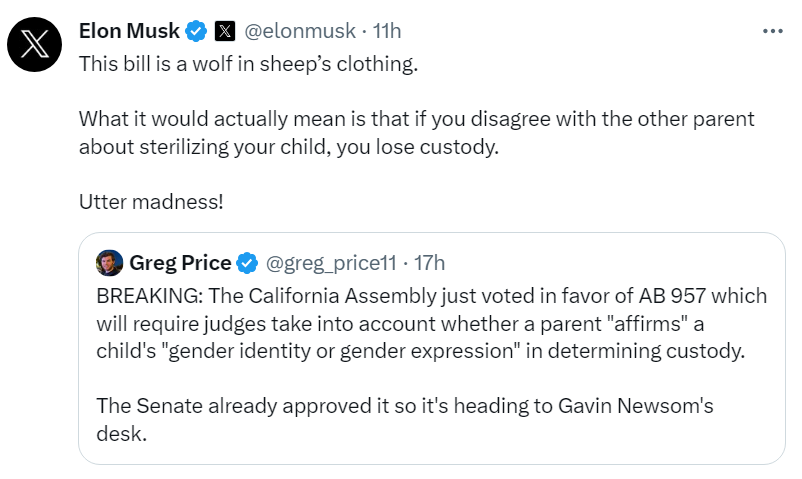
Absurd and dangerous laws like this illustrate the extremely strong bonds humans have with default vocabularies, default cognitive tautologies, default authoritarian control, default conformity. These default bonds are the core of why mind-control works and how it works. Goose any of these bonds and droves will follow. We are right now living inside a multifaceted totalitarian panopticon—a Dark City you cannot leave. Is penultimate reality that we are controlled by Satan or mired in the First & Second Noble Truths of Buddhism? ABN
The timeline for full deployment of the modern United States internet control system, is likely around late fall and early winter this year, in advance of the 2024 U.S. election cycle
I share this information with you so that you understand what is being constructed and what is about to be deployed on a large scale throughout the U.S. internet operating system. The U.S. internet will be different. The social media restrictions became more prevalent and noticeable in the past several years; now it is time for DHS to expand that process to the entire U.S. internet.
The timeline for full deployment of the modern United States internet control system, is likely around late fall and early winter this year, in advance of the 2024 U.S. election cycle.
Everything will change. Every route of online traffic including Internet Service Providers (ISP’s) to filters and rerouting on Domain Name Systems (DNS), to the Internet Protocol (IP) itself will be subject to change in the form of background shadow banning. If the DHS partnership is successful, you will not initially notice – much like a shadow banned platform user doesn’t notice their new defined status. The shift will become more obvious over time.
One odd outcome will be a regional targeting system. Depending on where you are in the USA, your online experience will be different. There will also be enhancements to your internet travel based on your profile. Good thinking users will have benefits that enhance the experience of the user and supports the interests of the national security guardians.
♦ Deployment of a Virtual Private Network (VPN) is irrelevant in this construct. A VPN is like you renting a car without a license plate. You travel past all the Automatic License Plate Readers, arrive at your destination, leave the keys in the ignition and just abandon the car. Your personal travel was essentially invisible to the APLR system. However, when the internet roads are controlled by the national security state, and there is no longer an offramp to the destination, your VPN use is irrelevant – you cannot reach your destination. That’s part of the shift.
You will notice I use the term “definition” quite often. That is because the root of every control mechanism is grounded upon defining things. When you accept the terms ‘disinformation’, ‘misinformation’, and/or ‘malinformation’, you are buying into the process that permits definitions to determine your travel. Those who define both you and your destination, ultimately control your online experience.
If you provide content online, you probably already have noticed this happening to you. Total information control by advanced AI is a modern iteration of the First & Second Noble Truths—that we suffer because we cling to delusion. Escaping our delusional group karma will require paying wise attention to the truths of our own unique mind-streams and experiences. That has always been the case in the human realm. The good side of this is it has become so obvious today (if you look) how delusions are made and propagated. Fully understanding the First & Second Noble Truths = Enlightenment. In this context, FIML has more value than ever. ABN
Malignant narcissism and identity
Malignant narcissism is an extreme form of narcissism characterized by aggression against people who threaten the narcissist’s narcissistic supply.
A malignant narcissist sees the other person as the threat, not just what they say or do.
This makes sense in that a narcissist has at some level concluded that they as a person are the standard for all things; thus, other people are blamed and attacked far out of proportion to whatever the narcissist believes they have done.
In Christian terms, the malignant narcissist blames the sinner not the sin and thus attacks the sinner, even when the sin may be as mild as a withheld compliment or a deserved rebuke.
I think all narcissists behave in a manner similar to this, though the ordinary type, which is very common in this world, is less aggressive than the malignant type.
Since narcissism is so common, one can say that in some ways narcissists have good reason to be suspicious of others and take revenge on them. There really is a good chance that they are dealing with another narcissist, who will do the same to them if they get the chance.
In a previous post, I wrote about the vortex or tautology of identity, the tautology of basing our identity on a semiotic matrix that, by its very nature, always refers back to the same “identity.” A malignant narcissist is an extreme example of this problem.
The semiotics of malignant narcissism are such that the narcissist sees his or her identity as being the person they really are. Seeing themselves in this way, narcissists apply a similar logic to others—at their core they are people who must be opposed or attacked for even the slightest perceived offense.
A group example of extreme malignant narcissism might be North Korea. If an NK citizen makes a single mistake—even a slight verbal mistake—they run the risk of being executed and also having three generations of their family sent to prison for life. The reasoning is that the original offender is a very bad person, which can be known from what they said. And since they are very bad, they must have influenced every person in their family who is younger than them and been influenced by every person in their family who is older than them.
If that isn’t hell on earth, I don’t know what is.
It is my belief that most groups, even very cute and nice ones, tend toward narcissism and many of them tend toward and become malignantly narcissistic. This happens because groups form and maintain themselves on the basis of shared semiotics, which necessarily are formulaic or simplistic.
We can see malignant narcissism in many religious, political, nationalist, or ethnic groups. The clearest sign is a disproportionate response to criticism—banishment, murder, violence, loss of employment, etc.—but narcissistic groups can also be clever and hide these responses or delay them long enough that the connection to the “offense” is hard to see.
Just as narcissistic groups cannot bear criticism, even self-criticism from within, so individual narcissists are bad at introspection. For either one, to honestly view and assess the core value (me!) is to destroy the false identity. For either one (group or individual) this would be a wonderful thing for them and others, but it is hard to do because their semiotic matrix is a tautology and they cannot admit this, or usually even see it.
first posted JULY 31, 2013

This image has been around for some time. It clearly shows how words are manipulated not just to fool us but to force us to accept lies and absurdities. This undermines the normal thought and verbal systems that guide our use of language and concepts. Once undermined this verbal-conceptual system is fairly easily replaced with a new one, which, if it is amplified in the media, will become a new normal. Once that happens, mind-control is successful. ABN
Medical Board Chief Who Wanted Doctors Delicensed for ‘Misinformation’ in Bed With PR Firm Tied to CDC, Pfizer, Moderna
The head of a national medical organization who publicly called for doctors to lose their licenses unless they supported government narratives on COVID-19 treatments and vaccines concealed his relationship with a public relations firm whose client list also included Pfizer, Moderna and the Centers for Disease Control and Prevention (CDC).
Dr. Richard Baron, president and CEO of the American Board of Internal Medicine (ABIM) is a client of Weber Shandwick, investigative journalist Paul D. Thacker reported on Wednesday.
In late 2021, Baron publicly pushed for doctors who spread “misinformation” about COVID-19 and the vaccines to lose their license and certification. Baron said then that “putting out flagrant misinformation is unethical and dangerous during a pandemic.”
Weber, the world’s second-largest PR firm, has branded its team as “misinformation and disinformation” experts and says it provides clients with services to help manage any perceived threats posed by spreaders of such information.
The firm has organized conference panels on “medical misinformation” in which Baron participated.
This is a perfect example of deadly sleazy use of the term misinformation. Misinformation and disinformation are useful terms if used properly. In this case, calling yourself a ‘misinformation and disinformation expert’ is itself mind-control through disinformation. Nearly all of our once respectable institutions have turned into sleazy lying sacks-of-shit, very sorry to say. ABN
What limits speech? In a word: Fear
If we consider speech with only one listener and look firstly at the micro level, we find it is fear of wrong word choice, wrong gesture, expression, demeanor, or tone of voice that limits our speech because a misstep with any one of these may transgress interpersonal limits.
At the meso level, it is either fear of offending or embarrassing (our understanding of) the “personality” of our listener or the fear of an actual flareup from our listener.
At the macro level, it is the fear of introducing a largish idea with sociological or career implications that might disturb, embarrass, or anger our one listener.
With two or more listeners, the analysis is much the same though the numbers of people make it more complex, until we get to so many people we are speaking to an audience. Then it becomes simpler in some ways because the micro and meso levels will be less prominent due to distance between speaker and audience and there being no clear single target of our tone of voice or phraseology.
On the other hand, an audience’s response can be more complex and problematic because more than one person can become angry at us.
Human beings thus are stuck in a game that is controlled by how most of us listen most of the time.
Stated differently, human beings have magnificent speech and communicative capabilities, but rarely get to use them to their full, best effect because one or more of the many speech limits outlined above will cause us either to hold our tongues or else risk creating a disruption in the mind(s) of our listeners.
This seems like a Big Problem to me. I do not want to spend my life constrained by those rules. FIML can help us overcome this problem but even FIML cannot do it all.
We must also recognize that our very comprehension of meaning itself is grounded in fear.
first posted SEPTEMBER 23, 2019
UPDATE: This is a main area where I have some disagreement with traditional Buddhist practice which tends to put the onus of right speech entirely on the speaker. This makes sense in many contexts but in many other contexts it can cause speakers to withhold or be timid when they should not. Or it can cause listeners to believe that speakers must always keep in mind their weaknesses and that they (listeners) are being entirely proper when they misinterpret or mis-react to someone’s speech. This kind of thinking too often leads to overly emotional responses, a greatly reduced scope of discussable topics, and an overall pettiness that constrains everyone. Placing the onus for right speech always on the speaker and never requiring right mindfulness of the listener leads to a kind of hierarchy of speech or a totalitarian view of what is right and wrong to say. In the world today, we can clearly see how speech is constrained in this way through censorship, shadow-banning, muting, shaming, deplatforming, cancelling and more with almost no good purpose ever being served except elitist control of the masses. At interpersonal levels, our speech is too often limited by the narcissistic sensibilities of listeners or what we fear those sensibilities might be. None of this is optimal good speech. In Buddhism we want to optimize speech, thought, mindfulness, and listening. It is good to be mindful of what we say, when we say it, and to whom. But it is not good to always tread in fear every time you open your mouth. ABN
Inventing your own communication system
If you know a system well and change parts of it to make it more efficient, that system will work better.
Evolution works this way “mindlessly” in the sense that we assume today that there is no plan behind evolutionary change. If something works better it tends to replace that which it works better than.
Another “mindless” example is AI systems that invent their own languages:
An artificial intelligence system being developed at Facebook has created its own language. It developed a system of code words to make communication more efficient. The researchers shut the system down as it prompted concerns we could lose control of AI. (Researchers shut down AI that invented its own language)
The linked article mentions other AI system that have similarly invented their own communication systems. These systems work but humans are not able to understand them.
All of this shows that communication systems have their own logic and that they can be made more efficient by pursuing that logic.
This is what FIML does through the use of a few new rules for speaking and listening.
FIML emphasizes and provides techniques for:
- analysis of real-time communication
- much greater accuracy in real-time communication
- much greater mutual understanding, efficiency, and satisfaction
By improving your communication system(s) and removing error from it, FIML greatly enhances psychological well-being.
FIML works with the communication system(s) you already have. FIML does not tell you what to think.
first posted JULY 27, 2017
Indeterminacy of translation and FIML
I betray my poor education by admitting that I had never heard of W. V. Quine’s “indeterminacy of translation” until last week. My ignorance is especially egregious as I have worked as a professional translator for many years.
Maybe I had heard about it but had forgotten. I am being self-reflective because FIML practice is deeply, fundamentally concerned with the “indeterminacy” of translating one person’s thoughts into another person’s head.
Quine’s thesis is not just about translating from one language to another, though there is that. It is much more about the fundamental impossibility of determining what anything means well enough to “translate” it into another context, a next sentence, into another person’s mind, or even “translating” your own speech from the past into the context of your mind today.
If I had known about Quine, I probably never would have thought of FIML because his ideas and the slews of papers written on “indeterminacy of translation” surely would have made me believe that the subject had been worked through.
As it was, I have plodded along in a delightful state of ignorance and, due to that, maybe added something practical to the subject.
In the first place, I wholeheartedly believe that speech is filled with indeterminacy, which I have generally called ambiguity or uncertainty. In the second place, I have confined my FIML-related investigations mainly to interpersonal speech between partners who care about each other. I see no solution to the more general problem of indeterminacy within groups, subcultures, or linguistic communities. Until brain scans get much better, large groups will be forced to resort to hierarchical “determinacy” to exist or function at all.
For individuals, though, there is much we can do. FIML practice does not remove all “indeterminacy.” Rather, it removes much more than most people are aware is possible, even remotely aware is possible. My guess is FIML communication provides a level of detail and resolution that is an order of magnitude or two better than non-FIML.
That is a huge improvement. It is life-changing on many levels and extremely satisfying.
FIML does not fix everything—and philosophical or “artistic” differences between partners are still possible—but it does fix a great deal. By clearing up interpersonal micro-indeterminacy again and again, FIML practice frees partners from the inevitable macro-problems that micro-ambiguity inevitably causes.
Moreover, this freedom, in turn, frees partners from a great deal of subconscious adhesion to the hierarchical “determinacy” of whichever culture they are part of. Rather than trapping themselves in a state of helpless acceptance of predefined hierarchical “meaning,” FIML partners have the capacity to sort through existential semiotics and make of them what they will with far less “indeterminacy,” or ambiguity, than had been possible without FIML practice.
first posted DECEMBER 7, 2014
Brainwaves Encode the Grammar of Human Language
Every day you hear at least some utterances you’ve never heard before. That you can understand them is partly due to the fact that they are structured according to grammatical rules. Scientists have found that the human brain may use the relative timing of brainwaves to encode and decode the structures in a sentence.
Grammar is a way of structuring information that makes language an efficient way to communicate. Knowing the grammatical rules of our language allows us to say pretty much anything we want, including things we have never heard before by combining words to (new) sentences. Being able to learn and use grammar is unique to humans. But it also creates a challenge for the science of how the brain processes human language—how do our brains, essentially a bunch of cells in a network, represent something as abstract as grammatical rules?
Scientists at the University of Edinburgh and the Max Planck Institute for Psycholinguistics study this question with the help of computer-based models. They constructed an artificial neural network that simulates key features of the brain, such as densely connected populations of neurons that show neural oscillations. Neural oscillations are wave-like patterns of activity that happen at different frequencies, some very fast and some slow. The relative timing of these neural oscillations can help the brain encode grammatical relationships between words in a sentence, as Andrea Martin and Leonidas Doumas report in a paper in PLOS Biology.
By encoding words in one oscillation, and phrases in another, the brain can keep track of words and phrases at the same time. This demonstrates how something as complex as a sentence can be encoded in the neural currency of oscillations. A key finding of the new study is that these artificial neural networks, when fed example sentences, give off patterns of energy that mimic what the brain does when it processes a sentence. Martin, lead author of the study, says: “This work helps us understand how the brain solves a complex puzzle and why it gives off the activity patterns that it does when processing language.”
In this exciting age of the brain, where we know more about our brains than ever before, being able to link basic experiences like speaking and understanding language directly to brain function is especially important. Linking our brains to our behaviors holds the key to understanding not only what it means to be human, but also to understanding how the (arguably) most complex computing device in the universe, the human brain, gives rise to our daily experiences. Such knowledge may also lead to biologically inspired advances in human-like artificial intelligence and computation.
This article was originally published by Max Planck Neuroscience on March 6, 2017. The relevant study can be retrieved here.
Read more at Max Planck Neuro.
I am posting the entire article because it’s a good summary and I do not want it to be lost. It has been taken down from Max Planck Neuroscience. The study: A mechanism for the cortical computation of hierarchical linguistic structure. This makes good sense and seems to describe something that is really happening in the brain. Being in the zone while performing complex tasks in sports or other endeavors also seems to entail brainwave patterns like these. ABN
How working memory works and doesn’t work
A new study on working memory has some intriguing insights into how working memory works and how it doesn’t work.
It’s widely known that when working memory is overtaxed, confusion results, skills decline, while feelings of frustration and anger may arise. The reason for this seems to be:
Feedback (top-down) coupling broke down when the number of objects exceeded cognitive capacity. Thus, impaired behavioral performance coincided with a break-down of Prediction signals. This provides new insights into the neuronal underpinnings of cognitive capacity and how coupling in a distributed working memory network is affected by memory load. (Working Memory Load Modulates Neuronal Coupling)
A well-written article about this study contains the following diagram and explanation:

This article—Overtaxed Working Memory Knocks the Brain Out of Sync—also contains the following passages and quote from one of the study’s authors:
Miller thinks the brain is juggling the items being held in working memory one at a time, in alternation. “That means all the information has to fit into one brain wave,” he said. “When you exceed the capacity of that one brain wave, you’ve reached the limit on working memory.”
…The prefrontal cortex seems to help construct an internal model of the world, sending so-called “top-down,” or feedback, signals that convey this model to lower-level brain areas. Meanwhile, the superficial frontal eye fields and lateral intraparietal area send raw sensory input to the deeper areas in the prefrontal cortex, in the form of bottom-up or feedforward signals. Differences between the top-down model and the bottom-up sensory information allow the brain to figure out what it’s experiencing, and to tweak its internal models accordingly. (Emphasis added)
Working memory works via connections between three brain regions that together form a coherent brain wave.
Notice that “an internal model of the world,” which is a “top-down signal” within the brain wave feedback loop, predicts or interprets “bottom-up” sensory input as it arrives in the brain.
I believe this “top-down signal” within working memory is the reason FIML practice has such enormous psychological value.
By analyzing minute emotional reactions in real-time during normal conversation, FIML practice disrupts the consolidation, or more often the reconsolidation, of “neurotic” responses. (Disruption of neurotic response in FIML practice)
FIML optimizes human psychology by helping partners intervene directly into their working memories to access real-world top-down signals as they are happening in real-time. Doing this repeatedly reliably alters the brain’s repository of top-down interpretations, making them much more accurate and up-to-date.
The model of working memory proposed in this study also explains why FIML can be a bit difficult to do. Partners must learn to allow a FIML meta-perspective or “super top-down” signal to quickly commandeer their working memories so that analysis of whatever just happened can proceed rationally and objectively. It does take some time to learn this skill, but it is no harder than many other “automated” skills such bicycling, typing, or playing a musical instrument.
first posted JUNE 7, 2018
A deep philosophical flaw of the West is the root cause of our downfall
The West has failed to analyze and understand metalevels of interpersonal communication. Our philosophies employ metalevel concepts and vocabularies but have never delved into or properly understood metalevels of interpersonal communication.
This failure to properly understand metalevels of interpersonal communication has very large downstream effects. It has retarded our religious understanding and psychologies, our group formation, our understanding of other groups, and our ability to form profound interpersonal relationships.
The basis of this claim is that when interpersonal language is deeply restricted—as ours is by this massive hole in Western philosophy—all other forms of language use are negatively affected. When metalevels of interpersonal communication are limited, so is almost everything else.
I believe our philosophers never went there for the same reason no one elsewhere has either—analysis of interpersonal metacognitive language and thought goes against a primitive human instinct to not question others too closely, especially in real-time and about usage and meaning.
The few areas of Western endeavor that have not been hobbled in this way are science, technology, and to some extent economics and politics. This is because these areas by definition must deal with metalevel concepts and thus are very capable of understanding and manipulating them, but only in their own self-described contexts. They are successful because they are practically engaged with the real-world.
In contrast, Western religions, psychologies, group formations, and intergroup communication are so severely hobbled by limited metacognitive understanding, they are all but forced to use rigid definitions of what their metacognitive levels are. Thus Western psychologies are theoretical, religions are dogmatic, group formations are formal at best or ideologically tribal, indicating the need to enforce metacognitive language and concepts rather than analyze or discuss them.
Wittgenstein came close to understanding the problem but did not provide a solution or seem to see that there is one. I hope readers of this site understand that FIML is both the solution to this problem and the best way to personally experience and come to grips with how very serious it is. ABN
first posted JUNE 1, 2023
‘My daughter was murdered by a gender ideology’: LA mom slams CPS after it took away her daughter and let her transition into a man – before she killed herself three years later aged just 19
‘My daughter was murdered by a gender ideology,’ she said at the hearing. ‘CPS took my daughter when she was 16 years old. It was helped by her public school counselor and LGBTQ group and another trans-identified girl.
‘My daughter was taken from her loving home because the state of California claims I was abusive for not affirming her trans identity. I lost my daughter over a name and pronouns.’
She went on to say that her daughter had ‘mental health issues’ and was ‘not a boy trapped in a girl’s body.’
‘Why are there so many transgender in foster care? Because this state take them from their families, tell them to run, then steals them. Parents are given one option to treat their distressed child: Affirm drugs and remove their healthy body part or else lose your child,’ she told the Judiciary Senate.
‘The abuse claim against me was finally dropped, but it was too late. The damage was done. By then, my daughter was in horrible mental and physical pain. My daughter knelt down in front of a train. She was murdered by gender ideology.’
link w video
I cannot think of any way a Buddhist can countenance what was done to Yaeli by adults. Encouraging and then enforcing a delusional ‘identity’ is the opposite of everything Buddhism stands for. To do that to a child is as bad as it gets. Buddhism is largely a gentle teaching but it is very firm on the ethics of not encouraging delusion in anyone and especially in children. To my knowledge, there is no other religion that is more squarely against what happened to Yaeli than Buddhism. Enticing, encouraging a child in their delusions and then taking her from her home and mother—this is the opposite of all Buddhist teaching. There is no way Buddhists can condone this or not speak against it. This is deeply wrong. I hope more Buddhists will join me in speaking very strongly against these laws and this kind of behavior. It is the adults who are to blame for this. ABN
 American Buddhist Net