Science, Buddhism, and FIML

In some ways FIML practice is a science.

Partners seek the best data available to determine what is being said and/or how they are communicating with each other. Their communication becomes highly objective in the sense that each partner trusts the other’s description of what they said more than their own subjective/emotional impression of what they think they heard. Based on this data, partners are able to continuously upgrade their understandings of each other.

FIML uses an extrinsic formula—the rules of FIML practice—to make this happen, and in this it also resembles science. FIML has an objective, clearly stateable and testable method or procedure for attaining its results. FIML results are also objective in that great satisfaction and better communication are measurable. FIML can be falsified by having many partners do it and not get good results, and in this it is also scientific.

In some ways, though, FIML is turned 180 degrees away from science. This is so because FIML does not have any extrinsic belief or value system that requires submission of the intrinsic, individual, unique mind of either partner. Partners who do FIML can only look to themselves to free themselves from the constraints of extrinsic beliefs, values, semiotics, behaviors, ideas, concepts, and so on. (This does not mean abandon the extrinsic, but rather become free of the constraints of the extrinsic. FIML practice, by paying close attention to speech moments, will help partners do this because they will see precisely where the rubber of extrinsic values meets the road of their self expression and/or listening.)

The FIML method gives partners the tools they need to perceive what Buddhists call the thusness of their unique individualities. The thusness or suchness of being cannot be apprehended through extrinsic semiotics, but can only be experienced by the individual.

Science, in general, does not give us insight into our suchness. Yet FIML practice and Buddhist practice, by using methods that are similar to those of general science, can. FIML differs from science in that it does not make any claims about what is objectively true “out there.” But FIML does claim that partners will vastly improve their communication with each other, and following that vastly improve their understanding of their existence, the  suchness of their unique being.

FIML may constitute an improvement on traditional Buddhist practices because FIML uses objective rules to unite two people in the pursuit of truthful communication. It is different from the traditional practice of one person pursuing “truth” alone in that FIML provides the means for each partner to constantly check his or her work against the other partner. An individual alone is easily subject to fantasy and illusion. FIML is also different from traditional group practices where a group is led by a master or guru. In these practices, the master may be subject to the limitations of solitary practice while the group may be misled by that. Additionally group members will have a very strong tendency to base their understanding on extrinsic semiotics provided by the master, not the true suchness of their individual being.

slightly edited, first posted NOVEMBER 18, 2012
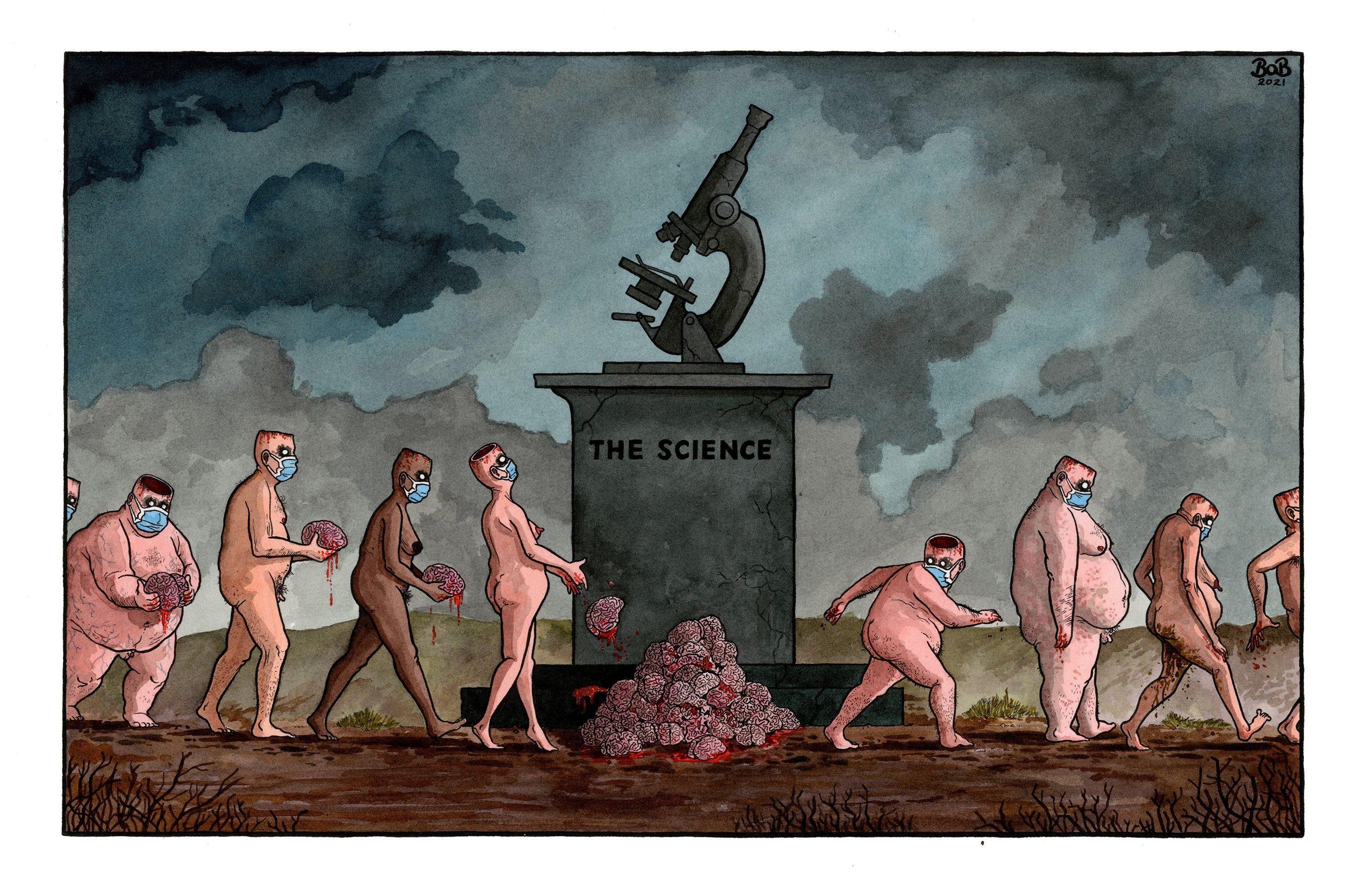
Device keeps brain alive, functioning separate from body

DALLAS – Nov. 02, 2023 – Researchers led by a team at UT Southwestern Medical Center have developed a device that can isolate blood flow to the brain, keeping the organ alive and functioning independent from the rest of the body for several hours.

Juan Pascual, M.D., Ph.D., is a Professor of Neurology, Pediatrics, and Physiology, and in the Eugene McDermott Center for Human Growth and Development at UT Southwestern. He holds the Ed and Sue Rose Distinguished Professorship in Neurology and The Once Upon a Time Foundation Professorship in Pediatric Neurologic Diseases.

The device, tested using a pig brain model and described in Scientific Reports, could lead to new ways to study the human brain without influence from other bodily functions. It also could inform the design of machines for cardiopulmonary bypass that better replicate natural blood flow to the brain. The findings build on previous research by study leader Juan Pascual, M.D., Ph.D., and his colleagues.

“This novel method enables research that focuses on the brain independent of the body, allowing us to answer physiological questions in a way that has never been done,” said Dr. Pascual.

…Isolating the brain will allow researchers to manipulate inputs to this organ to study how they change brain function without the body’s influence. For example, Dr. Pascual said, he and his colleagues have already used this system to better understand the effects of hypoglycemia (low blood sugar) in the absence of other factors. Although scientists can induce hypoglycemia by restricting food intake in lab animals or dosing them with insulin, the body can partially compensate for either of these scenarios by altering metabolism and this, in turn, alters the brain. In contrast, the new device allows researchers to alter the glucose content directly in blood pumped to the brain.

source

Fish can recognize themselves in a mirror, an indication of self-awareness and complex cognition

Atwo-year-old toddler flashes her toothy grin as she catches sight of her reflection in a mirror and watches as the image in front of her mimics her every move. Unbeknownst to her, she has passed a major developmental milestone called mirror self-recognition or MSR, which indicates an advanced level of cognitive capabilities in both human and non-human animals.  

A new study shows that in addition to other non-human animals like dolphinselephants and several great apes, fish can recognize themselves in mirror reflections and photographs. What’s more, they can even distinguish between photographs of their own images and that of their companions. Researchers studying the cleaner fish (Labroides dimidiatus) have now added their findings to a growing body of evidence that points to fish having a sense of self, indicating a higher depth of awareness than previously known.

Mirror self-recognition has been used to study self-awareness and visual recognition in a wide range of human and non-human animals. Developed for primates in the 1970s, the test begins by allowing the individual to familiarize herself with her mirror image.

source

The brain as a guessing machine

A new approach to the study of mental disorder—called computational psychiatry—uses Bayesian inference to explain where people with problems are going wrong.

Bayesian inference is a method of statistical reasoning used to understand the probability of a hypothesis and how to update it as conditions change.

The idea is that people with schizophrenia, for example, are doing a bad job at inferring the reasonableness of their hypotheses. This happens because schizophrenics seem to be less likely to put enough weight on prior experience (a factor in Bayesian reasoning).

Somewhat similarly, “sensory information takes priority [over previous experience] in people with autism.” (Bayesian reasoning implicated in some mental disorders)

Distorted calculations — and the altered versions of the world they create — may also play a role in depression and anxiety, some researchers think. While suffering from depression, people may hold on to distorted priors — believing that good things are out of reach, for instance. And people with high anxiety can have trouble making good choices in a volatile environment (Ibid)

The key problem with autism and anxiety is people with these conditions have trouble updating their expectations—a major component of Bayesian reasoning—and thus make many mistakes.

These mistakes, of course, compound and further increase a sense of anxiety or alienation.

Like several of the researches quoted in the linked article, I find this computational approach exciting.

It speaks to me because it confirms a core hypothesis of FIML practice—that all people make many, significant inferential mistakes during virtually all acts of communication.

In this respect, I believe all people are mentally disordered, not just the ones who are suffering the most.

I think a Bayesian thought experiment can all but prove my point:

What are the odds that you will correctly infer the mental state(s) of anyone you speak with? What are the odds that they will correctly infer your mental state(s)?

In a formal setting, both of you will do well enough if the inferring is kept within whatever the formal boundaries are. But that is all you will be able to infer reasonably well.

In the far more important realm of intimate interpersonal communication, the odds that either party is making correct inferences go down significantly.

If we do not know someone’s mental state, we cannot know why they have communicated as they have. If our inferences about them are based on such questionable data, we are bound to make many more mistakes about them.

Dr. Lisa Feldman Barrett: How to Understand Emotions | Huberman Lab Podcast

UPDATE: I highly recommend this video discussion for all Buddhists and all practitioners of FIML. Barrett describes the fundamental reality of human consciousness as it grapples with emotion, sensation, bodily feedback and general states of physical being. Her insights are 100% consonant with Buddhist philosophy and FIML practice. Both FIML and Buddhism differ from what Barrett is saying only in that in addition to the emptiness, impermanence, and vagueness of human emotional states they also see human thought, belief, interpretation, perception and comprehension in the same way. In FIML practice, these deeply important uncertainties also include language, semiotics, communicative acts, and the psychologies associated with them.

At one point, Barrett says she is not saying there is nothing there or no truth to emotional states. She is just saying they typically are not clearly definable and often mistaken. Exactly right. I would add that Barret sees a very important part of the underlying problem of human psycho-spiritual existence but she only sees that one part and offers no more than a description of it.

FIML practice provides not only a more accurate description of the problem but also a method to greatly enhance our understanding of all human states of being as they occur in real-world, real-time situations. FIML differs from traditional Buddhist practice in that it offers a robust practice for two people to use together.

To emphasize a major point: Barrett has caught a very big fish but is holding it by the tail only. Buddhism is based on the whole fish as is FIML. Both Buddhism and FIML offer deeply important ways to deal with the whole fish. FIML adds a precise practice between two people that speeds up understanding. Buddhism claims there is an ‘ultimate reality’, a Buddha mind above and beyond the ‘relative reality’ of mundane uncertainty and clinging. FIML provides deep psychological understanding and correction of the mundane problem while also allowing glimpses of Buddhist ultimate reality. Barrett, Buddhism, and FIML all are addressing the same thing from different points of view. ABN

UPDATE: This video is a delightful 2+ hours discussion, not to be missed. Buddhists will enjoy how it elucidates Buddhist teachings on the Five Skandhas and how they underlie Buddhist understanding of human psychology.

It is also an excellent description of why you must do FIML. It provides a detailed and nuanced picture of why FIML practice is essential for full optimization of human psychology, language use, semiotics, and mental functioning. FIML has no content and does zero to define you or anyone. FIML shows you how to gather information and discover for yourself.

FIML is a method that allows partners to isolate significant (or not) moments during real-time, real-world communication that can be identified and agreed upon by both partners and thus become objectively analyzable (in the sense that both partners agree on what the moment was or what it entailed). That is how language can greatly help us understand how our speech, sensations, emotions, bodily states are functioning in the real-world in real-time.

The hard part about FIML is you cannot at the inception of a FIML moment sit back, like Barrett and Huberman, and just wander around pleasantly talking about theories and ideas within a well-defined (and restricted) scientific paradigm.* The first moments of a FIML query are by definition unexplained and undescribed to both partners.

Once identified and described the unique, idiosyncratic import of those moments will be discovered. And often what is discovered will be of next-to-no importance or be some sort of mutual or one-sided mistake or trivial misinterpretation. At other times, deep and deeply interesting patterns or critical associations will be discovered. At those times, you will be able to clearly see how your habitual mind is functioning in a real-world, real-time situation.

Since FIML moments are moments, they are small enough and well-described enough for partners to mutually clearly understand and admit what has happened without reservations. This is extremely refreshing, especially when experienced scores and then hundreds of times. There is no other way to get this information and mutually understand it than FIML practice.

* I do not mean to slight or dismiss Barrett or Huberman here. They have provided a superb description of an extremely serious problem and also illustrated how science today has not solved it. Barrett mentions how serious the problem is but does not provide a solution to it. Knowing the problem is there is a good start. It’s like identifying a disease. Solving the problem as FIML does is the next step. FIML treats the disease and largely cures it. I 100% agree with Barrett when she emphasizes how serious this problem is. I see its seriousness as being even greater than she does. This problem is far worse than a few mistaken convictions in law courts or a persistent fog of interpersonal confusion. It is a constant ever-present demon in all of us and it leads to enormous suffering, sadness, violence, murder, tribalism, worse. As for science, FIML is a subjective science, possibly the realest and most important subjective science there is right now.

In Barrett’s vocabulary, basic FIML works with the very fine ‘granularity’ of emotion/ sensation/ interpretation. A next step after identifying these granular moments during FIML is to analyze/ discuss how they are related to other granularities and also less granular more abstract habits or mental states/ conditions; this is where in Barrett’s terms FIML ‘adds dimensionality’ to our worlds. What is remarkable about FIML is the dimensionality we add is based on mutually agreed objective idiosyncratic data.

Around the 1:30 mark and beyond, Barrett describes what Buddhists know as the Five Skandhas1) form/ percept/ stimulus, 2) sensation (bodily action), 3) perception (more detail and feedback), 4) activity (more detail, feedback and abstraction), 5) consciousness/ mental state (delusional, or within relative reality). The Five Skandhas, of course, are fractal, dynamic, fast-moving, multi-granular, and describe/ categorize bodily-mental states at all levels of delusional/ hallucinatory/ relative ‘reality’.

‘Get your butterflies flying in formation’. ABN

People with pronounced psychopathy and sadism are harder to startle

…“We conclude that individuals with high levels of sadism show a diminished startle reflex that is relatively immune to potentiation by negative environmental stimuli,” the study authors wrote. “These findings provide further insight into the biological markers of the Dark Tetrad traits and their unique facets. Our findings may also have implications for fields beyond psychology, like business and economics, where managerial effectiveness (e.g., navigating workplace crises) and financial decision-making (e.g., loss aversion and risk-taking) may depend on the personality of a single individual with socially aversive tendencies.”

The study makes an important contribution to the scientific understanding of biological markers of dark traits. However, it also has limitations that need to be taken into account. Notably, most of the study participants were students. Although the second study included participants with very high levels of sadism, it is still unlikely that it included many individuals with truly high levels of this malevolent trait.

The study:Blunted startle reactivity in everyday sadism and psychopathy, was authored by Erin E. Buckels, Douglas A. Williams, Paul D.Trapnell, Siavash Kermani Koosheh, Owen M. Javra , and Sasha C. Svenne.

source

Today’s leaders of the Western world, including Israel, clearly exhibit extreme Dark Tetrad personality traits—narcissism, Machiavellianism, psychopathy, and sadism. This study relies on student subjects (a limitation) but corroborates physical markers of the startle reflex convincingly enough to provide decent evidence for the hypothesis. I singled out Western leaders above but am sure that almost all major political leaders throughout history have had Dark Tetrad traits. Human social instincts lean heavily toward hierarchical submission and it takes outliers to climb that ladder. Nice guys finish last is one way to say it. Given humanity as it is today biologically, I see no hope in changing this. Given the promise of gene selection through selective breeding of non-coerced willing parents, I see a lot of hope that human societies will improve enough to remove our most vulgar, violent, destructive traits. I hope readers of this site have cast off the negative shroud surrounding the word eugenics. Done properly, without force or humiliation, eugenics would be a very good thing for our species. As it is, people do it all the time on their own anyway through partner selection, birth-control, abortion, in vitro gamete and zygote selection, and so on. ABN

Are we living in a simulation? Physicist claims he has new evidence we’re simply characters in an advanced virtual world

Melvin Vopson, an associate professor in physics at the University of Portsmouth, claims we may be characters in an advanced virtual world. 

He claims that the physical behaviour of information in our universe resembles the process of a computer deleting or compressing code – a clue that perhaps the machines hope we don’t notice. 

Professor Vopson has already warned of an impending ‘information catastrophe’, when we run out of energy to sustain huge amounts of digital information. 

‘My studies point to a bizarre and interesting possibility that we don’t live in an objective reality and that the entire universe might be just a super advanced virtual reality simulation,’ Professor Vopson said. 

Last year, the academic – from Romania – established a new law of physics, called the ‘second law of information dynamics’ to explain how information behaves. 

His law establishes that the ‘entropy’, or disorder, in a system of information decreases rather than increases.

This new law came as somewhat of a surprise, because it’s the opposite of the second law of thermodynamics established in the 1850s, which explains why we cannot unscramble an egg or why a glass cannot unbreak itself. 

As it turns out, the second law of infodynamics explains the behaviour of information in a way that the old law cannot.  

source

Vopson’s paper: The second law of infodynamics and its implications for the simulated universe hypothesis featured

UPDATE: Information that is information about other information appears to be what we think of as consciousness, especially if that information is dynamic or able to focus and choose. Information may also be thought of as the stuff of karma, which itself can be thought of as a form of dynamic information, a coherent procession of information over time. This may even be the definition of time.

Consciousness as we know it is almost always dramatic; it almost always knows something or wants to know something or aims toward something or retreats from it. This is clearly true with regard to other people (or sentient beings) or within ourselves as our information parts interact (sort of what psychology is, or rumination). Regardless of whether human consciousness is high or low in the scheme of things, it tends to deeply crave meaning, purpose, reason, and is often satisfied with tautology over nothing, which proves or at least demonstrates this point :-)

Meaning and purpose are directional and organizational kinds of information. Since they are very common and arguably universal in everything we see, including the ‘lives’ of inanimate matter, it does seem that the whole of everything holds together around this point. In terms of information, it does not make much sense to say life itself is meaningless because what it is is a kind of meaning, a kind of procession of information. ABN

Footprints show humans in America earlier than previously believed

A new analysis of tiny specks of pollen from long-dead conifer trees, seeds and sets of ancient footprints in New Mexico have revealed that humans arrived in North America much earlier than scientists previously thought. 

If the findings hold, then they are the oldest footprints ever discovered in the U.S.

Because the footprints themselves can’t be carbon dated, the researchers behind the new study looked at seeds from aquatic plants found in the same layer of sediment — essentially a proxy dating tool. Carbon dating reveals that the seeds fell between 21,000 and 23,000 years ago — thousands of years earlier than previous estimates had supposed.

source