Ukraine, which has been destroyed, and which has witnessed all of its strong young men killed in futile battles and massacres, and from which one-half of its population has fled, never to return, has also been soldto Western investment funds. If Israel goes bottoms-up, expect to see millions of Israelis move to Ukraine — now ‘a land without people for a people, yet again, without land’. ABN
A new analysis of dozens of arrowheads is helping researchers piece together a clearer portrait of the warriors who clashed on Europe’s oldest known battlefield 3,250 years ago.
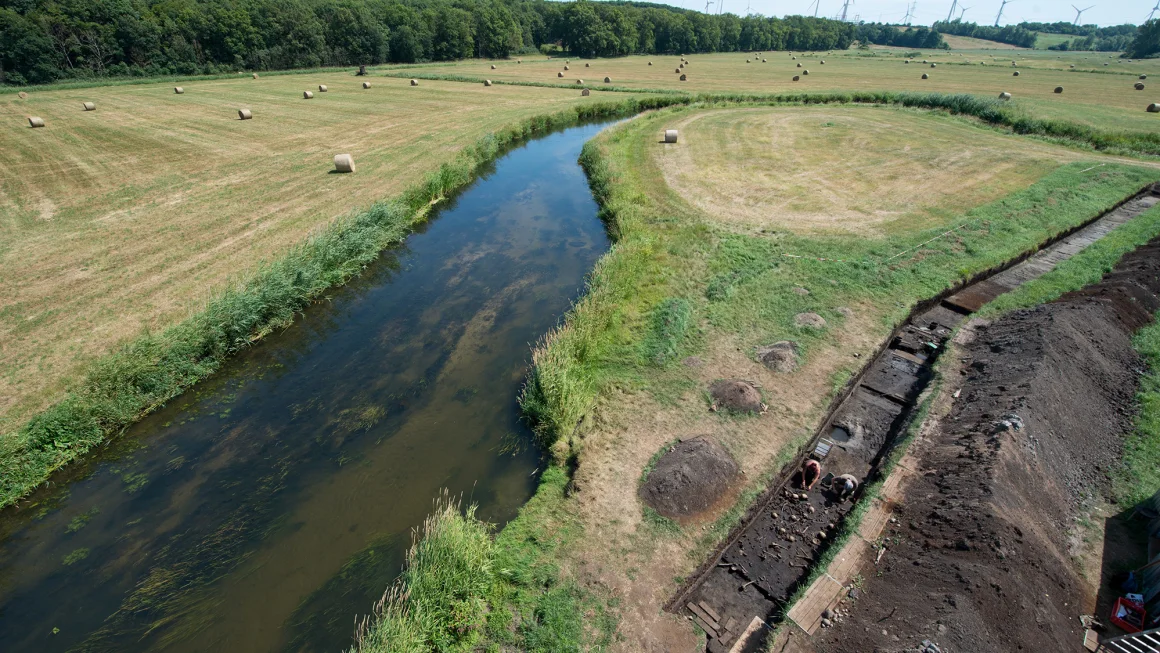
The bronze and flint arrowheads were recovered from the Tollense Valley in northeast Germany. Researchers first uncovered the site in 1996 when an amateur archaeologist spotted a bone sticking out of a bank of the Tollense River.
Since then, excavations have unearthed 300 metal finds and 12,500 bones belonging to about 150 individuals who fell in battle at the site in 1250 BC. Recovered weaponry has included swords, wooden clubs and the array of arrowheads — including some found still embedded in the bones of the fallen.
No direct evidence of an earlier battle of this scale has ever been discovered, which is why Tollense Valley is considered the site of Europe’s oldest battle, according to researchers who have studied the area since 2007.
Studies of the bones have yielded some insights into the men — all young, strong and able-bodied warriors, some with healed wounds from previous skirmishes. But details on who was involved in the violent conflict, and why they fought in such a bloody battle, has long eluded researchers.
The Torah verses convey profound messages that we can insightfully extract for our daily lives. Rabbi Shay Tahan, the Rosh Kollel of Shaarei Ezra in Brooklyn, NY, graciously opens the gates to understand them.
The recent conflict in Lebanon raises the age-old question regarding the northern borders of biblical Eretz Yisrael. Where exactly did Hashem define the boundaries, and are we obligated to conquer those areas? Do the mitzvot of terumah and ma’aser apply to those lands as part of Eretz Yisrael, or are they considered outside the borders?
The Torah provides clear guidelines regarding the areas we were commanded to conquer when taking possession of the land.
In the last generation, the term “Greater Israel” has come to the forefront. It is sometimes used in political or religious discussions about the ideal or future borders of Israel, often in the context of messianic or Zionist aspirations. Some interpret it as a call for the re-establishment of Israel’s biblical borders. However, the concept varies in meaning, ranging from symbolic or spiritual interpretations to literal geographical claims.
This term refers to the concept of the biblical boundaries of the Land of Israel as promised to the Jewish people in various parts of the Torah. It is often associated with the land described in the Covenant with Avraham (Brit Bein HaBetarim), which stretches from the “River of Egypt” (interpreted by some as the Nile or a smaller river in Sinai) to the Perat River. This expansive region includes parts of modern-day Israel, the West Bank, Gaza, Lebanon, Syria, Jordan, and Iraq.
When Hashem promised Avraham Avinu the Land of Israel at the Brit Bein HaBetarim, the pasuk says (בראשית טז): “On that day, Hashem made a covenant with Avram, saying: To your descendants, I have given this land—from the river of Egypt to the great river, the Euphrates.”
It’s been obvious all along that the Western cabal is gunning for WW3. The strategy appears to be moving ahead on two fronts: 1) Europe/NATO/USA versus Russia; and 2) Israel/USA against Iran and whoever else. Massive geopolitical effects will flow from this. ABN



 American Buddhist Net