The caves were built in two phases, the first starting around the second century BCE and the second occurring from 400 to 650 CE, according to older accounts, or in a brief period of 460–480 CE according to later scholarship.[7]
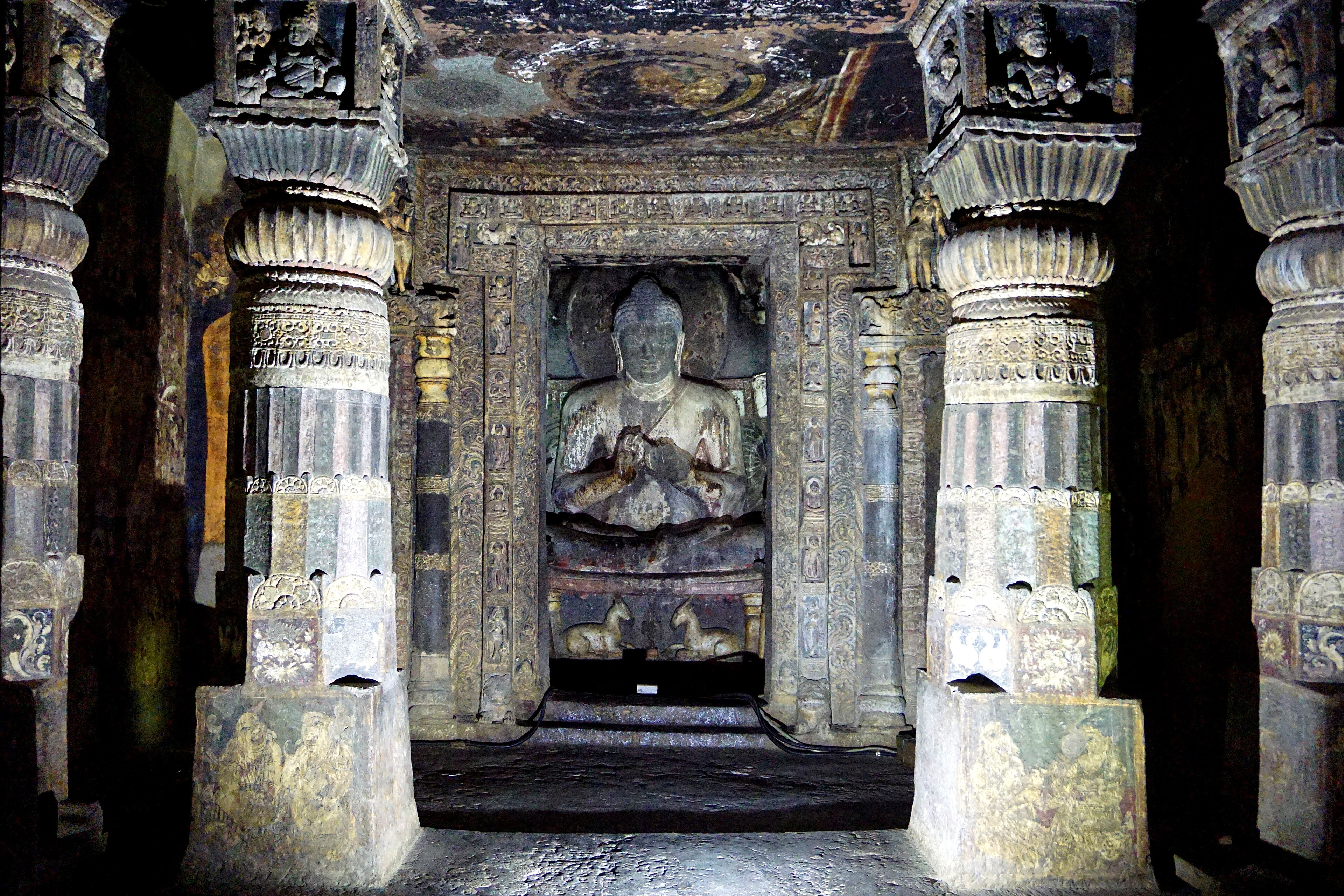
The Ajanta Caves constitute ancient monasteries (Viharas) and worship-halls (Chaityas) of different Buddhist traditions carved into a 75-metre (246 ft) wall of rock.[8][9] The caves also present paintings depicting the past lives [10] and rebirths of the Buddha, pictorial tales from Aryasura’s Jatakamala, and rock-cut sculptures of Buddhist deities.[8][11][12] Textual records suggest that these caves served as a monsoon retreat for monks, as well as a resting site for merchants and pilgrims in ancient India.[8] While vivid colours and mural wall paintings were abundant in Indian history as evidenced by historical records, Caves 1, 2, 16 and 17 of Ajanta form the largest corpus of surviving ancient Indian wall-paintings.[13]
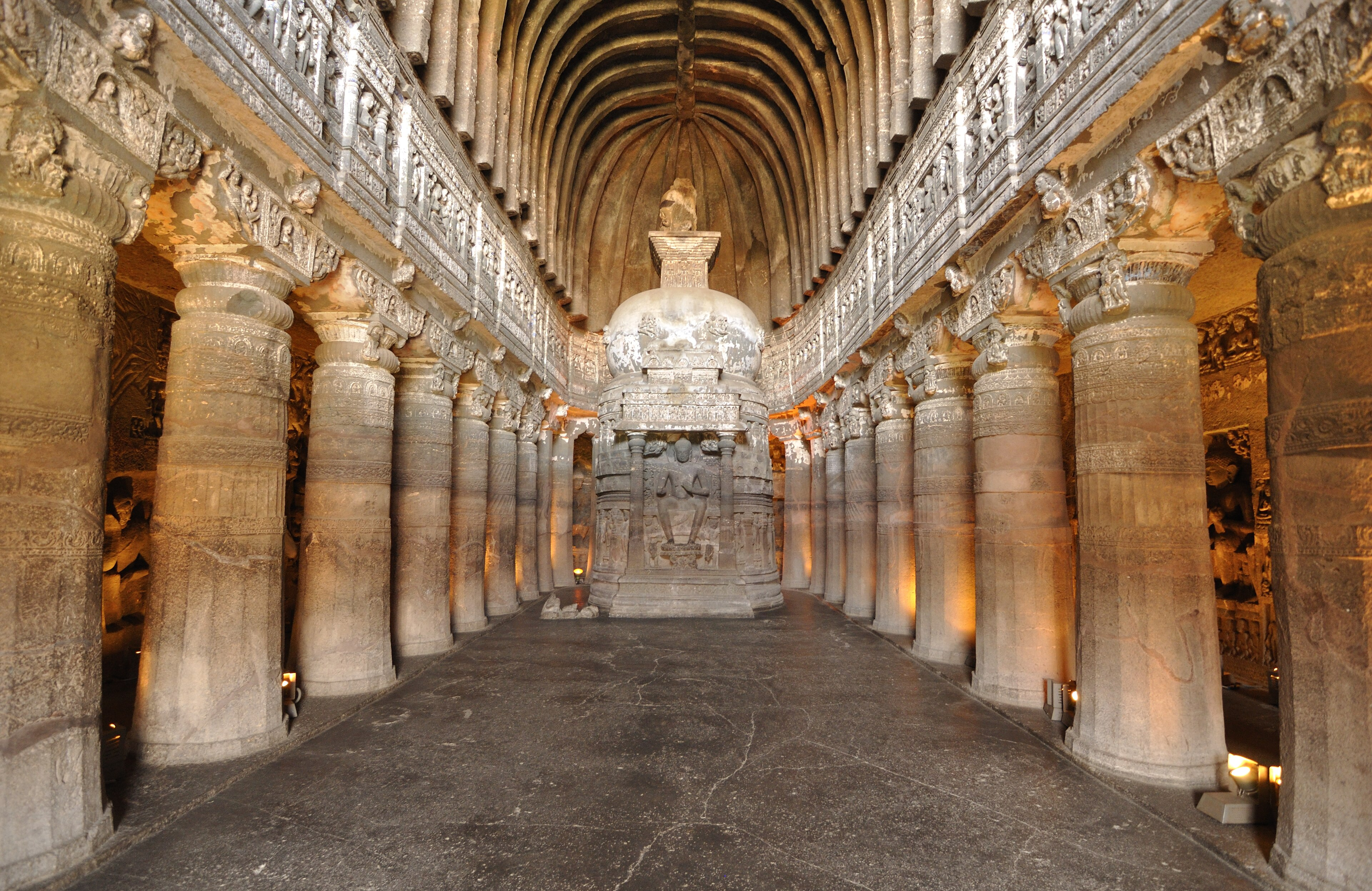
This is a view of Cave 26, which is a Buddhist “Chaitya Griha” or prayer hall. Ajanta Caves in Maharashtra, India is a World Heritage Site.
The Ajanta Caves are mentioned in the memoirs of several medieval-era Chinese Buddhist travelers.[14] They were covered by jungle until accidentally “discovered” and brought to contemporary attention in 1819 by a colonial British officer Captain John Smith on a tiger-hunting party.[15] The caves are in the rocky northern wall of the U-shaped gorge of the River Waghur,[16] in the Deccan Plateau.[17][18] Within the gorge are a number of waterfalls, audible from outside the caves when the river is high.[19]


 American Buddhist Net