A remarkably well preserved 1,600-year-old city complete with a church, watchtowers and bustling streets has been unearthed beneath Egypt’s Western Desert.
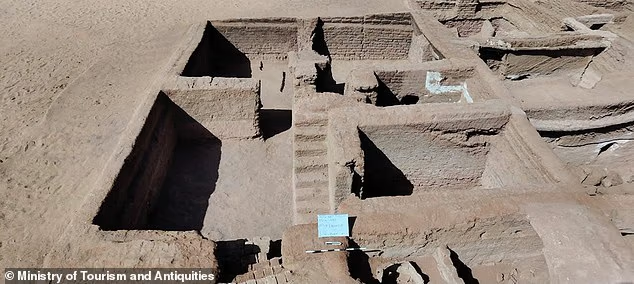
Archaeologists have announced the discovery of a sprawling Byzantine-era settlement at the Dakhla Oasis.
Here, they unearthed homes with vaulted roofs, bread ovens, kitchens and stone mills that offer a rare glimpse into everyday life during the 4th century.
They also found around 200 inscribed pottery fragments recording commercial transactions, letters and a selection of coins.
The carefully planned settlement features broad north-south streets intersected by east-west roads to create public squares, while two watchtowers and a heavily fortified building protected its outskirts.
At its centre stands a basilica church overlooking one of the city’s main streets.
Experts say the discovery provides one of the clearest pictures yet of life in Egypt’s remote oases during the Byzantine Empire.
Archaeologists have announced the discovery of a sprawling Byzantine-era settlement at the Dakhla Oasis


 American Buddhist Net