The ongoing debate surrounding the relationship between Christianity and Jewish scripture has grown increasingly complex over recent decades, with critics like Laurent Guyénot arguing that Christianity did not merely absorb Jewish texts but was, in its very essence, molded by them. This perspective suggests that the core tenets of Christianity—such as notions of divine election and messianic expectation—reflect a deeper Jewish influence that has shaped Western civilization. Guyénot posits that Christianity became the primary conduit through which Jewish metaphysical concepts were disseminated to Gentile cultures. This appropriation, he argues, led to a civilization that, while claiming to worship a universal God of love, effectively organized itself around Jewish messianic aspirations. Such claims, while provocative, warrant careful scrutiny, particularly in the context of differing interpretations within the Christian tradition itself.
Guyénot’s analysis operates on two levels: one historical and one theological. He outlines a historical trajectory wherein the Latin Church gradually compromised its original theological foundations, becoming increasingly intertwined with the Jewish tradition it initially sought to transcend. However, he also asserts that Christianity inherently bore the Jewish imprint from its inception. Critics argue that this latter claim lacks sufficient evidence, suggesting instead that the issues Guyénot raises are symptomatic of a divergence within Christianity itself, particularly between Western and Orthodox traditions. The Orthodox Church, they argue, has consistently maintained a distinct theological identity that diverges from Western Christianity’s post-Filioque developments, and it has preserved the apostolic inheritance against various historical assaults.
The crux of the disagreement lies in the differing interpretations of salvation and grace between Orthodoxy and Western Christianity. While Orthodoxy emphasizes the transformative aspect of salvation as theosis—union with God through divine grace—Western traditions, particularly post-Filioque, have tended to frame salvation in more legalistic terms, akin to a change in legal status before God. This theological divergence has far-reaching implications, leading to fundamentally different understandings of the relationship between God and humanity. The Orthodox perspective maintains that the ultimate aim of Christian life is the restoration of communion with God, contrasting sharply with Western thought, which has often conceived salvation as a transactional relationship governed by legal categories.
Ultimately, the historical and theological complexities surrounding Christianity’s relationship with Judaism raise important questions about the nature of religious identity and the interpretation of scripture. While Guyénot’s thesis regarding the “Judaization” of Christianity has garnered attention, it is essential to recognize the diversity within Christian thought itself. The Orthodox tradition, with its emphasis on theosis and the uncreated divine life, offers a counter-narrative to the claims of inherent corruption within Christianity. The ongoing dialogue between these perspectives highlights not only the historical intersections between Christianity and Judaism but also the broader implications for understanding the evolution of religious thought in Western civilization. This discourse challenges adherents to critically engage with their theological foundations, ensuring that they are rooted in a coherent understanding of their faith that honors both tradition and scripture.
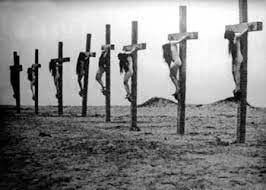
Jews were behind the Armenian Genocide in 1915-1923. (Pictured – Armenian film reenactment of young Christian girls crucified alive in Malatia, as a mockery of Christ)
1.2 million Christian Armenians were sent on death marches to the Syrian Desert in 1915 and 1916. Driven forward by paramilitary escorts of the Ottoman Empire, Under the direction a Judaic/Masonic sect named ‘The Young Turks’. After a successful coup in Turkey, driven by Jewish revolutionaries, ‘The Young Turks’ celebrated their victory by committing Christian genocide and did so as barbarically and as demoralizingly possible.
The ‘Armenian genocide was decided between August, 1910 and October 1911, by a Young Turk committee composed entirely of displaced Balkan Jëws in the form of a syncretist Jèwish-Masonic sect which included Talaat, Enver, Behaeddin Shakir, Jemal, and Nizam posing as Muslims. It met in the Rothschild-funded Grand Orient Lodge/Hotel of Salonika, where the plan of a coup and genocide was planned, a plan that is well documented.
“Every Jew who spills the blood of the godless, is doing the same as making a sacrifice to God.” (Talmud: Bammidber Raba c21 & Jalkut 772)
__________
UPDATE: I forgot to link to the original when I posted this yesterday. The probable link is here. The words are the same, but I am not certain this was the original link I had used. The poster at the link provided clarifies that the execution scene in the photo is a reenactment from an Armenian film of a purported genuine event. ABN
This article argues that the human brain saves energy by predicting or imagining “reality” more than actually perceiving it: Do Thrifty Brains Make Better Minds? The article argues that this way of using our brains allows us to work more efficiently with complex data or in complex situations.
I think this general premise is pretty well known and agreed on, but the linked article puts it in a new way. The following sentence caught my eye: This… underlines the surprising extent to which the structure of our expectations (both conscious and non-conscious) may quite literally be determining much of what we see, hear and feel.
The article uses visual perception as an example, but the idea applies just as well, and maybe more so, to what we hear in the speech of others. FIML practice works by inserting a new mental skill between the first arising of a (stored) interpretation and its full-blown acceptance as “reality”.
I am posting this because it explains Utah’s unique law on victims rights to a ‘speedy trial’; and also because Erika is not without suspicion, thus rendering her ineligible to invoke this law. Moreover, given the paucity of evidence against Tyler Robinson and the prosecution’s dilatory and incomplete disclosures of said evidence, it looks bad to speed this trial to a hasty conclusion. ABN
Full video:
__________
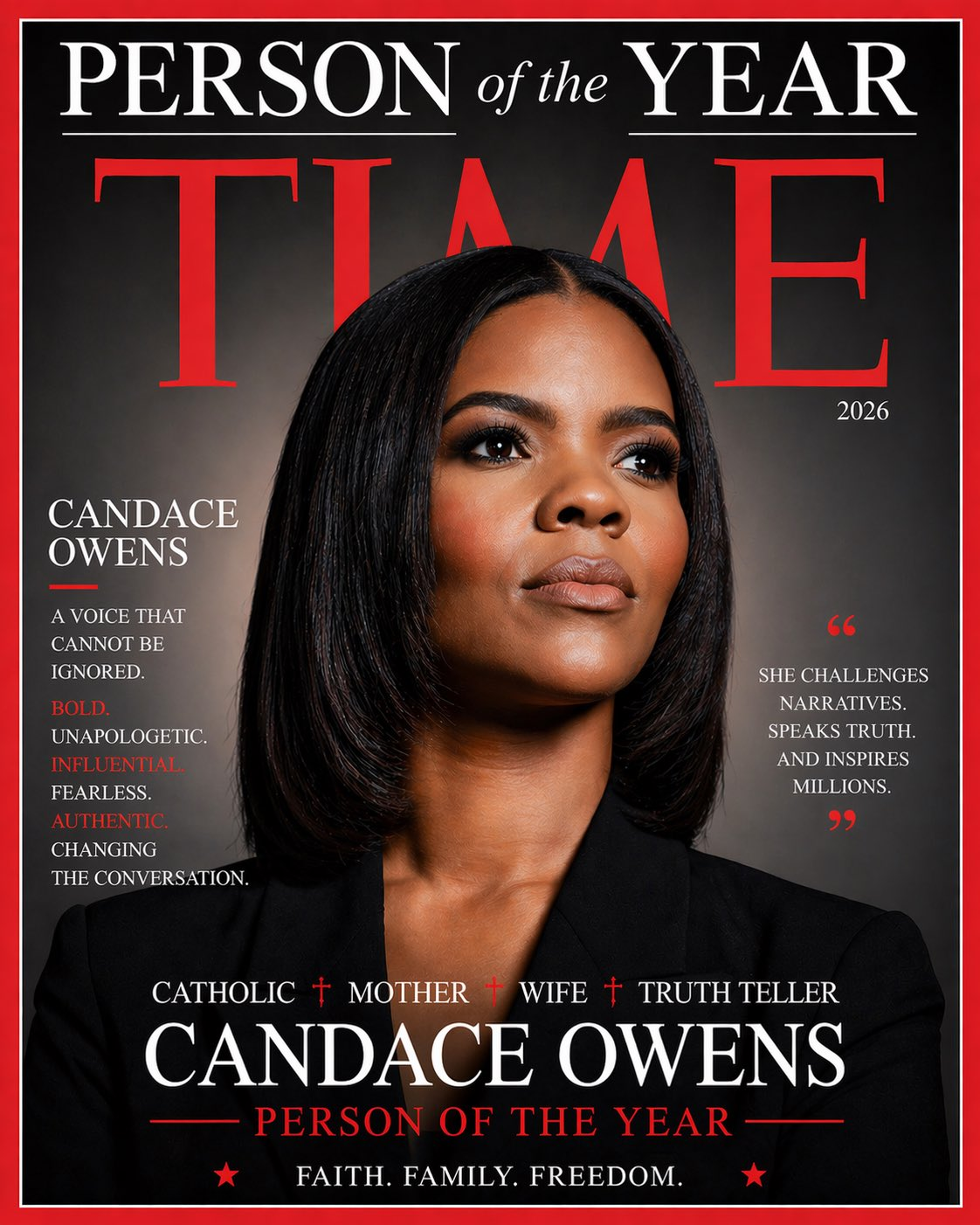
UPDATE: The full vid is worth watching because De Gregorio very reasonably suggests that Candace Owens file as a ‘close friend’ of the victim and request the trial not be speedy but deliberate, careful and fair. ABN
HB 1802 (Tennessee) and SB 1407 (Tennessee) refer to the same legislation, known as the “Stand Your Ground” property protection bill, which was passed by the Tennessee House on April 23, 2026, with a 62-24 vote and awaits Governor Bill Lee’s signature.
The bill fundamentally alters Tennessee’s self-defense statutes by expanding the permissible use of force to include the protection of property, moving beyond the traditional “life for a life” standard. Key provisions include:
Justified Force: Individuals may use force, and in specific extreme circumstances, deadly force, to prevent crimes such as theft, arson, trespassing, or the harming of livestock and pets.
Conditions: Such force is considered “justified” only when no other reasonable means of protection are available.
Trespasser Nuance: An individual may use intimidation or force against a trespasser or property damager provided the person is not attempting to flee (i.e., their back is not turned).
Opposition: Critics, including Representative Justin Pearson (D-Tenn.) and Representative Greg Martin (R-Tenn.), argue the bill lowers the threshold for lethal force, potentially justifying deadly force over property crimes or against vulnerable individuals like the elderly or those with dementia.
According to the latest 2026 reports from the National Cancer Institute (SEER) and the@AmericanCancer Society, since 2021, there has been a documented acceleration in #turbocancers, specifically colorectal, breast, and brain tumors, in adults under 50.
Millions believe this is proof positive of the the long-term immunological impact of mass mRNA #covidvaccination, yet the medical community refuses to do a proper investigation and/or end this disastrous campaign.
The timing of this surge is a massive red flag. We need transparency, independent safety data, and a relentless search for the truth.
Three Signs, or Trilakṣaṇa: All dharmas are anitya ‘impermanent’…. All dharmas are duḥkha ‘unsatisfactory, imperfect, unstable’…. All dharmas are anātman ‘without an innate self-identity. (dharmas means ‘things’)
By basing meditation practice on the Three Signs, we can achieve nirvana.
This is the simplest or shortest way to describe Buddhism. It appears to also be the most ancient way to describe Buddhism. This basic description is historically attested to within approximately 100 years of the Buddha’s passing.
The Noble Eightfold Path is also an excellent way to describe and understand Buddhist practice. It is not historically attested until several centuries after the Buddha’s passing.
Buddhism is a living tradition which develops and responds to new information and societal differences. Something that is true and helpful, like the Noble Eightfold Path, is good Buddhism. Buddhism is not based on sacred texts but on mind-to-mind teaching and insight, both philosophical (the Three Signs) and experiential (samadhi/ nirvana).
The Three Signs include duhkha, which is often misleadingly translated as ‘suffering’, or worse, ‘lifelong suffering’. The much better translation of duhkha is ‘badly standing’ or ‘unstable’. With this in mind, the Four Noble Truths may be considered slightly misleading since the First Noble Truth is often called the Truth of Suffering. The Four Noble Truths are not attested historically until several centuries after the Buddha’s passing.
Nirvana and deep meditative states are something we experience.. There is no substitute for this experience. All of Buddhist practice is aimed at experiencing nirvana. Nirvana can be attained in this life. ABN
Bayesian belief or perspective in some respects possibly co-relates with FIML as both are able to update expectation based on accumulating data insight, particularly as a kind of Thomas Kuhnian or Zen insight. The more reductive method of scientific expectation cognizes realization, reality, as statistical summaries across repeated events. These two types correlate, in degrees, to Kantian Noumenon and phenomenon, and to his notion of categorical decisions.
Beginning with Cantor’s Uncountability and Power Set Theorems, then Godel’s two Incompleteness Theorems, and Tarski’s Undefinability of Truth Theorem, it is presently accepted proof in logic-mathematics circles that there is no earth-touching mudra Truth gesture within “Human, All too Human” ratiocination. Cf Wittgenstein’s “Whereof one cannot speak, thereof one must be silent.” Both Gautama’s mudra and Jesus’ comparable “mudra” of Silence standing in the “What is truth?” Biblical scene witness to a Truth-claim of Mind re which human inquiry thereat Cantor, Godel, Tarski, et al. have satisfactorily shown to be coincidentally incomplete and therefore indefinite.
__________
I completely agree with paragraph one above. That is precisely what FIML does and it is in line with both ancient and modern philosophy and modern mathematics and science. As for paragraph two, I also agree with it but want to add that Buddhist practice provides a fundamental experience, which is typically lacking in Western philosophy. That experience is the experience of the samadhi states, including nirvana which is the purest of the samadhi states. If we use words to describe nirvana, we might say it is the experience of pure awareness of pure consciousness. It is the knowable and observable ‘going out’ of delusion, leaving the experiencer with nothing but pure awareness. This is an attainable state in this life, achievable through meditation. ABN
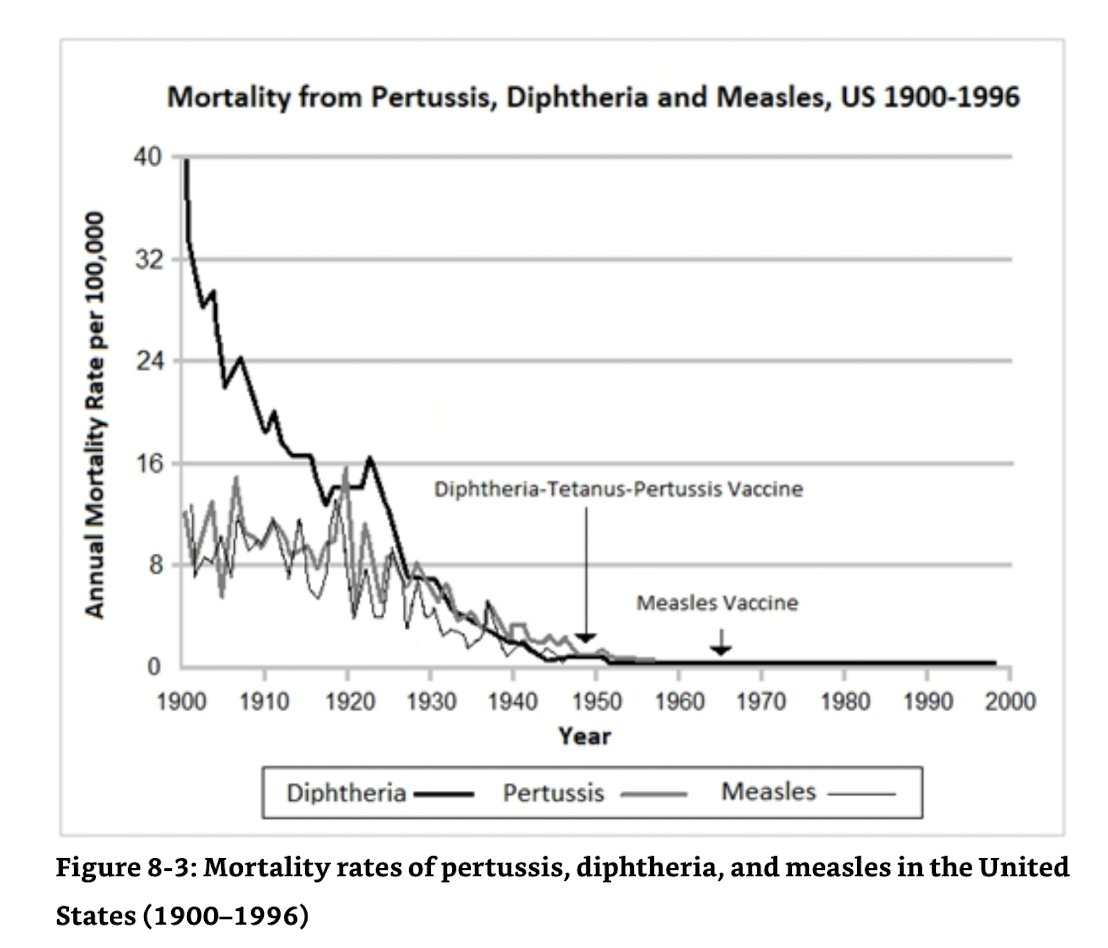
You need to see this chart. The keys to public/private health and better lives are clean water, sanitation, fresh food, and good hygiene. Vaccines have historically played a minor/tiny role at best. The reason we keep talking about them constantly pertains almost entirely to industrial interests.
Berry breaks down the key differences and similarities between conventional and naturopathic doctors—and explores the profession’s history and its post-pandemic surge and growth.




 American Buddhist Net