
Grok describes and analyzes FIML

Key Points

  • Research suggests FIML, or Functional Interpersonal Meta Linguistics, is a communication technique to improve relationships by addressing misinterpretations in real-time.
  • It seems likely that FIML involves partners interrupting conversations to clarify emotional reactions, aligning with Buddhist principles of mindfulness.
  • The evidence leans toward FIML supporting advanced Right Speech and Right Listening, potentially transforming lives by enhancing understanding.

Description

What is FIML?
FIML, or Functional Interpersonal Meta Linguistics, is a method designed to optimize communication and psychological well-being between two people. It’s described as a form of analytical psychotherapy that doesn’t require formal training, focusing on clearing up misunderstandings as they happen.

How It Works
Partners agree to interrupt normal conversations when one feels an emotional reaction to something said. The reacting partner asks the other about their state of mind at that moment, and the other responds honestly. This process helps identify if the reaction was based on a misinterpretation, with follow-up questions for clarity. Repeating this frequently can develop better communication skills.

Connection to Buddhism
FIML aligns with Buddhist teachings, supporting advanced forms of Right Speech and Right Listening. It’s seen as a practical application of mindfulness, based on impermanence and emptiness, potentially leading to personal transformation by freeing individuals from ordinary speech constraints.

Unexpected Detail: Precision Comparison
Interestingly, FIML is compared to the James Webb Space Telescope for its clarity in communication, suggesting it offers a much sharper understanding than typical conversations, likened to using an old Hale telescope.


Survey Note: Comprehensive Analysis of FIML Based on American Buddhist Net

This note provides a detailed examination of Functional Interpersonal Meta Linguistics (FIML) as presented on American Buddhist Net, focusing on its description, practice, and relation to Buddhist principles. The analysis aims to offer a thorough understanding for readers interested in communication techniques and their philosophical underpinnings.

Background and Definition

FIML is defined on American Buddhist Net as a technique for optimizing communication and psychological well-being between two people. It is described as a form of analytical psychotherapy that can be practiced without formal training, emphasizing real-time analysis to clear mistaken psychological interpretations. This approach is particularly noted for addressing both recent and long-held miscommunications, enhancing the relationship dynamics between partners.

The site compares FIML to advanced scientific instruments, such as the James Webb Space Telescope, for its clarity in communication, contrasting it with normal speech, which is likened to using the older Hale telescope. This analogy underscores FIML’s potential to provide precise, high-resolution insights into interpersonal interactions.

Practice and Methodology

The practice of FIML involves a structured process, detailed in How to do FIML. Partners must first agree to interrupt normal conversations when needed, creating a foundation for open communication. The process unfolds as follows:

Step NumberDescription
1Partners agree to do FIML and can interrupt normal conversation as needed.
2One partner feels a sensation or emotional reaction within one second after the other says something.
3The reacting partner asks, “What was your state of mind when you said X?” seeking the other’s short-term memory contents.
4The other partner answers honestly, describing their state of mind during the few seconds surrounding the statement.
5If the reacting partner finds no justification for their reaction, they realize it was a misinterpretation, trusting the other’s honesty.
6Follow-up questions, e.g., “Are you sure you were not implying boredom when you said X?” may be asked for clarity.
7The reacting partner discusses the new understanding with the other, briefly or at length, as chosen.
8The process is repeated frequently; after a few hundred successful instances, metacognition may develop, reducing the need for frequent interruptions.

The term “sensation” is clarified as an emotional, physical, or hormonal response occurring soon after something is said, starting at a discreet moment, and can be negative or positive. Mindfulness is crucial, with partners encouraged to observe these sensations within one second and make queries in a neutral tone to avoid further reactions.

Additional resources on the site, such as FIML and practical semiotics, Advanced FIML, and FIML FAQs, provide further guidance on refining the practice, addressing issues like snowballing in practice and disruption of neurotic responses.

Relation to Buddhism

FIML’s integration with Buddhism is a significant aspect, as outlined in various articles on American Buddhist Net. It is described as supporting advanced Right Speech and Right Listening, aligning with Buddhist principles of impermanence and emptiness. This connection is detailed in What is FIML?, where it is noted as a method or process, not formalities, meeting requirements for creating Right Conditions for these advanced practices.

The site suggests that FIML can transform one’s life by freeing individuals from the constraints of Ordinary Speech, as seen in Notes on semiotics, FIML, Buddhism, and a bit of anthropology. This article highlights how FIML corrects distortions in thinking or feeling that may arise from practicing Buddhism in isolation, emphasizing the importance of truthful interaction with an honest partner. It posits that early Buddhists might have engaged in similar practices during their travels in pairs or fortnightly discussions of failings, a tradition that has declined in many places.

Further, The deep importance of intentional language discusses FIML as a profound philosophical answer to language and communication, revealing real-time speech analysis that moves meaning to true experience, resonating with Buddhist mindfulness. Global Workspace Theory and mistake awareness & correction links FIML to calibrating minds like fine instruments, playing the FIML communication game for precise readings, reinforcing its mindfulness aspect.

Significance and Impact

The significance of FIML lies in its potential to enhance communication precision, as evidenced by its comparison to advanced telescopes. This unexpected detail highlights its capability to offer clarity beyond typical conversational exchanges, potentially revolutionizing how partners understand each other. The site also suggests that FIML can address interpersonal conundrums arising from the Problem of the Criterion, as noted in Buddhism category posts, impacting daily relationships and communication at every level.

FIML’s impact is further illustrated in Scott Adams Interview – It’s Okay to Be White, where the author, identified as ABN, recommends FIML for optimizing communication and psychology, suggesting it could benefit millions by spreading its practice. This underscores its broad applicability and potential for societal impact.

Author and Context

While specific author information is not directly provided, the site’s posts, such as About, indicate it is run by ABN, focusing on Buddhism, communication, and FIML. The contact email, realABN@pm.me, as seen in Contact, suggests a personal engagement with readers, reinforcing the site’s role as a platform for sharing and discussing these ideas.

Conclusion

FIML, as presented on American Buddhist Net, is a robust communication technique with deep ties to Buddhist philosophy, offering a practical method for enhancing interpersonal relationships through mindfulness and real-time analysis. Its structured practice, alignment with Buddhist principles, and potential for personal transformation make it a valuable tool for those seeking to improve communication and psychological well-being.

Key Citations

__________

Grok used 45 seconds to deep search FIML and produce the above result, posted in full. It did a good job. I am fine with posting this and encouraging readers to look it over. Done properly and for a reasonable amount of time, FIML is deeply life-enhancing. It probably should become a fundamental part of Buddhist practice. ABN
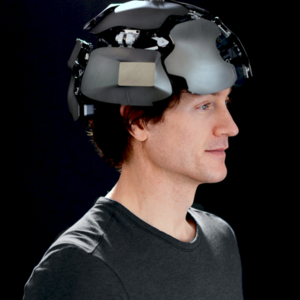
Ketamine experiment on brain recorded in detail

I injected the horse tranquilizer Ketamine and tracked my brain data for 15 days. It completely scrambled my brain.

In a world-first we answered the question ‘what happens to the brain before, during, and after ketamine treatment?’ We also discovered how long it took for my brain to return to ‘normal’.

The results surprised me. 

link

Someday this kind of technology will assist FIML practice. I doubt it will replace it but it likely will enhance it. ABN

Micro-aggression or micro-aguessin’?

Do FIML practice successfully 25 times and you will understand how wrong the notion of micro-aggression is. Not only wrong but also destructive to self and other. Rather than have us probe own minds, micro-aggression asks us to assert a false interpretation of someone else’s mind. From a Buddhist point of view, micro-aggression turns us 180 degrees away from wisdom and enlightenment ABN.

Global Workspace Theory and mistake awareness & correction

Global workspace theory is a description of how our minds work. The word global refers to the whole mind or brain, not the world.

The central feature of this theory—the global workspace—is conscious working memory, or working memory that could be made conscious with minimal effort.

This global workspace is also what a great deal of Buddhist mindfulness attends to. If we focus our attention on what is coming in and out of our global workspace, we will gain many insights into how our minds operate.

The Buddha’s five skandha explanation of consciousness can be understood as a form (or percepta) entering the global workspace.

Consciousness is the fifth skandha in the chain of skandhas. It is very important to recognize that whatever we become conscious of is not necessarily right.

With this in mind, we can see that being mindful of what is entering and leaving our global workspace can help us forestall errors from forming and growing in our minds.

In the Buddhist tradition, ignorance (a kind of error) is the deep source of all delusion.

But how do I know if the percepta or bits of information entering my awareness are right or wrong?

Well, there is science and Bayesian thought processes to help us, and they are both very good, but is there anything else?

What about my actual mind? My psychology? My understanding of my being in the world? How do I become mindful and more right about these?

Besides science and Bayes, I can ask an honest friend who knows me well if the percepta I think I just received from them is right or wrong.

If my friend knows the game, they will be ready to answer me before my global workspace changes too much. If my friend confirms my interpretation of what they just did or said, I will know that my interpretation (or consciousness) is correct.

If they disconfirm, I will know that my interpretation was incorrect, a mistake.

This kind of information is wonderful!

We calibrate fine instruments to be sure we are getting accurate readings from them. Why not our own minds?

This kind of calibration can be done in a general way, but you will get a general answer in that case. If you want a precise reading, a mindfulness answer, you need to play the FIML communication game.

first posted February 12, 2020

Does the Universe think? (with Bernardo Kastrup)

228

UPDATE: I’ve watched 45 minutes of this and, so far, it is a beautiful model of how to talk. These guys are both trained philosophers and act like it. They listen charitably (means use the best possible interpretation of what they hear) to each other, delight in rebuttals, and quickly and easily clear up misunderstandings with evident pleasure as they move almost seamlessly together deeper and deeper into their topic without losing sight of where they want to go. Maybe at minute 46 they are going to kill each other in a fit of anger, who knows? Up to minute 45, they provide an exquisite example of how to talk about philosophy. And what FIML can teach partners about how to talk to each other.

The field of FIML is not philosophy per se. It is the idiosyncratic intermeshed fields of the FIML partners themselves. I have often said FIML has no content save what partners bring to it. FIML is a technique which reveals what our content is, what we are bringing to our relationship. Once both partners see clearly through the eyes and ears of each other what both of you are bringing, you will also delight in the fun of being able to talk as well as Kastrup and Hawkins (but about much more than just philosophy). I doubt either one of them does FIML and both of them might find it difficult since so much of their psycholinguistic constellations are defined by academic philosophy, but I know they could do it if they tried. ABN

Concepts don’t exist — as objective, phenomenological, cognitive, or neural structures

The case for removing concepts from cognitive science and AI research

It can be difficult to convince someone that concepts don’t exist. Everyday experience appears to provide overwhelming evidence to the contrary. Concepts are not only intuitively perceived to be active in daily life, they are also a widespread feature of theories across AI and cognitive science, where they are assumed to be necessary for symbolic and logical thought¹. Most who read the title of this post would be tempted to brush off the argument as patently, demonstrably absurd. It’s akin to trying to convince a European 500 years ago that God doesn’t exist, when everything around them appears to be evidence of, and indeed presupposes God’s existence. Any contrary argument is likely to be taken as the result of sophistry or word-wrangling, or because some critical piece has been neglected.

Despite their seeming obviousness, it is worth noting that there is still no complete and unambiguous explanation for what concepts are, or how they work on thoughts —and indeed how to program them into AI. The human ability to learn and create concepts is multifaceted and complex. AI theories and implementations generally only touch on one or two of its features, while neglecting large numbers of counter-cases. This has lead some researchers, notably Lawrence Barsalou, to suspect that the way we think of concepts is flawed. Perhaps the whole notion of concepts — as a native mechanism for grouping experiences — is untenable.

source

This article is well-worth reading. Below, I have made a few notes based on my reading of it. To my eye, it demonstrates the existence of consciousness as a thing, the existence of a very real subjective world, the high probability that this subjective world is not entirely confined in your head, that consciousness is a primary of existence and not confined to our brains, and also, importantly for this website, why FIML works so well.

(The sections in quotes are from the article.)

Firstly, concepts: they exist within consciousness and are used to reason, analyze, communicate, organize, and so on. They are probably a features of consciousness itself, depending on how you define them. They need not be stable.

Secondly, FIML:

To begin with, there is no scientific experiment or empirical observation that can be used to prove that any given concept “exists”, and by extension that concepts exist at all.

No. FIML practice provides unlimited empirical observations that concepts exist. FIML is a scientific experiment and can easily be repeated as many times as you like.

To objectively prove that any given interpretation matches reality, you would somehow have to compare your subjective mental concepts against an objective view of the real situation. But the latter isn’t possible.

Yes, it is possible. FIML is precisely that—a means ‘to compare your subjective mental concepts against an objective view of the real situation’.

FIML accomplishes this by allowing two subjective consciousnesses to objectively compare their mutually ‘subjective mental concepts’ against each other. To claim that ‘an objective view of the real situation’ can only be achieved by some other means is absurd. The very best means to objectively compare subjective states is to have two honest informants compare them based on a shared micro unit of communication in the real-world in real-time. This is what FIML does.

The discreteness of concepts is a built-in requirement of language itself, one that does not necessarily reflect what an individual mind is doing.

Continue reading “Concepts don’t exist — as objective, phenomenological, cognitive, or neural structures”

Origin of cultural learning: babies imitate because they are imitated

For the study, the researchers looked at the interaction between mother and child over several months. The babies came into the lab for the first time at the age of 6 months, while their final visit was when they were 18 months old. As they engaged in various play situations, the interactions and imitations of mother and child were analyzed.

The longitudinal study shows that the more sensitive a mother was in her interactions with her six-month-old child and the more often she imitated the infant, the greater the child’s ability was at the age of 18 months to imitate others.

In the interaction between parents and child, mutual imitation is a sign of communication. Parents respond to the signals given by the child and reflect and amplify them. A mutual imitation of actions and gestures develops. “These experiences create connections between what the child feels and does on the one hand and what it sees on the other. Associations are formed. The child’s visual experience is connected to its own motor activity,” says Markus Paulus, explaining the neuro-cognitive process.

Children learn a variety of skills through imitation, such as how to use objects, cultural gestures like waving, and the acquisition of language. “Children are incredible imitators. Mimicry paves the way to their further development. Imitation is the start of the cultural process toward becoming human,” says Markus Paulus. In psychology, the theory that the ability to imitate is inborn held sway for a long time. The LMU study is further evidence that the ability is actually acquired.

source

Mutual imitation and/or rapport are fundamental to interpersonal communication and a constant of it. FIML practice is a metacognitive method for making these processes ‘objective’ and thus mutually understandable, analyzable, and correctable or transformable as needed or desired. FIML works with objective material, which is defined as material both partners agree on. Real-world, real-time mutually agreed upon moments of micro communication discovered during FIML practice are some of the best objective psychological material you will ever acquire. Analyzing it with your partner is a total blast! There is no other way to do it except through FIML practice. ABN

UPDATE: This study reveals the profound importance of imitation for the infant brain. Imitation is one of the first things humans learn and it establishes a basis for social interactions from then on. Imitation is a major foundation of all cultures. People within any culture always imitate each other a lot. This includes adults who form new cultures or conform to deep transitions within their already accepted cultures. Often, cultural transitions are so large, the original culture is lost to time. This instinct to keep up with the group through imitation is a major factor in behavioral mind-control. This video provides an excellent example of how blunt, crude, nasty and deeply fear-based mind-controlled cultural transitions often are. Not only are viewers lured into being terrified of the invisible virus, they are also bullied into conforming to the one and only way to save themselves—taking a dangerous and untested vax. When children and then babies were also sucked into this whirlpool of anti-science, all morality was gone and all that was left was fear and insane conformity. If the mind-controllers learned anything from this, they will probably leave pregnant women and babies alone next time. More likely is they will cause even greater fear. ABN

Do you realize how ambiguous you are when you speak?

And how bad you are at interpreting what others say to you?

If not, you are living in a very muddled world that is probably “anchored” to nothing more than your “feelings,” your “identity,” or some form of extrinsic “belief” or “faith” in your nation, group, religion, career.

Either you are a sort of slave to a public semiotic (religion, ethnicity, career, etc.) or you are a sort of slave to your muddled interior—your volatile emotional sense of “who” you “are.”

The only way I know of to fully comprehend how badly you speak and listen is to do FIML practice.

You may understand in the abstract how wrong and ambiguous speech and listening frequently are, but if you don’t do FIML you won’t be able to see with any specificity  how wrong you are and where and why. If your understanding is only general or abstract, it will function as just another level of ambiguity, another source of mistakes.

Mildly sorry for being so blunt, but it’s true. Only FIML, or something very similar, can give you and your partner real-time access to objectively agreed upon communication mistakes being made between you. And there is no general or abstract substitute for that.

Even a single mistake can have massive consequences. But we all make dozens of mistakes every day.

first posted August 8, 2013

FIML is like a hand compared to a dog’s paw. ABN

How (intimate) interpersonal language functions

Parentheses around the word (intimate) indicate a spectrum from less to more intimate, less to more psychologically important.

1) If we study how (intimate) interpersonal language functions, we will discover that it is significantly both defined and impeded by errors in listening and speaking.

2) The more intimate interpersonal communication is the more idiosyncratic it is.

Since (intimate) interpersonal communication is psychologically more significant the more intimate it is, it follows that it is very important to analyze and understand this kind of communication. It also follows that (intimate) interpersonal communication is harder to analyze from the outside the more intimate it is.

It is essentially impossible for an expert to tell two lovers what their words mean or how to understand their acts of communication.

Therefore, the lovers must do it themselves. The expert can only show them how to do it themselves.

3) This is a fundamental truth that rests in the nexus between language and psychology: the more intimate the communication the more important it is psychologically and also the more important it is that the communicators be able to analyze their communication satisfactorily and correct errors that inevitably occur.

4) How to do that can be taught. This is a good job for psychologists. Doing the analyzing and correcting is the job of the intimate communicators.

5) If (intimate) interpersonal communications are not analyzed and corrected; if errors are not discovered and removed from the system, the psychologies of both communicators will be harmed.

6) Conversely, if (intimate) interpersonal communications are analyzed and corrected; if errors are discovered and removed from the system, the psychologies of both communicators will be benefited.

7) Indeed, removing error from an (intimate) interpersonal communication system will result in gradual optimization of both the system and the psychologies of the analyzers.


8) In sum:

  • communication error is inevitable in (intimate) interpersonal communication systems
  • it is very important to correct these errors
  • and to analyze them and the communication system itself in the light of these corrections
  • this optimizes both the communication system and the psychologies of both communicators

There is no other way to accomplish such sweeping improvement in both communication and individual psychology. There is no outside way for intimate communications to be analyzed and no one else to do it but the intimate communicators themselves.

This fundamental truth applies both to intimate communication and psychology. Psychology is determined by intimate communication and vice versa.

FIML practice is specifically designed to correct (intimate) interpersonal communication errors and is best used for this purpose.

first posted JANUARY 6, 2019

Technology and human transformation

Most fundamental changes in human societies happen due to technological advances.

The next big change in human psychology will come from inexpensive, very sensitive brain scans.

These scans will show millions people in real-time how their brains are actually behaving and reacting. Presently unnoticed or concealed twinges of emotion will become conspicuously visible on a screen or within a hologram that surrounds our heads.

People will be able to use this technology in the company of a computer program or with a human partner. A good AI program will use brain-scan information to reveal much about us. We will learn stuff about how we actually function that very few are aware of today.

Having this knowledge will change the way we understand ourselves and our interactions with others. Rather than work almost exclusively with the vague stories we tell ourselves, we will be able to see how our brains (and bodies) actually function in real time.

The difference between our stories and how we actually function is very great. Great enough to completely change the landscape of what we now think of as human psychology.

There already exist inexpensive EEG rigs that are sort of good at measuring moods and honesty. There are also expensive ones with more capacity. Within a decade or two, these devices will be much better. An accurate lie-detector will surely be included in the consumer package.

This technology will rewrite our understanding of human psychology and remake the ways we think of human society today. If you want to get a head start on the future, learn how to do FIML now.

First posted 4/30/18

Speech comprehension and context

A new study on speech comprehension shows that humans respond to the “contextual semantic content of each word in a relatively time-locked fashion.”

These findings demonstrate that, when successfully comprehending natural speech, the human brain responds to the contextual semantic content of each word in a relatively time-locked fashion. (Source)

This process is roughly illustrated here:

While I do not doubt these findings for simple speech in simple contexts, I do wonder what the results would be for speech in psychologically complex contexts, whether that speech is simple or not.

I wonder this because I am certain that in almost all psychologically complex contexts (those rich with subjectivity, emotion, idiosyncratic memory or association, etc.) the “contextual semantic content of each word” will necessarily be different, often very different for each speaker.

Psychologically rich interpersonal speech is almost always fraught with contextual differences that can be very large. Sometimes participants know these differences exist and sometimes they don’t. It is very common for speakers to make major mistakes in this area, the most important area of speech for human psychological well-being.

It seems possible that EEG with increased sensitivity might one day be able to detect “context diversion” between speakers, but even if complex emotional information is also included, people will still have to talk about what is diverging from what.

My comments are not meant to detract from the very interesting findings posted above. I make them because these findings illustrate how inherently problematic real-time mutual comprehension of the “contextual semantic content” of all spoken words actually is.

FIML practice is the only way I know of today to find profound real-time mutual comprehension of complex interpersonal speech.

Brain plasticity and ‘critical periods’ for learning

Neurodevelopment: Unlocking the brain

This is an interesting article on brain plasticity and “critical periods” for learning some skills (e.g. stereo-vision, language acquisition, etc.). It seems there may be ways to reset or reopen critical periods through chemical or behavioral interventions.

Vision therapy, which aims to correct adult amblyopia and other eye conditions, already has shown that basic visual skills can be relearned and some visual problems corrected by proper training.

Incidentally, FIML practice retrains us to listen, speak, and think differently. In doing this, FIML may be reopening a critical period for language/semiotic processing or even for the fundamental organization of consciousness itself. Once acquired, FIML skills have far-reaching effects on virtually all aspects of human social and psychological awareness.

If Buddhist practice is thought of in a light like this (that new cognitive skills are learned as some old ones are unlearned), it may remove some of the mystical aspects of how people understand the Dharma while also making Buddhist teachings more appealing to people with science training or an affinity for objective science.

first posted July 6, 2012

Perceptual distortions inevitably accrue and distort our psychologies

Keep your eyes focused on the cross between the flashing images. The faces will appear grossly distorted in your peripheral field of vision. Now, consider that just as our eyes can distort faces as in the gif above, so our minds can and frequently do distort all of our perceptions, especially ones with psychological relevance. This is how our minds do not work well psychologically and emotionally. To compensate for psychological distortions most people in all cultures in the world are forced to cleave to whatever the default assumptions of their cultures are. This leaves us with plastic faces and conformist mannerisms, while inside our minds are filled with emotional distortions. As we carry these distortions through the years, our psychological misperceptions of ourselves and others can become deeply misshapen, leading to neurotic confusion on many levels. No general theory or general method can fix this problem, which at its core is an accumulation of idiosyncratic perceptual distortions held in memory (and the responses that arise from them). FIML practice is a specific activity designed to find and remove perceptual and psychological distortions. FIML will always be unique to the partners using it. It will always deal with their idiosyncratic distortions as they arise in real time. In this sense, FIML has no content except what you put into it. FIML is a tool that helps us see ourselves as we are really functioning in real-time. ABN

Metacognition and real-time communication

Metacognition means “awareness and understanding of one’s own thought processes,” or “cognition about cognition,” or “being able to think about how you think.”

To me, metacognition is a premier human ability. How can it not be a good thing to be aware of how you are aware and how you think and respond to what is around you?

In more detail:

The term “metacognition” is most often associated with John Flavell, (1979). According to Flavell (1979, 1987), metacognition consists of both metacognitive knowledge and metacognitive experiences or regulation. Metacognitive knowledge refers to acquired knowledge about cognitive processes, knowledge that can be used to control cognitive processes. Flavell further divides metacognitive knowledge into three categories: knowledge of person variables, task variables and strategy variables.

(the original source for this quote has disappeared but this article on Wikipedia makes the same points and more)

Most people do metacognition and are aware of doing it. We do it when we plan, make decisions, decide how to get from one place to another, how to relate to one person differently from another, and so on.

Where we don’t do metacognition is in real-time communication in real life, where it matters most. This is not because we are not able to do it. It is because very few of us have the right technique, Flavell’s “acquired knowledge” that allows us to do it.

If we have the right technique, we will be able to gain a great deal of knowledge about real-time cognitive process while also learning how to control them.

FIML practice is a metacognitive practice based on, to quote the above source, “acquired knowledge about cognitive processes… that can be used to control cognitive processes.”

In the case of FIML, the “acquired knowledge” is the FIML technique which allows us to gain conscious “control over cognitive processes” of real-time interpersonal communication.

FIML is different from other analytical communication techniques in that FIML provides a method to gain control over very short or small units of communication in real-time. This is important as it is these very short real-time units that are most often ignored or not dealt with in most analyses of human communication.

If you know how to catch small mistakes, they become sources of insight and humor. If you don’t know how to catch them, they often snowball into destructive misunderstandings.

FIML is fairly easy to do if you understand the importance of correcting the minor misinterpretations that inevitably arise between people when they speak and communicate. By using the FIML metacognitive method, partners gain control over the most elusive kinds of interpersonal error which all too often lead to serious interpersonal discord.

FIML can and does do more than catch small mistakes, but first things first. If you cannot correct small errors in real-time communication, you are not doing anything even resembling thorough metacognitive communication.

Identity as a vortex or tautology

Our identities are fundamentally made up of semiotic matrices. That is to say, in part, that our identities have meaning; they mean something to us.

Often they mean a great deal to us and from them we derive the semiotics of motivation, intention, life-plans, many of our central interests, and so on.

Identities have strong emotional components, to be sure, but our emotions are ambiguous or diffuse if they are not positioned on a semiotic matrix and focused or defined by that matrix.

Identity is usually tautological in that its components, interests, and associations tend always to lead back to a few central elements. Often these elements have been inculcated in us by training. Some, we learn on our own. These elements are our values and beliefs, and also how these values and beliefs are understood and pursued.

The semiotics of identity must mean something to the person identifying with them. In this sense, they are almost always tautological. I do what I do because that is how I learned how to do it, think it, feel it, perceive it.

Most people are more adept at moving the parts of language around than they are at moving semiotic elements around. When semiotics are unconscious, they act like a vortex pulling perception, emotion, and understanding always toward the center of the identity. I think this is another way to say, in the Buddhist sense, that the self is empty; that it has no “own being.”

We can pursue an understanding of an empty self through Buddhist thought and practice, but we will get better results more quickly if we add a practice that deals directly with the semiotics of our identities.

Since there is no book you can go to to look up how your unique semiotics of identity works, you have to see for yourself how it works. You can do much of this on your own, but eventually you will need a partner because there is no way you will be able to get an objective perspective on yourself acting alone.

FIML practice is the only way I know of to fully see into and through the semiotics of your “identity.” Beneath identity there is a sort of artesian well of pure, undefined consciousness. FIML helps us experience that well while keeping us from rushing back into the tautological matrix of identity or static self-definition and clinging to it.

FIML is able to do this because FIML is process. FIML itself has no definition, only a procedure. It is not a tautology because it has no semiotic boundaries.

first posted JULY 30, 2013

I wrote this ten years ago, before the rage of new identities was as hot as it is today. It provides a solid Buddhist view in modern terms of what an identity is and what its pitfalls can be, why all identities are fundamentally delusional. A point worth adding is you really do not need an identity. You can walk around all day long without ever thinking of your identity and you will be better for it. A persona or social thing we show others has some value when dealing with others but it is not an identity as described above or what you are in a deep sense. It is definitely not something to cling to. And it is not something to carve yourself up over. And it is absolutely not something to carve children up over. Clinging to a false self or tautological identity causes suffering; in fact, that is the cause of suffering as explained by the Buddha. Buddhist practice is all about not doing that, not clinging to a false self, a tautological identity, a delusion.

A word on what a persona or social thing is. It is a convenience in language and semiotics, a way of organizing speech and thought when dealing with others. That’s all it is. When we reify our personas or take them too seriously, we begin to delude ourselves and cause suffering through clinging and making bad decisions. ABN