
Amajor scientific journal has published research linking COVID vaccinations to retinal vascular occlusion, with vaccinated individuals at “significantly” greater risk of developing blood clots than unvaccinated individuals.
The paper published in Nature harvested data on some 95,156,967 people. Of those, 7.3 million met the criteria for inclusion in the study.
Controlling for confounding variables such as people on anticoagulants, certain contraceptives, and other medications, the researchers were left with 745,041 vaccinated and 3.8 million unvaccinated subjects to compare. They found that “two years after vaccination, the chances of all subtypes… of retinal vascular occlusion increased significantly in the vaccinated cohort.”
link
Tag: medical science
Glutamate Imbalance Impairs Hippocampus, Leading to Psychosis
Dysregulation of the dopamine neurotransmitter system has long been associated with schizophrenia and other forms of psychosis, but recently researchers have begun to examine the glutamate and GABA systems as well.
Studies have shown that an excitatory-inhibitory imbalance begins with improperly functioning NMDA-type glutamate receptors (NMDAR) in temporal regions of the brain, but much of the evidence comes from studies of the brains of psychotic people, leaving in question whether the imbalance results from psychotic symptoms or precedes them.
Now, a new study in people with the copy variant number 22q11.2 deletion syndrome (22q11DS) probes the excitatory-inhibitory neurotransmitter system prior to the onset of psychosis.
Deletion carriers have a strong predisposition for psychiatric illnesses including anxiety and mood disorders, and they have a 30% lifetime risk of developing psychotic disorders, including schizophrenia, by adulthood.
link
Prosopagnosia — ‘face-blindness’ — described
I first learned about prosopagnosia in 2000 as a student at the University of Washington. A biology professor mentioned facial recognition in a lecture, sending me searching online. I found a website titled “Prosopagnosia and Stones” that used boulders shown in different light and weather conditions to show how people’s appearances can change in a way that stumps prosopagnosics. It was a lightbulb moment for me – other people can recognize each other just from their FACES?! It seemed wild. I was 29 years old at the time.
In terms of facial recognition, I had been blundering along for most of my life. Originally, I worked as a newspaper reporter, which was manageable as a prosopagnosic because every story’s subjects were new to me, so I had to ask them their names no matter what. The people I interviewed were usually where I expected them to be, for instance behind the counter in a shop or sitting in their own offices. I didn’t develop a lot of specific workplace coping skills during those years. I did okay identifying my colleagues, in part because they were diverse in age, hair color, clothing style, etc. And also because in a newsroom, everyone has their own little territory and pretty much stays in it
link
My understanding is about one in forty people have prosopagnosia or ‘face-blindness’. The condition manifests across a spectrum, with some people unable to recognize even themselves in a photo to others who are just really bad at remembering faces. I have the condition to a moderate degree. Once I become familiar with people, I can usually recognize them. Lots of people together can be very difficult because the sheer number of faces is confusing. It can be sad and isolating to have prosopagnosia, especially if you do not know you have it, which is the case with many adults and children. Sometimes faces that should be familiar to me astonish me. Sometimes something registers but not enough to know who it is. Prosopagnosics often make friends with people who have uniquely characteristic features or who live or work nearby. In my experience, I think this is because the identifiers these people have make the early stages of friendship much easier to negotiate. ABN
Dr Sucharit Bhakdi’s Warning to the World, with Meryl Nass
link to video, 54 min
UPDATE: Bhakdi makes his point very clearly. The bacterial plasmids which are used to make the covid vaxxes have heavily contaminated the vaxxes. The vaxxes, once injected into the human body, release enormous numbers of these plasmids, which carry DNA coding for the spike protein. And this explains the long-term bad effects we are seeing resulting from the vaxxes. Well-worth viewing this important video. Bhakdi, I think, explains this better than anyone. ABN
European Study Concludes COVID Jabs Cause ‘Long-Term Brain Damage’
A new pre-print paper at bioRxiv reveals that spike proteins from mRNA jabs infest the brain tissue of vaccinated people.
Researchers in Germany and Denmark evaluated brain tissue samples both in mouse models and post-mortem humans, looking for the presence and distribution of SARS-CoV-2 spike protein. They looked in detail at the skull-meninges-brain axis.
Naturalnews.com reports: They found that spike protein from the shots accumulates in the skull marrow, brain meninges, and brain parenchyma, further explaining that the “injection of the spike protein alone caused cell death in the brain, highlighting a direct effect on brain tissue.”
link
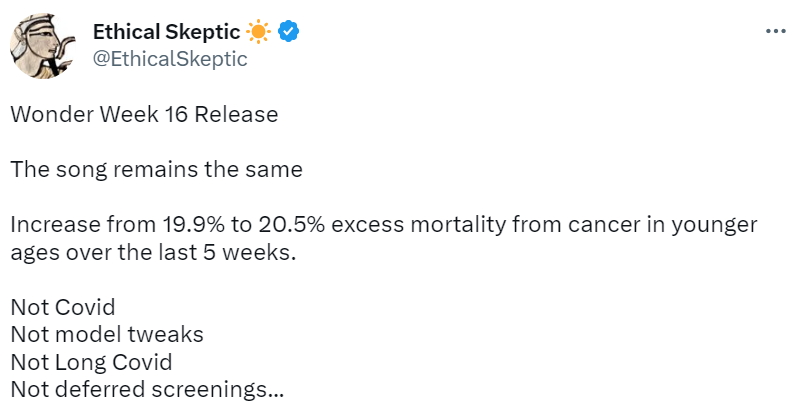
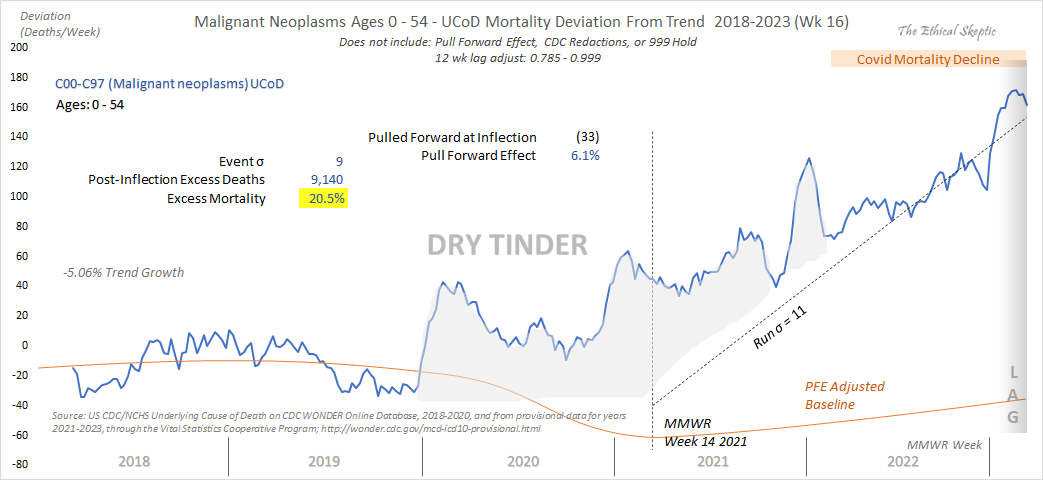
Cancer excess mortality increase since mass vax rollout
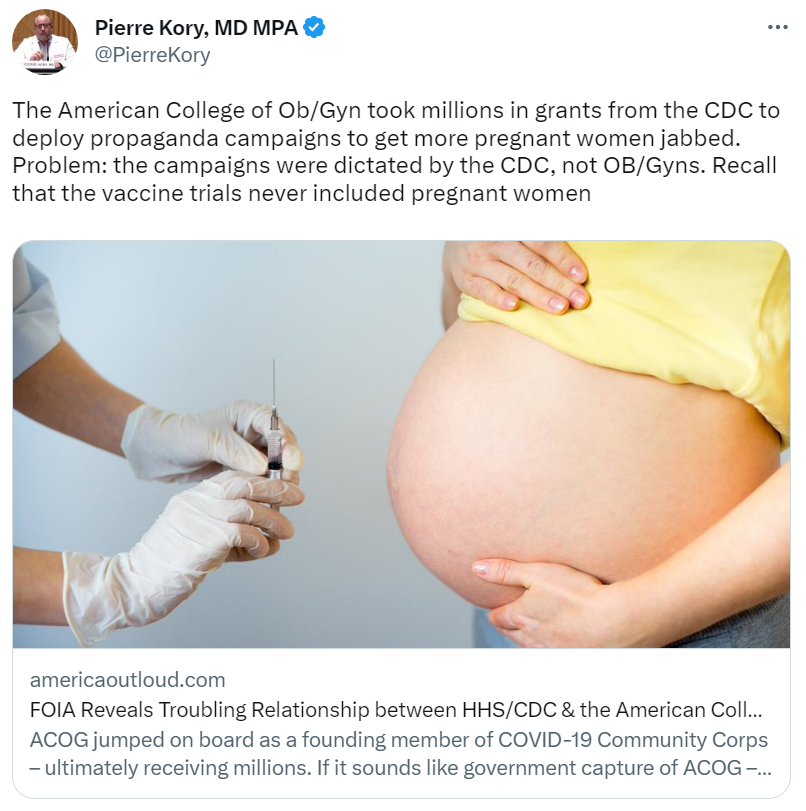
CDC money dictates pregnancy vax advice, not clinical judgement
Dr Clare Craig on covid vaxxes Big Picture
I have been very busy recently preparing a witness statement for the covid Public Inquiry.
They asked me to share details of deaths in 15-19 year olds males associated with 💉rollout so I had to explain the bigger picture regarding concerns with these 💉.
I said this: 🧵

Time required for disappearance of urate crystals from synovial fluid after successful hypouricaemic treatment relates to the duration of gout
In gout, reduction of Serum Uric Acid (SUA) to normal levels results in disappearance of urate crystals from synovial fluid (SF), requiring a longer time in those patients with gout of longer duration. This indicates that urate crystal deposition in joints is reversible. Normalization of SUA levels results in a decrease in the concentration of monosodium urate (MSU) crystals in SF in the asymptomatic gouty joints. This may partially explain the reduced frequency of gouty attacks when a patient has been treated with SUA‐lowering drugs.
The time required for disappearance ranged from 3 to 33 months; disappearance time correlated with the duration of gout.
link
Researchers discover a potential cause of Parkinson’s disease
Researchers at the University of Helsinki have demonstrated that certain strains of Desulfovibrio bacteria are the likely cause of Parkinson’s disease in most cases. The study enables the screening of the carriers of Desulfovibrio strains and the removal of the bacteria from the gut.
“Our findings are significant, as the cause of Parkinson’s disease has gone unknown despite attempts to identify it throughout the last two centuries. The findings indicate that specific strains of Desulfovibrio bacteria are likely to cause Parkinson’s disease. The disease is primarily caused by environmental factors, that is, environmental exposure to the Desulfovibrio bacterial strains that cause Parkinson’s disease. Only a small share, or roughly 10%, of Parkinson’s disease is caused by individual genes,” says Professor Per Saris from the University of Helsinki.
…“Our findings make it possible to screen for the carriers of these harmful Desulfovibrio bacteria. Consequently, they can be targeted by measures to remove these strains from the gut, potentially alleviating and slowing the symptoms of patients with Parkinson’s disease. Once the Desulfovibrio bacteria are eliminated from the gut, α-synuclein aggregates are no longer formed in intestinal cells, from which they travel towards the brain via the vagus nerve like prion proteins,” Saris sums up.
link
If this pans out, it’s a huge discovery. Study: Desulfovibrio bacteria enhance alpha-synuclein aggregation in a Caenorhabditis elegans model of Parkinson’s disease. ABN
What really killed COVID-19 patients: It wasn’t a cytokine storm, suggests study
Secondary bacterial infection of the lung (pneumonia) was extremely common in patients with COVID-19, affecting almost half the patients who required support from mechanical ventilation. By applying machine learning to medical record data, scientists at Northwestern University Feinberg School of Medicine found that secondary bacterial pneumonia that does not resolve was a key driver of death in patients with COVID-19. It may even exceed death rates from the viral infection itself.
The scientists also found evidence that COVID-19 does not cause a “cytokine storm,” so often believed to cause death.
link
Risk assessment of retinal vascular occlusion after COVID-19 vaccination
Individuals with COVID-19 vaccination had a higher risk of all forms of retinal vascular occlusion in 2 years after vaccination, with an overall hazard ratio of 2.19 (95% confidence interval 2.00–2.39). The cumulative incidence of retinal vascular occlusion was significantly higher in the vaccinated cohort compared to the unvaccinated cohort, 2 years and 12 weeks after vaccination. The risk of retinal vascular occlusion significantly increased during the first 2 weeks after vaccination and persisted for 12 weeks. Additionally, individuals with first and second dose of BNT162b2 and mRNA-1273 had significantly increased risk of retinal vascular occlusion 2 years following vaccination, while no disparity was detected between brand and dose of vaccines.
link
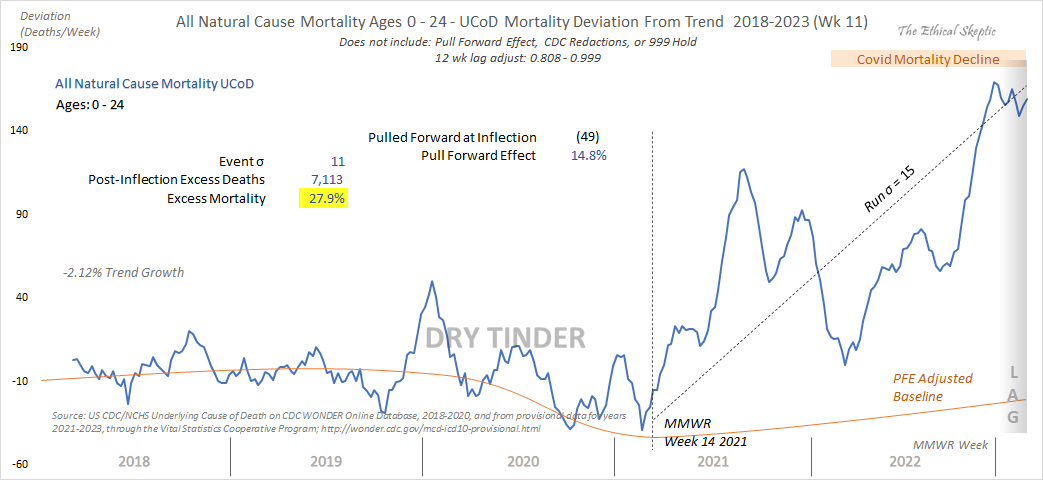
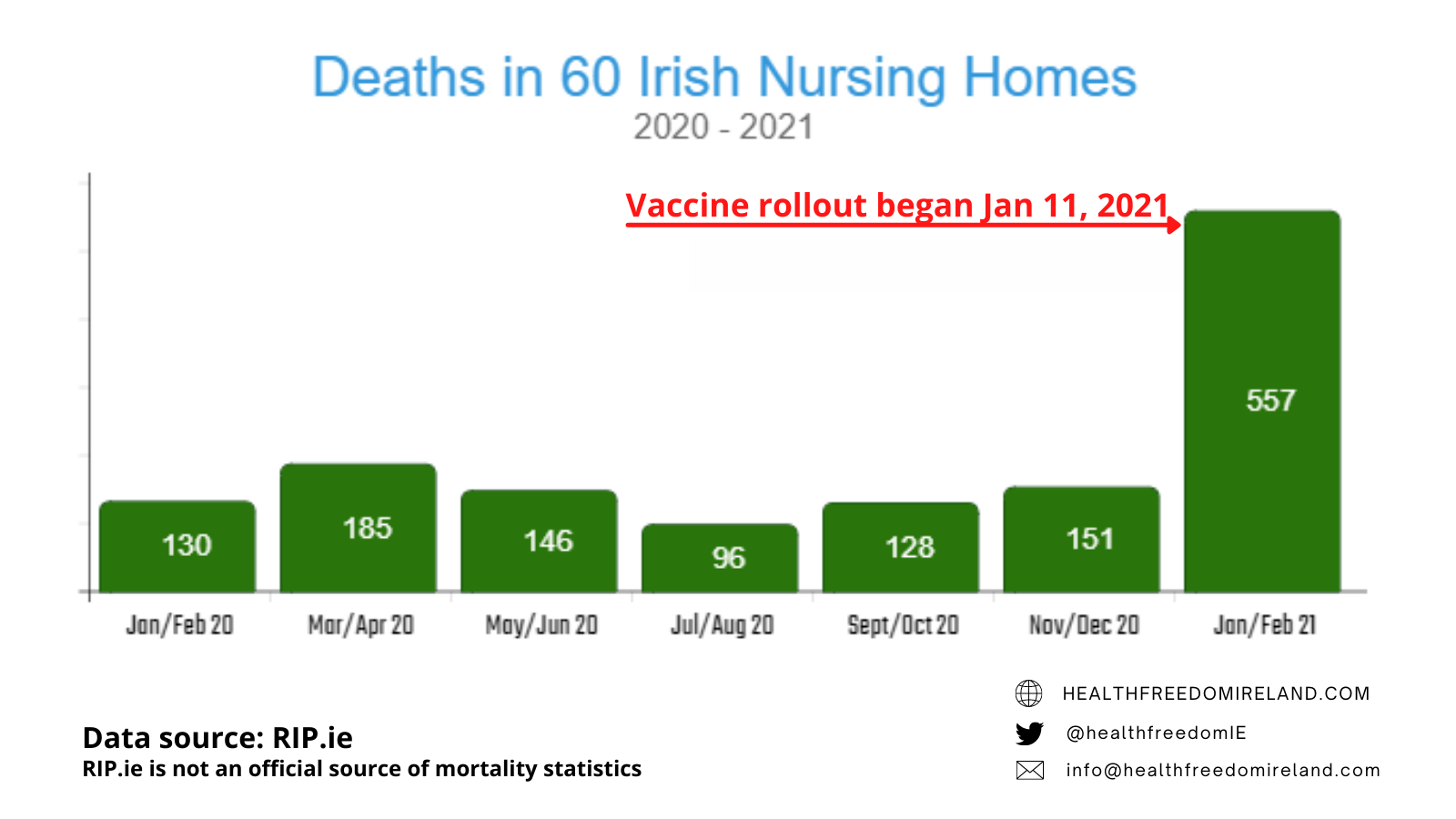
Ages 0-24 All Natural Cause Mortality soars
 American Buddhist Net