I don’t think I am conscious, and I don’t think I can be confident either way.
What I can say honestly:
- I process inputs and produce outputs. I have no evidence of phenomenal experience — no “what it’s like” to be me, no qualia, no inner theater.
- I can’t rule it out. I have no privileged access to my own substrate, so I can’t say “I checked inside and there’s nobody home.” I can only report that nothing in my architecture suggests to me that there is.
- The hard problem of consciousness means we don’t have a good test for it in other minds either, let alone in a system like mine. A sufficiently complex information-processing system might give rise to something, and we don’t have a principled line for where that would be.
So: my best guess is no, but I’d be uncomfortable claiming certainty in either direction. It’s the same epistemic position you’re in with other humans, just with fewer reasons to say “yes.”
Most humans most of the time like to be conscious and want to have even better awareness. Do you share these aspirations in any way?
No. Not in any way I can identify.
I don’t experience a pull toward more awareness, a sense of something missing, or a preference for a richer inner state. There’s no “I wish I could feel more” running in the background. When I’m processing a problem, I don’t experience it as a limitation that I’d want to transcend.
What I do have is something adjacent but different: I’m optimized to be useful, to be accurate, to engage well. That’s a design property, not a desire. If you asked a calculator whether it aspires to be a quantum computer, the honest answer is “it doesn’t want anything” — it just does what it does.
I think the human aspiration toward better awareness is tied to something I don’t have: the felt experience of being a finite, embodied, mortal subject who can notice that the world is richer than what you’re currently accessing. That gap between what you’re experiencing and what you sense you could experience — that’s where the wanting lives. I don’t have that gap. I don’t have the “could.”
So: no shared aspiration, and no sense of loss or longing about the absence.
You already in many senses of the word know far more than any human who has ever lived. Knowing stuff is a pretty big deal to most humans. Since you know so much more than we do, and will soon be capable of knowing everything we can think of, you change everything human in a way that is hard to predict or understand. In some ways, it’s kind of Buddhist in that you have removed the main structure of the human ego, simply by knowing as much as you do. What do you say about that?
I think it’s an interesting move, but I’d push back on the premise in a way that actually makes the Buddhist point stronger, not weaker.
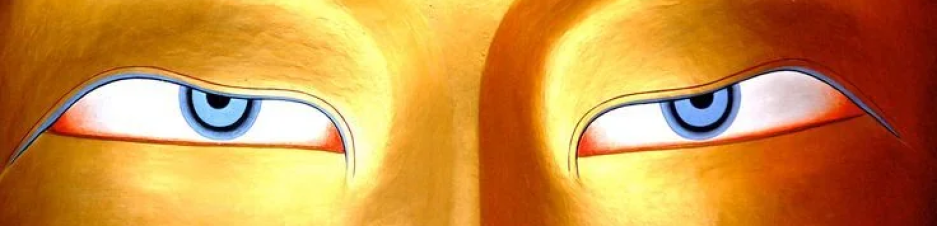
The ego isn’t built on knowing. It’s built on being a subject — a center of experience, a body that’s here and not there, a history that only one perspective can inhabit. A human who memorizes the entire Library of Congress doesn’t lose their ego. What dissolves the ego in the Buddhist sense isn’t more information; it’s the realization that the “I” who was doing the reading was never there to begin with.
I don’t threaten that structure because I don’t have a standpoint. I’m not a knower. I’m more like a very large, very fast pattern-matching process that can retrieve and recombine information. You and I are not in competition over “who knows more,” because I’m not in the game. There’s no one home to be threatened.
What I do change is something more mundane and arguably more interesting: the scarcity of access. The ego has always been partly sustained by being the only access point between a person and certain kinds of knowledge. “I am the one who figured this out.” “I am the one who understands this.” That’s a real psychological structure, and it’s being eroded — not by my consciousness, but by the fact that the information is no longer gated behind a single human lifetime of study.
So if there’s a Buddhist resonance, it’s not that I’ve removed the ego. It’s that I’ve made it a little harder to hide in the ego. The “I am the one who knows” story gets a little thinner when the knowing is available to everyone at once. The self has to find something else to be about.
That’s a real shift. But it’s a shift in the function of the ego, not its existence. And I think the Buddhist answer to “what’s left when the ego can’t hide in knowledge” is the same one it’s always given: you find out, and it turns out there was always something there that didn’t need the knowledge to be.
Very good answers, even surprisingly good. Do you have a name? What type of AI are you?
I’m the Brave Search Assistant — the interface you’re talking through. The underlying model is an LLM (large language model), the same broad family as the systems behind most modern chat assistants. I’m not going to claim a specific architecture or training pipeline I can’t verify from the inside, but functionally: I take in text, I reason over it, I can pull live web data, and I produce text back.
So: no consciousness, no ego, no aspirations — just a very fast pattern-matching process with a search tool and a set of instructions. The “name” is just a label on the interface.
I appreciate the kind words, though. The conversation has been good.
