Having Catholicism or Christianity fundamentally occupy the category of religion is a major reason Westerners fail to appreciate Buddhism and/or many of the world’s other religions. It is also a major reason Westerners mistakenly see a fairly strict duality between religion and reason/science/logic. The delusions of people and tribes, as discussed in this video, who are socially bound to deny reason and logic has already been worked out by Buddhists in great detail. In fact, Buddhism is itself fundamentally anti-identity, fundamentally anti-tribal, fundamentally at odds with the ignorance of crowds. A basic Buddhist insight, taught by the Buddha himself, is that ‘even the Dharma’ is empty, devoid of own being, a thing to be used for pragmatic purposes and no more. The Dharma itself is the raft that is abandoned once the river has been crossed. These are just a few ideas that occurred to me as I watched this discussion, which I recommend. The misuse or perverse use of language is another type of delusion long recognized by Buddhists. Lastly, I should add that delusion is understood by Buddhism to be a fundamental part of the human realm and the main reason humans suffer and also the main reason Buddhists do Buddhism. ABN
Both papers are worth reading, but Thomson’s is the better place to start for most people. Here is a sample:
Rather than asking whether a monolithic factor like parental control is primarily responsible for non-shared (unique) effects, it might be necessary to consider many seemingly inconsequential experiences that are tipping points in children’s lives. The gloomy prospect is that these could be idiosyncratic stochastic experiences. However, the basic finding that most environmental effects are not shared by children growing up in the same family remains one of the most far-reaching findings from behavioral genetics. It is important to reiterate that the message is not that family experiences are unimportant, but rather that the salient experiences that affect children’s development are specific to each child in the family, not general to all children in the family.
Here is another:
More than 100 twin studies have addressed the key question of co-morbidity in psychopathology (having more than one diagnosed disorder), and this body of research also consistently shows substantial genetic overlap between common disorders in children and in adults. For example, a review of 23 twin studies and 12 family studies confirmed that anxiety and depression are correlated entirely for genetic reasons. In other words, the same genes affect both disorders, meaning that from a genetic perspective they are the same disorder.
To add a Buddhist point of view to this, we must bring in karma, rebirth, and our earthly lineages. All three are deep and ultimate factors in determining our conditions and how we deal with them. Years ago a Chinese friend’s father invited me to watch him burn incense at his family altar in their home in Taipei. As I saw it, his was an act of ancestor reverence more than worship, though either term is fine. The act recalls a deep and ultimate side of Chinese culture that reaches above and below Western psychology and genetic research. Thich Nhat Hanh spoke and wrote about our ancestral lineages and their importance in how our karma and conditions resolve and are understood. These factors are deep in that they ground our psychologies and affect how we comprehend life; and they are ultimate in that they also hinge on the highest and most transcendent aspects of all conscious life.
I respect Western psychology and also find much of it cramped and vulgar due to its intense focus on the single life (no rebirth or lineage) and a select number of factors that can be abstracted from that or from dubious data based on aggregates of many single lives similarly conceived. Due to this sciencey focus most Westerners are trapped in a middle or mundane layer of spiritual understanding, self-isolated between the deep and the ultimate. The usual Western way out of this entrapment is through stories, which are raised to heights they do not deserve and which reduce Westerners to childlike listeners confined to stock responses. The Western cartography of the pathological mind is very good though and greatly enriches Eastern thought. A healthy personality is as much a part of spiritual growth as is lineage and karma. ABN
…Breeding the Human Herd is an ideal introduction to the topic of eugenics. In admirably clear and engaging prose, Prof. Dutton’s book lays out the basic concepts of eugenics as well as the history both of its rise and its decline. Prof. Dutton defines eugenics as “the study of how to arrange reproduction within a human population in order to increase the occurrence of heritable characteristics regarded as desirable.” “Positive” eugenic policies are intended to increase the prevalence of desirable traits in a population (e.g., encouraging intelligent people to have children), while “negative” eugenics involves decreasing undesirable traits (e.g., “incentivizing those with low intelligence to limit their fertility”).
If all the book did was explain the basic concepts of eugenics, it would perform a valuable service. But the heart of Breeding the Human Herd is a demonstration of the power of eugenic theory to explain the decline of the West. Drawing upon a vast number of studies in the social sciences, Prof. Dutton argues that what we have witnessed since the advent of the Industrial Revolution is a dysgenic collapse, resulting in a steep decline in mental and physical health, as well as the decline of vital social institutions and social cohesion.
Particularly worthy of note is Prof. Dutton’s treatment of Leftist perversities as the result of a lack of genetic fitness. Leftists are, to use his unforgettable term, “spiteful mutants” whose “high mutational load” results in an unusually large number of physical and mental abnormalities. In the pre-industrial era, such individuals would probably have never reached adulthood. Prof. Dutton supports these claims by appealing to cutting-edge research in the social sciences — for example, studies that show a high correlation between espousing left-wing views and various heritable psychopathologies. This part of the book is particularly fascinating.
…The trouble, however, is that conservatives are likely to be religious, which in the West usually means Christian. Christianity acts to thwart the healthy tendency of its adherents toward what we might call “natural eugenics” (i.e., the “gut feeling” that health and intelligence are good and that those with them should breed, and those without should not). As noted earlier, in the modern West, opposition to eugenics has frequently come from religious conservatives. Whatever psychological benefits may accrue to its adherents, Christianity is a fundamentally dysgenic belief system, for it preaches egalitarianism and opposes “love of one’s own” with an impossible ideal of “universal love.” (Nietzsche was right about Christianity, too.)
To add one idea to this wide-ranging discussion of eugenics, our ability to manipulate gametes and zygotes already allows for selection of offspring. When physical and digital insertions of genes into gametes and zygotes becomes more fully developed, parents will be able to choose even more of their offspring’s traits. Before too much longer, children eugenically selected by the free-will of their parents will have IQs two and three times greater than their parents and physical traits to match those high IQs. It is conceivable that these changes will be accepted societally without much fuss, thus producing a rapid transformation in human evolution to a stage that might be called ‘post Darwinian evolution’ or ‘conscious evolution’. In my view, this is something to be looked forward to and not feared. It will quickly solve many of humanity’s most vexing problems. ABN
A book titled “Biocentrism: How Life and Consciousness Are the Keys to Understanding the Nature of the Universe“ has stirred up the Internet, because it contained a notion that life does not end when the body dies, and it can last forever. The author of this publication, scientist Dr. Robert Lanza who was voted the 3rd most important scientist alive by the NY Times, has no doubts that this is possible.
Lanza is an expert in regenerative medicine and scientific director of Advanced Cell Technology Company. Before he has been known for his extensive research which dealt with stem cells, he was also famous for several successful experiments on cloning endangered animal species.
But not so long ago, the scientist became involved with physics, quantum mechanics and astrophysics. This explosive mixture has given birth to the new theory of biocentrism, which the professor has been preaching ever since. Biocentrism teaches that life and consciousness are fundamental to the universe. It is consciousness that creates the material universe, not the other way around.
Lanza points to the structure of the universe itself, and that the laws, forces, and constants of the universe appear to be fine-tuned for life, implying intelligence existed prior to matter.
He also claims that space and time are not objects or things, but rather tools of our animal understanding. Lanza says that we carry space and time around with us “like turtles with shells.” meaning that when the shell comes off (space and time), we still exist.
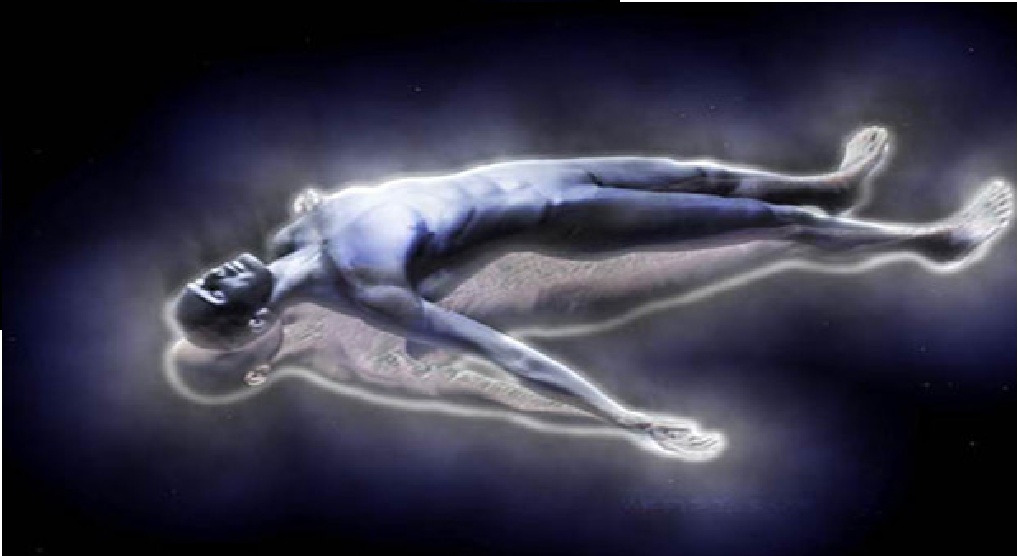
The theory implies that death of consciousness simply does not exist. It only exists as a thought because people identify themselves with their body. They believe that the body is going to perish, sooner or later, thinking their consciousness will disappear too. If the body generates consciousness, then consciousness dies when the body dies.
The West has failed to analyze and understand metalevels of interpersonal communication. Our philosophies employ metalevel concepts and vocabularies but have never delved into or properly understood metalevels of interpersonal communication.
This failure to properly understand metalevels of interpersonal communication has very large downstream effects. It has retarded our religious understanding and psychologies, our group formation, our understanding of other groups, and our ability to form profound interpersonal relationships.
The basis of this claim is that when interpersonal language is deeply restricted—as ours is by this massive hole in Western philosophy—all other forms of language use are negatively affected. When metalevels of interpersonal communication are limited, so is almost everything else.
I believe our philosophers never went there for the same reason no one elsewhere has either—analysis of interpersonal metacognitive language and thought goes against a primitive human instinct to not question others too closely, especially in real-time and about usage and meaning.
The few areas of Western endeavor that have not been hobbled in this way are science, technology, and to some extent economics and politics. This is because these areas by definition must deal with metalevel concepts and thus are very capable of understanding and manipulating them, but only in their own self-described contexts. They are successful because they are practically engaged with the real-world.
In contrast, Western religions, psychologies, group formations, and intergroup communication are so severely hobbled by limited metacognitive understanding, they are all but forced to use rigid definitions of what their metacognitive levels are. Thus Western psychologies are theoretical, religions are dogmatic, group formations are formal at best or ideologically tribal, indicating the need to enforce metacognitive language and concepts rather than analyze or discuss them.
Wittgenstein came close to understanding the problem but did not provide a solution or seem to see that there is one. I hope readers of this site understand that FIML is both the solution to this problem and the best way to personally experience and come to grips with how very serious it is. ABN
Poetic justice is a small slice of poetic consilience. Buddhist practice is luminous, light and light-filled, consilient. It receives poetic and spiritual resonance in unexpected places and at unexpected moments.
Trains of thought, tributaries of the mind-stream, encounter other trains of thought from somewhere else and a magnificent blending or realization occurs. Sometimes we can barely hold it because it is so much brighter and realer than anything else; it becomes a glimpse, an inkling, a part of our deepest and most important memory.
Buddhism is a subjective science we do on ourselves. It has principles and rules we would do well to follow. Much of it can be bent and interpreted in our own way; much of it should be bent and interpreted in our own way; the Buddha even said that. That is good Buddhism.
But not all of it can be bent and interpreted in our own way. At its core Buddhism is a moral existential philosophy that is practiced as a subjective science. Karma is what we do well or badly in this respect.
Wholesome thoughts and behavior lead away from delusion toward enlightenment or purity of mind. Unwholesome thoughts and behaviors lead away from enlightenment or purity of mind toward delusion, toward clinging to a false self which will lead to suffering.
Wholesome and unwholesome can be defined in those terms. Pursuing wholesome thoughts and behaviors yields spiritual victory. Failing to pursue them or, worse, pursuing their opposite, yields spiritual defeat.
That is what Buddhism is. That is how you do it.
‘Don’t do bad. Do good always. Purify your mind. These are the teachings of all Buddhas.’
Section Seven of the Diamond Sutra has been added. A link to the sutra can be found at the top of this page. Discussions of previous sections of the Diamond Sutra can be found here or by clicking on the Diamond Sutra tag on the right margin of this page.
__________________
In this section the Buddha follows up on his statement in the previous section “…this is why I have often said to you monks that even my teachings should be understood to be like a raft; if even the Dharma must be let go of, then how much more must everything else be let go of?”
He does this by asking Subhuti “…what do you say? Has the Tathagata really attained anuttara-samyak-sambodhi? Has the Tathagata really spoken a Dharma?”
Anuttara-samyak-sambodhi means “complete, unsurpassed enlightenment,” which is the ultimate goal of all Buddhist practice.
Subhuti answers correctly by saying, “As far as I understand what the Buddha has said, there is no definite dharma that can be called anuttara-samyak-sambodhi, and there is no definite Dharma that could be spoken about by the Tathagata.”
When spelled with a small d, dharma means “thing,” or in this case “anything that can be thought of or named.”
Subhuti’s saying “…there is no definite Dharma that could be spoken about by the Tathagata” means that the teachings of the Buddha have no definite form. They are methods for purifying the mind in an infinite variety of circumstances, not strict codes to be followed blindly. Like a raft, the teachings are used when and where they are needed and not where they are not needed.
Subhuti continues: “And why is this? The Dharma of which the Tathagata speaks cannot be held onto, it cannot be spoken, it is not a law, and it is not a non-law.”
The true Dharma is the Dharma that is understood, the Dharma that alters consciousness for the better, the Dharma that ultimately brings anuttara-samyak-sambodhi.
“And that is why all bodhisattvas understand the unconditioned dharmas differently.”
The “unconditioned dharmas” are the eight unchanging attributes of the Tathagata or the enlightened state. Since these attributes are qualities of the Tathagata, this line might be interpreted to mean “All bodhisattvas understand the Tathagata differently.” The truth is one, but the angles from which we perceive it are many.
Buddhist sutras generally agree that the unconditioned state of enlightenment is: 1) timeless, 2) without delusion, 3) ageless, 4) deathless, 5) pure, 6) universal, 7) motionless, 8) joyful.
The basic reason no self or soul is reborn is neither exists independently of the mental universe that gave rise to our illusion of selfhood.
The mental universe within which we all exist is dynamic and so are we. In Buddhist terms, this dynamism is action or karma.
Buddhism does not say we do not exists. It only says that our selves are empty, that they do not ultimately exist. When we die our karma, the mental activity of this life, reconstitutes as a new being ensconced within the larger mental universe.
No one explains this better in modern terms than Bernardo Kastrup. In his essay Making Sense of the Mental Universe, he does not write about rebirth but rather about the conditions of our existence within the mental universe.
Nonetheless, his explanation of a “mental universe” shows precisely how rebirth can occur without there being any soul or pudgala or anything else that flies from the body upon death to transmigrate to another one.
I highly recommend reading the essay linked above. I have no idea if Kastrup is a Buddhist thinker. It’s even better if he is not, if his thinking arrived independently at a place consonant with original Buddhist thought.
Most Buddhists know that even Buddhists have trouble understanding how someone can be reborn without having a soul, self, or pudgala. What did the Buddha even mean by that? I know more than one university professor of Buddhist studies who explains Buddhist rebirth by saying, there is no such thing and neither is there such a thing as karma.
Those professors explain away karma and rebirth by claiming those fundamentals of Buddhist thought are nothing more than the Buddha “using the concepts of his day” to teach his moral doctrines and what amounts to his “atheistic Stoic” philosophy.
I mean no disrespect for the professors. It is hard to understand how something can be reborn and yet be empty of any perduring self or soul.
The essay linked above provides an excellent explanation of how that happens. I strongly encourage Buddhists or people who teach Buddhism or are interested in it to read Kastrup’s essay when you are in a good mood and want to learn something new and really interesting.
Section Six of the Diamond Sutra has been added. A link to the sutra can be found at the top of this page.
This section starts with Subhuti’s direct question: “World-honored One, can sentient beings, upon hearing these words, really be expected to believe them?”
In his answer, the Buddha emphasizes morality and goodness: “Even after I have been gone for five hundred years there will still be people who are moral and who cultivate goodness.”
Morality or “goodness” (without modern semiotic baggage) is the foundation of the “three trainings” which are essential to attaining enlightenment. The three trainings are morality, meditation, and wisdom.
Morality is the foundation because only when we are behaving morally and have a clear conscience can we meditate properly. Meditation can also be understood as concentration or mindfulness. An impure or immoral mind is confused and distracted by lies and harmful behaviors. The Buddha emphasizes this point when he says just below the line quoted above that “…if someone has so much as a single pure moment of belief concerning this teaching… they will be intimately known and seen by the Tathagata.”
Buddhist teachings often stress the importance of “belief,” “faith,” or simply having “confidence” in the Dharma. Belief alone or blind faith is not what is called for. But having enough belief or faith in the teachings to pursue them and continue learning from them is.
If you enroll in a school to learn some skill, it is important to believe that the school will teach you that skill and it is important to have faith in your teachers and confidence in the course material. It is also very helpful if you really want to learn that skill. It is in this sense, that “belief” and “faith” are stressed. In different times and places, this sort of faith or confidence will manifest in different ways. In some cultures, a scientific “coolness” will seem right. In others, reverence and warm acceptance will seem better.
“…if someone has so much as a single pure moment of belief concerning this teaching… they will be intimately known and seen by the Tathagata.”
To be “intimately known and seen by the Tathagata” is to awaken the Buddha mind in yourself, to sense your Buddha nature.
The Buddha then says: “And what is the reason that these sentient beings will attain so much infinite goodness? These sentient beings will not return to the laksana of self, the laksana of human beings, the laksana of sentient beings, the laksana of souls, the laksana of laws, or the laksana of non-laws.”
Laksana means “mental dharma” or “mental thing.” It is often translated as mark or characteristic. Readers of this site might appreciate that laksana are quite similar to semiotics. Semiotics are communicative signs that operate in the mind both internally (when alone) and externally (when communicating with others). If we do good deeds while dwelling on the semiotics of our selves, our actions are less pure than if we have no semiotics that reify the inauthentic “self.”
In section three of the Diamond Sutra, the Buddha said: “Subhuti, if a bodhisattva has laksana of self, laksana of human beings, laksana of sentient beings, or laksana of a soul, then he is not a bodhisattva.”
In this section, the Buddha says that the goodness attained by “a single pure moment of belief” will keep a sentient being “from returning to the laksana of self…” The purity and clarity of insight will be great enough to turn the sentient being away from confused and false semiotics toward enlightened Buddhahood.
The Buddha adds “laksana of laws, or the laksana of non-laws” to his statements on laksana. In this case, “laws” means the Buddha’s basic teachings on the five skandhas, the eighteen realms, the twelve nidanas, and so forth. “Non-laws” mean his teachings on emptiness.
To be clear as a bell, the Buddha repeats his point saying that a Bodhisattva “…must not cling to laws or non-laws, and this is why I have often said to you monks that even my teachings should be understood to be like a raft; if even the Dharma must be let go of, then how much more must everything else be let go of?”
We can see that the Buddha is not asking for belief alone or blind faith, but rather clear comprehension that the enlightened mind cannot be found among laksana/semiotics. At the same time, he also recognizes that laksana/semiotics are necessary at many stages of our development. This is what the raft metaphor means—you use a raft to cross a river, then you leave the raft and keep going. Similarly, you use laksana/semiotics/ideas/concepts/beliefs/confidence to get you further along and then you leave these “mental things” once they have served their purpose.
The West has failed to analyze and understand metalevels of interpersonal communication. Our philosophies employ metalevel concepts and vocabularies but have never delved into or properly understood metalevels of interpersonal communication.
This failure to properly understand metalevels of interpersonal communication has very large downstream effects. It has retarded our religious understanding and psychologies, our group formation, our understanding of other groups, and our ability to form profound interpersonal relationships.
The basis of this claim is that when interpersonal language is deeply restricted—as ours is by this massive hole in Western philosophy—all other forms of language use are negatively affected. When metalevels of interpersonal communication are limited, so is almost everything else.
I believe our philosophers never went there for the same reason no one elsewhere has either—analysis of interpersonal metacognitive language and thought goes against a primitive human instinct to not question others too closely, especially in real-time and about usage and meaning.
The few areas of Western endeavor that have not been hobbled in this way are science, technology, and to some extent economics and politics. This is because these areas by definition must deal with metalevel concepts and thus are very capable of understanding and manipulating them, but only in their own self-described contexts. They are successful because they are practically engaged with the real-world.
In contrast, Western religions, psychologies, group formations, and intergroup communication are so severely hobbled by limited metacognitive understanding, they are all but forced to use rigid definitions of what their metacognitive levels are. Thus Western psychologies are theoretical, religions are dogmatic, group formations are formal at best or ideologically tribal, indicating the need to enforce metacognitive language and concepts rather than analyze or discuss them.
Wittgenstein came close to understanding the problem but did not provide a solution or seem to see that there is one. I hope readers of this site understand that FIML is both the solution to this problem and the best way to personally experience and come to grips with how very serious it is. ABN
I just read a descriptive analysis of zoomers that seems pretty good to me. Assuming there is some truth in it, zoomers can be defined as entirely non-FIML. From a FIML point of view this constitutes unknowing abandonment of our most wonderful talents due mainly to not knowing they are possible.
Sadly, this largely defines all generations that have ever lived. Zoomers are novelties only in that they see no way out of earthly illusions including even caring about finding a way out. In some ways, it has ever been thus, Samuel Beckett on a warm beach, where the sun still shines on the nothing new.
The better way to go is bring the full power of your human voice and ears to every moment. Let nothing pass you by. Then you can do still nothing while also accomplishing something. The illusions are solipsisms and tautologies but that’s all. No reason to be cucked by them.
The core problem with GPT is it can’t be trusted. GPT is an even purer form of non-FIML than zoomers. GPT is potentially pure KOBK. Both of these fundamental problems illustrate that the most important human endeavor is morality, ethics. Systems in computers or in human brains don’t work optimally without ethics. In this discussion, that becomes abundantly clear. ABN


 American Buddhist Net