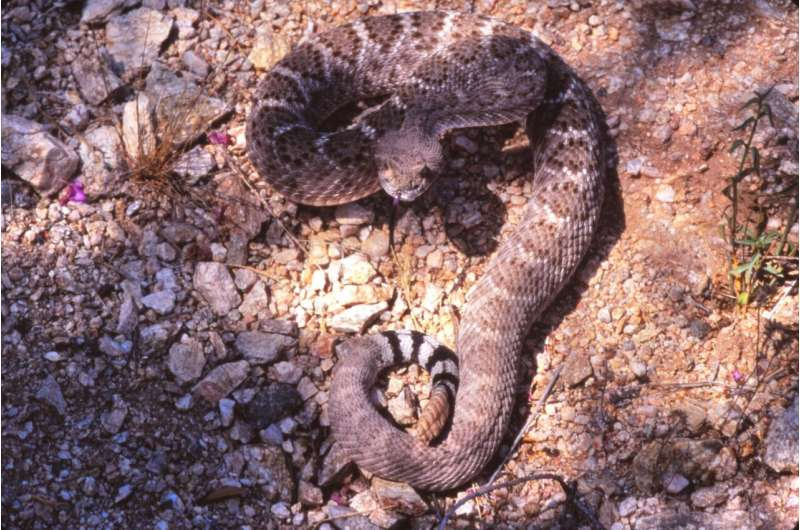
A western diamondback rattlesnake. Credit: Sean B. Carroll
University of Maryland researchers discovered a new approach to treating venomous snakebites—using the same toxin-blocking proteins that snakes evolved to protect themselves. The team found that specific combinations of blood proteins from western diamondback rattlesnakes provided unprecedented neutralizing power against the venom of multiple dangerous snake species.
“This is one of those great stories when nature has already solved a problem we’ve been grappling with for decades,” said Carroll, who also holds the Andrew and Mary Balo and Nicholas and Susan Simon Endowed Chair at UMD.
A neglected treatment gap
Snakebites remain one of the world’s most neglected tropical diseases. The World Health Organization estimates that venomous snakebites kill 80,000 to 140,000 people each year and leave hundreds of thousands more with permanent disabilities. Many victims live in rural regions where access to effective antivenoms is limited.


 American Buddhist Net